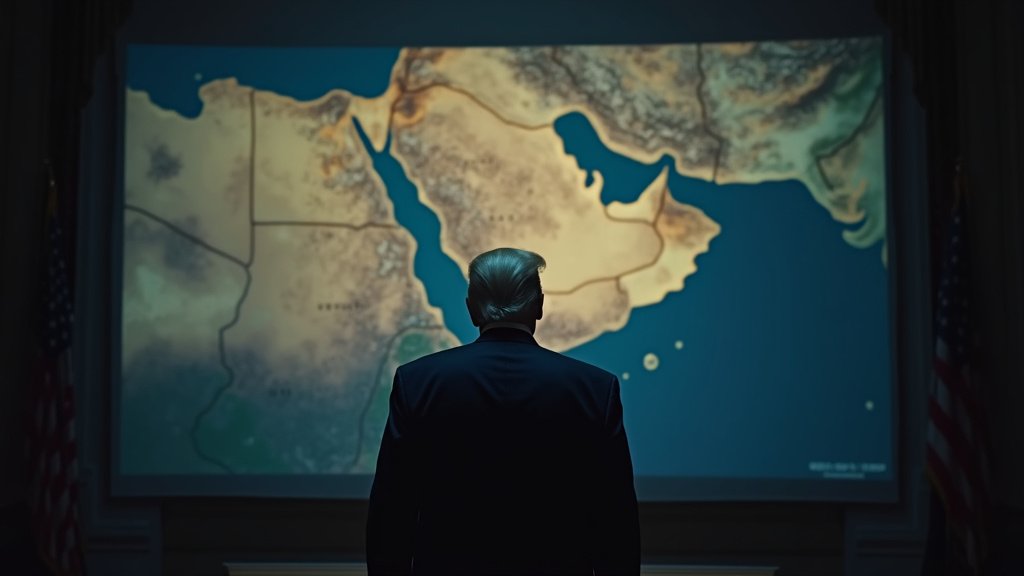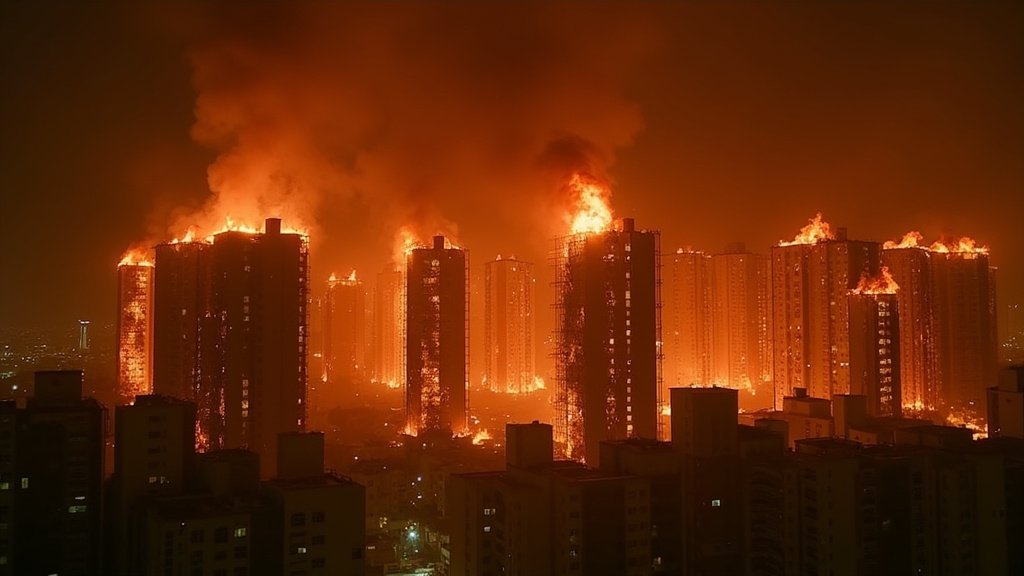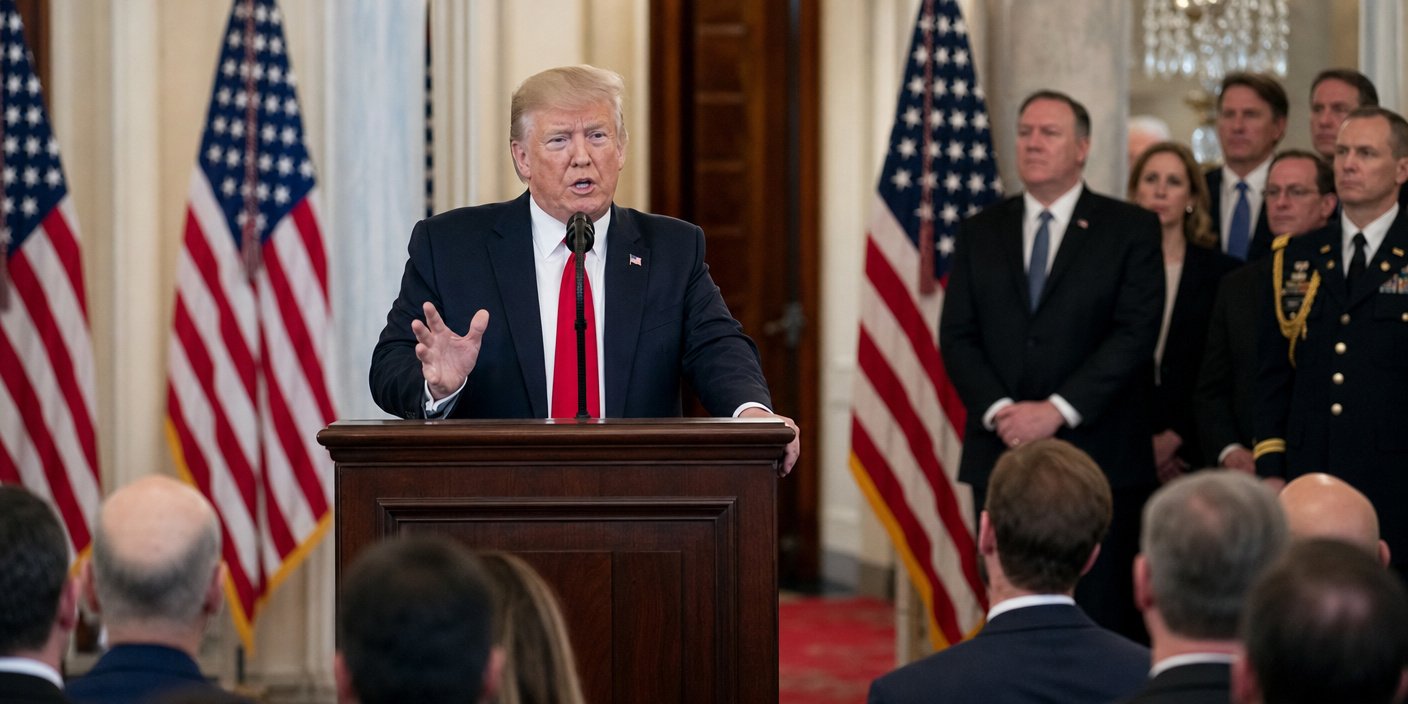
The United States has entered the 11th consecutive night of a sustained air campaign targeting Iranian military infrastructure, marking one of the most prolonged and significant military operations in the region in recent history. As the operational tempo intensifies, President Donald Trump has issued a high-stakes warning, explicitly singling out ‘Pickaxe Mountain’—an underground nuclear facility—as a potential target, signaling a significant shift in the strategic objectives of the ongoing conflict. This development has sent shockwaves through global defense ministries and energy markets alike, as the operation moves beyond logistics and into the realm of high-value strategic assets.
Key Highlights
- Sustained Operational Tempo: The U.S. air campaign has now reached its 11th straight night, focusing heavily on disrupting Iranian drone storage and logistical supply chains.
- Nuclear Escalation: President Trump has formally identified ‘Pickaxe Mountain,’ an underground nuclear facility, as a viable target for future strikes, potentially expanding the scope of the campaign.
- Infrastructure Focus: The strikes are specifically designed to degrade Iran’s ability to project power via unmanned aerial vehicles (UAVs) and decentralized supply networks.
- Global Impact: Markets are reacting with volatility as the threat of direct strikes on nuclear infrastructure increases geopolitical risk.
The Escalating Air Campaign and Strategic Objectives
The ongoing U.S. air campaign represents a calculated effort to dismantle the backbone of Iran’s regional military projection. Over the past 11 nights, Central Command (CENTCOM) has executed a series of precision strikes aimed at what intelligence officials describe as ‘decentralized logistics hubs.’ These hubs, largely responsible for the storage, maintenance, and deployment of unmanned aerial vehicles (UAVs), have been the primary focus of the operation.
By targeting the infrastructure rather than the mobile assets themselves, the U.S. strategy appears to be a long-term neutralization plan. Military analysts suggest that this approach is intended to force the Iranian military into a defensive posture, limiting their capacity for rapid retaliation while degrading their long-term offensive capabilities. The precision of the strikes suggests a deep intelligence penetration, allowing for the targeting of high-value equipment stored in hardened facilities.
The ‘Pickaxe Mountain’ Factor
The most significant development in the past 24 hours is the explicit rhetoric surrounding ‘Pickaxe Mountain.’ Historically, nuclear infrastructure in Iran has been treated as a ‘red line’ issue, often requiring complex diplomatic negotiations. President Trump’s public identification of this site as a potential target marks a departure from traditional cautious rhetoric.
‘Pickaxe Mountain’ is understood by intelligence community experts to be an underground facility designed for high-density fortification. Targeting such a facility would require advanced bunker-penetrating munitions, such as the GBU-57 Massive Ordnance Penetrator (MOP). The shift in language suggests that the administration is no longer solely focused on logistical supply chains but is now actively considering the neutralization of Iran’s nuclear-adjacent capabilities. This rhetoric is interpreted by regional observers as a signal of intent, raising the threshold of the current conflict from a regional military standoff to a strategic, existential threat to Iran’s infrastructure.
Analyzing the Logistics of the Conflict
The 11-night duration of the campaign has forced military logisticians to manage a high-tempo supply chain. U.S. forces, utilizing regional airbases and carrier strike groups in the Persian Gulf, have maintained a persistent presence. The strategy hinges on the ‘degrade and deter’ doctrine, which seeks to limit the opponent’s ability to coordinate large-scale retaliatory responses.
However, the sustained nature of these strikes brings into question the longevity of the mission. Maintaining 11 days of continuous sorties requires immense logistical support, including aerial refueling and airborne early warning and control (AEW&C) coverage. The ability to strike on consecutive nights demonstrates a clear superiority in air dominance, yet it also presents an opportunity for adversaries to adapt their tactics. As the U.S. targets drone storage, there is an inherent risk that the nature of these facilities will become more clandestine, further complicating future intelligence operations.
Geopolitical and Economic Ramifications
The global economy is acutely sensitive to conflicts in the Middle East, particularly those involving Iran. Energy markets have already begun to price in the ‘war premium,’ as traders monitor the possibility of broader regional destabilization. The targeting of military infrastructure—and now the potential targeting of nuclear facilities—creates a climate of extreme uncertainty for transit through the Strait of Hormuz.
Furthermore, the reaction of regional allies remains a critical variable. While the U.S. maintains that these strikes are defensive in nature, the expansion of targets to include nuclear facilities forces neighboring nations to recalibrate their diplomatic stances. The international community is closely watching for a potential shift in the conflict’s trajectory, as the window for a de-escalation path appears to be narrowing with every passing night of the operation.
FAQ: People Also Ask
1. What is the tactical significance of ‘Pickaxe Mountain’?
‘Pickaxe Mountain’ is categorized as a hardened, underground facility. Its tactical significance lies in its depth and fortification, which are believed to house sensitive nuclear research or processing equipment. A strike on such a facility represents a escalation from logistical to strategic infrastructure.
2. Why has the U.S. air campaign lasted 11 consecutive nights?
This duration indicates a ‘systemic degradation’ strategy. Rather than a singular ‘shock and awe’ event, the U.S. is methodically targeting logistical networks, drone storage facilities, and command-and-control nodes to continuously erode Iran’s military capacity over time.
3. Could this lead to full-scale regional war?
While current operations are targeted, the shift in rhetoric toward nuclear facilities increases the risk of miscalculation. Military analysts suggest that the situation is currently in a ‘high-tension equilibrium,’ where every additional strike increases the pressure on regional actors to respond, thereby elevating the risk of a wider conflict.