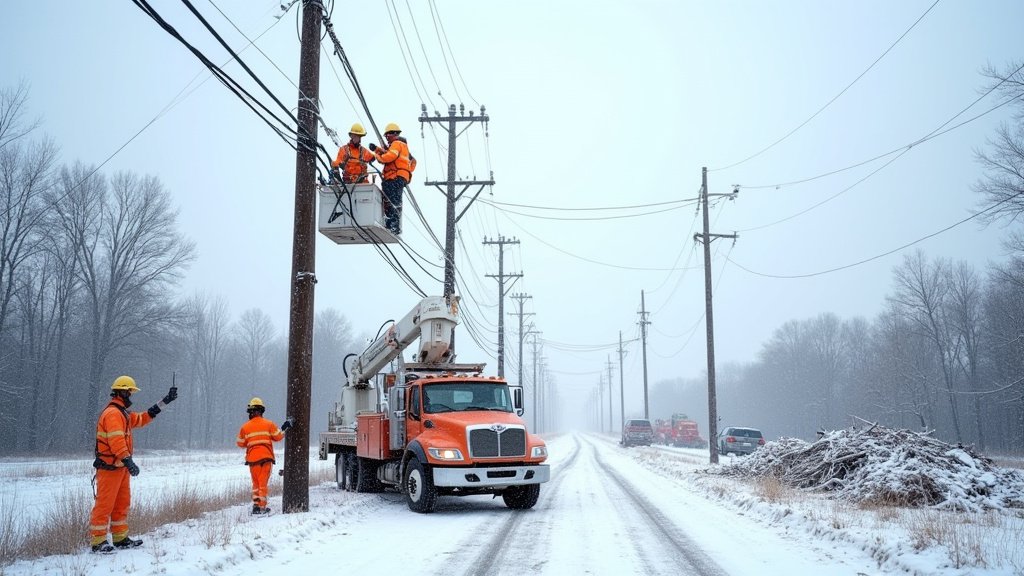
FEMA has officially approved $15.8 million in federal funding to support Michigan state, local governments, and a critical electrical cooperative in their ongoing efforts to recover from the severe winter storm that battered the region in March 2025. This influx of capital is earmarked for vital public safety communication infrastructure repairs, comprehensive debris management, and long-term power grid restoration, ensuring that communities impacted by the extreme weather conditions can return to stability.
Key Highlights
- Federal Investment: FEMA has allocated $15.8 million to assist Michigan’s recovery efforts.
- Core Focus: Funds are strictly designated for public safety communication infrastructure, debris removal, and electrical grid restoration.
- Collaborative Effort: The funding supports a multifaceted recovery approach involving state agencies, local municipal governments, and regional electrical cooperatives.
- Event Context: The package addresses the damages caused by the severe winter storm that occurred in March 2025.
Strengthening Michigan’s Resilience: The $15.8M FEMA Recovery Package
The approval of $15.8 million by the Federal Emergency Management Agency (FEMA) marks a significant step in the post-storm recovery timeline for the State of Michigan. Following the severe winter storm in March 2025, which saw unprecedented ice accumulation and high-wind stress on public infrastructure, the financial burden of restoration placed a strain on local budgets. This federal assistance acts as a necessary injection of capital to reimburse local and state entities for costs already incurred, as well as to facilitate ongoing repairs.
Breaking Down the Allocation
The funding is not a broad lump sum but rather a targeted reimbursement mechanism designed to cover specific categories of disaster-related expenses. A significant portion of the $15.8 million is dedicated to the electrical grid. In rural and suburban areas, the weight of ice and freezing rain on power lines caused widespread outages, necessitating extensive labor and material expenditures. By assisting electrical cooperatives—which often serve lower-density populations where the cost-per-mile of line is higher—FEMA is effectively stabilizing the regional energy sector.
Restoring Power and Public Safety
Beyond simple power restoration, the grant places a heavy emphasis on public safety communication infrastructure. During the March 2025 event, radio towers, emergency alert systems, and local cellular backbones were compromised. The ability for emergency responders to communicate is the bedrock of crisis management. This funding ensures that these technical assets are not only brought back to operational status but are hardened against future winter events, reducing the probability of failure during the next inevitable Great Lakes cold snap.
The Long Road to Recovery: Infrastructure and Debris Removal
Debris removal is often the most visible but operationally complex phase of recovery. The March 2025 storm created significant amounts of organic and structural waste, which hindered travel and obstructed emergency routes. The FEMA reimbursement process allows local governments to contract professional cleanup services, ensuring that fallen trees and ice-damaged materials are cleared efficiently, protecting the environment and public health in the aftermath.
Analyzing the Strategic Impact of Federal Aid
While $15.8 million is a substantial figure, its true value lies in the strategic continuity it provides. When state and local governments are forced to divert general funds to disaster response, other civic projects—such as road maintenance or school funding—often suffer. This FEMA grant effectively shields Michigan’s public coffers, allowing for a more balanced fiscal environment as the state continues its long-term infrastructure improvements.
Economic Implications for Local Cooperatives
Electrical cooperatives operate under a unique business model; they are member-owned and often function on thin margins. A disaster of the magnitude seen in March 2025 could lead to skyrocketing utility rates for residents if the cooperative had to absorb 100% of the repair costs. By securing federal reimbursement, the cooperative is able to keep consumer costs manageable, illustrating the essential role of federal-cooperative partnerships in maintaining the socioeconomic fabric of rural and semi-rural Michigan.
Enhancing Public Safety Communication Networks
The reliance on hardened communication infrastructure cannot be overstated. In the digital age, ‘public safety’ refers not just to sirens and flashing lights, but to the data networks that carry dispatch information and weather alerts. The 2025 storm demonstrated vulnerabilities in these networks, particularly in areas where aging analog hardware met modern demands. The FEMA funds allow for a pivot toward more resilient digital backbones, marking an upgrade in regional preparedness that extends well beyond mere restoration.
Future-Proofing Against Great Lakes Winters
As climate patterns shift, the intensity of Great Lakes winter storms appears to be reaching new thresholds. The structural failures witnessed in March 2025 serve as a data point for future urban planning. The lessons learned during this recovery period will be codified into building codes and infrastructure specifications, ensuring that as Michigan repairs what was broken, it also constructs a more durable foundation for the future.
The Regulatory Process Behind Federal Disaster Reimbursement
Accessing federal funds is a notoriously complex administrative process. The ‘Public Assistance’ program under FEMA requires rigorous documentation of every dollar spent. The $15.8 million award indicates that the state and local entities involved maintained meticulous records throughout the recovery phase. This compliance is essential; it ensures that taxpayer money is utilized with accountability and precision.
Why FEMA Funding Matters
The mechanism of federal reimbursement is the primary way the United States handles large-scale disaster recovery. It relies on a partnership where the federal government provides the funding, while the state government coordinates the delivery and oversight. The $15.8 million award is a testament to the effective communication and cooperation between the Michigan state emergency management office and federal authorities.
Ensuring Accountability in Disbursement
Every project funded by this grant will be subject to an audit. This process provides transparency to the public, ensuring that the resources intended for community safety are not lost to administrative waste. For the residents of the affected regions, this oversight is the guarantee that the $15.8 million will directly translate into stronger power lines, clearer roads, and more reliable emergency communication systems.
FAQ: People Also Ask
Q: What specific damages does the $15.8 million FEMA grant cover?
A: The funds are specifically allocated for public safety communication infrastructure repairs, professional debris removal services, and the restoration of the electrical grid managed by participating cooperatives and local agencies following the March 2025 storm.
Q: How do electrical cooperatives benefit from this FEMA funding?
A: Electrical cooperatives often face significant financial strain during large-scale disasters due to high repair costs over wide geographical areas. This FEMA funding reimburses these costs, preventing the need for the cooperatives to pass these emergency expenses onto their member-ratepayers.
Q: Is this funding already available to the local governments?
A: Yes, FEMA has awarded these funds, which are designed to reimburse state and local governments for costs incurred during the recovery process. This reimbursement process follows a thorough review of damages and project expenditures submitted by the local entities.
Q: Will this funding prevent future winter storm damages in Michigan?
A: While it cannot stop the weather, the focus on repairing and upgrading public safety and utility infrastructure helps ‘harden’ these assets, making them more resilient against future severe weather events.