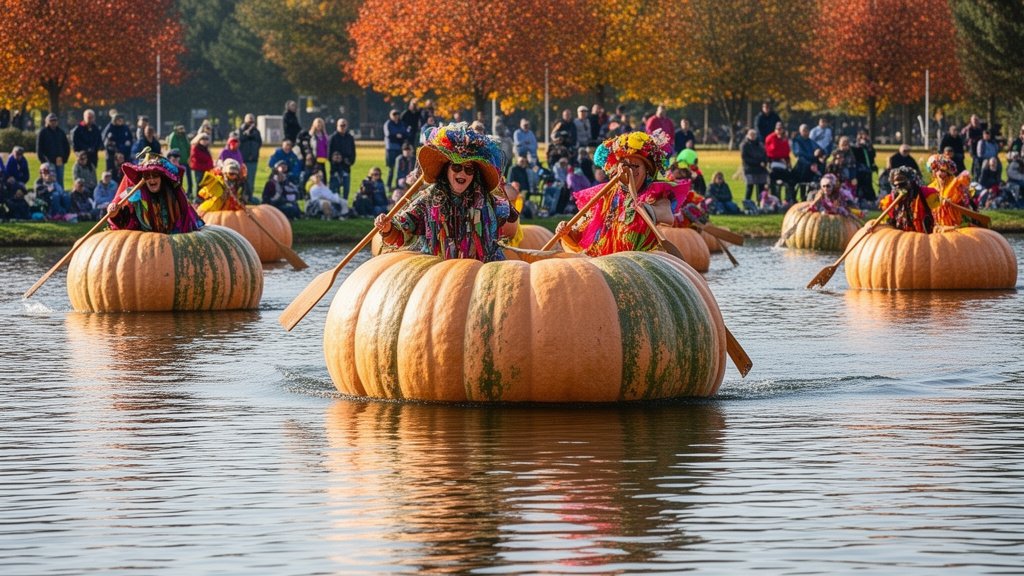
The West Coast Giant Pumpkin Regatta returns to Tualatin’s Lake of the Commons on October 18, 2026, promising another year of high-stakes, heavy-weight aquatic racing. This quintessential Pacific Northwest event blends competitive horticulture with community carnival energy, as costumed pilots navigate massive, hollowed-out gourds across the lake. As a cornerstone of the Oregon autumn calendar, the regatta has transformed from a niche curiosity into a widely recognized regional phenomenon, drawing participants and spectators eager to witness the collision of extreme gardening and lighthearted maritime competition.
Key Highlights
- Date & Location: The regatta will be held on October 18, 2026, at the Lake of the Commons in Tualatin, Oregon.
- Signature Racing: Watch participants dressed in elaborate costumes race specially prepared, massive pumpkins across the lake.
- Community Events: The festivities extend beyond the water, featuring the popular Regatta Run 5K and various activities including pumpkin bowling.
- Horticultural Marvels: The pumpkins used are primarily Atlantic Giant varieties, often weighing hundreds of pounds and requiring months of specialized care.
The Anatomy of an Oregon Icon: Paddling the Patch
The West Coast Giant Pumpkin Regatta is far more than a simple race; it is a testament to the intersection of agricultural dedication and community spirit. While the casual observer sees a comical race featuring paddlers in costumes, the preparation behind the scenes represents months of labor. The stars of the show are the Cucurbita maxima—specifically the Atlantic Giant variety—which are prized for their record-breaking mass and durability. Growing these behemoths requires a meticulous regimen of fertilization, controlled irrigation, and careful protection from Oregon’s early autumn frosts.
The Historical Evolution of the Regatta
Since its inception in 2004, the Regatta has navigated its own unique path. Originally started as a way to engage the community and highlight the agricultural roots of the Willamette Valley, it has matured into a major event managed by the Tualatin Parks & Recreation department. The decision to host the event at the Lake of the Commons was intentional; the lake’s calm, enclosed geography provides the perfect, safe theater for watching these heavy, unstable vessels attempt to maneuver. Over the years, the event has seen the introduction of standardized safety protocols, ensuring that while the competition remains fierce, the integrity of the lake and the participants remains protected.
The Science of ‘Cucurbitology’
For the serious growers associated with organizations like the Pacific Giant Vegetable Growers (PGVG), the race serves as a public finale for a long, intense growing season. These competitors understand that not every massive pumpkin is a racer. The ideal ‘boat’ requires a specific shape—flattened on the bottom for stability and thick-walled for structural integrity—that can withstand the weight of a human adult and the resistance of water. Growers often spend upwards of six months nurturing a single plant, aiming for pumpkins that tip the scales at anywhere from 500 to over 1,000 pounds. When these specimens are hollowed out, the remaining shell creates a surprisingly buoyant, if difficult-to-steer, racing craft.
Economic and Community Impact
Beyond the horticultural exhibition, the Regatta functions as a significant economic and social anchor for Tualatin. The event attracts thousands of visitors who contribute to local businesses, restaurants, and retailers. The inclusion of the Regatta Run 5K, which typically occurs on the morning of the main event, encourages active participation and draws a crowd that might not otherwise attend a purely horticultural event. This synergy between physical activity, community gathering, and the ‘spectacle’ of the pumpkin race ensures the event’s longevity. It serves as a reminder of how small towns can cultivate global interest by leaning into their local identity and embracing the absurd.
The Spectator Experience: Tips for 2026
For those planning to attend in 2026, the experience is best viewed from the banks of the Lake of the Commons. Because the event is weather-dependent, layering is essential. Attendees should expect a high-energy atmosphere characterized by cheering crowds and, occasionally, the dramatic ‘sinking’ of a pumpkin that didn’t quite make the design cut. The costume aspect is a non-negotiable highlight; participants are encouraged to lean into the absurdity, with themes ranging from traditional fall harvest aesthetics to pop-culture parodies. Parking in downtown Tualatin fills up early, so arriving well before the first heat is recommended for those hoping to secure a prime viewing position near the water’s edge.
FAQ: People Also Ask
1. Can anyone enter the West Coast Giant Pumpkin Regatta?
Yes, though the registration process is highly competitive and often requires participants to secure or grow their own pumpkins. It is recommended to check the Tualatin Parks & Recreation website for official entry deadlines and requirements.
2. What happens to the pumpkins after the race?
After the event, the pumpkins are typically composted, often utilized by local farms or community garden programs, ensuring that the waste is returned to the earth for future growth cycles.
3. Is it difficult to steer a pumpkin in water?
Extremely. Because pumpkins are not aerodynamic or hydrodynamic, they have significant ‘drag’ and zero stability. Pilots must rely on specialized paddling techniques and core balance to keep the pumpkin moving in a straight line, which is why capsizing is a common and anticipated outcome.
4. What kind of costumes do participants usually wear?
There is no limit to the creativity. While many choose fall-themed or farm-related costumes, the crowd favorites are often satirical or high-concept pop culture costumes that contrast sharply with the rustic nature of the pumpkin.