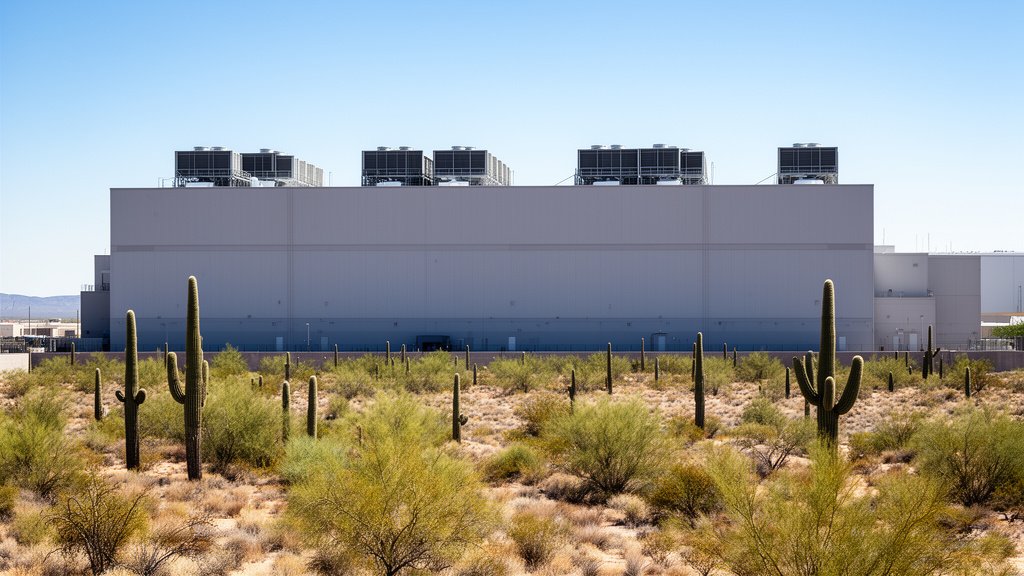
The City of Tucson has officially taken a stand on the digital infrastructure boom. Following a decisive 6-1 vote by the Mayor and Council, the city has enacted a robust set of regulations designed to govern the development, operation, and environmental footprint of large-scale data centers. As these facilities—the silent engines powering global streaming services, cloud computing, and the rapidly expanding artificial intelligence sector—seek to find new homes, Tucson’s new ordinance provides a blueprint for how municipalities can balance the economic allure of tech infrastructure with the practical realities of urban planning, noise control, and resource management.
The Mechanics of the Ordinance
The approved regulatory framework is not an outright ban on data centers, but rather a sophisticated tightening of the rules governing their presence within city limits. At the heart of the legislation are stringent requirements regarding land use and site design. Data centers are often perceived as ‘black boxes’—vast, windowless, industrial buildings that generate significant heat and ambient noise. The new code requires developers to adhere to rigorous buffering standards, ensuring these massive facilities do not impose intrusive visual or auditory disturbances on surrounding neighborhoods.
Specifically, the council has mandated that new proposals undergo a more rigorous site planning process. This includes detailed acoustic studies to mitigate the hum of HVAC systems and backup generators—a frequent complaint from residents in other municipalities. Furthermore, the legislation necessitates that developers provide clear disclosure regarding their energy usage and cooling mechanisms, acknowledging that these facilities function as critical back-end infrastructure for modern digital consumption.
Cooling in the Desert: The Water Consumption Paradox
Perhaps the most controversial aspect of data center development in a desert climate like Tucson is the intense water consumption required for cooling systems. Large-scale facilities often rely on evaporative cooling, which can place a strain on local water supplies. By requiring energy and utility disclosures, the City of Tucson is compelling developers to be transparent about their resource management strategies. This is a critical secondary angle: as climate change impacts water availability in the Southwest, municipal oversight on utility-heavy industries becomes a matter of public policy survival rather than just administrative red tape.
This regulatory focus serves as a preemptive measure to ensure that tech infrastructure does not compromise the city’s long-term sustainability goals. The council’s vote reflects a growing consensus among urban planners that data centers should not be treated as generic light-industrial projects. Instead, they are being categorized as a distinct class of infrastructure that requires unique oversight, particularly regarding their intersection with critical utilities.
Zoning, Noise, and Neighborhood Preservation
The intersection of industrial zoning and residential quality of life has long been a flashpoint in Tucson politics. The 6-1 vote signals that while the city welcomes economic development, it will not do so at the expense of residential tranquility. The noise ordinance component of the new regulations is particularly significant. Data centers operate 24/7, with constant server activity and cooling systems running at full capacity. The new mandate requires developers to implement advanced sound-dampening technology and site layouts that orient noise-producing equipment away from property lines adjacent to residential areas.
For local residents, this move provides a sense of security against the ‘industrial creep’ that has plagued other rapidly growing metropolitan areas. It establishes a standard that developers must meet before ground is broken, rather than reacting to complaints after the facility is already online. By front-loading these requirements into the zoning code, Tucson is effectively shifting the burden of mitigation back to the private sector.
Economic Implications and Strategic Infrastructure
From a macroeconomic perspective, the presence of data centers can be a double-edged sword. They bring tax revenue, high-paying technical jobs, and upgraded fiber-optic connectivity to a region. However, they also create relatively few jobs once the construction phase is complete, as modern data centers are highly automated. Tucson’s council is clearly calculating that the economic benefits—if properly regulated—outweigh the costs, provided the negative externalities are strictly contained.
This strategic approach positions Tucson as a smart-growth city. Instead of trying to attract tech companies at any cost, the city is signaling that it is a mature, discerning environment for investment. Tech giants and data center developers often prefer regulatory certainty over the ‘wild west’ approach. By codifying these rules, Tucson may actually be making itself more attractive to high-tier developers who are willing to adhere to clear standards, while filtering out speculative projects that might cut corners on environmental or noise protections.
Looking ahead, the city’s ability to enforce these regulations will be the next test. The 6-1 vote provides the legal teeth necessary to hold operators accountable, but the actual implementation will depend on ongoing monitoring and the city’s planning department’s capability to oversee such complex developments. As the digital economy continues to integrate into every facet of daily life, Tucson’s regulatory framework offers a template that other cities in the path of ‘data sprawl’ would do well to study.
FAQ: People Also Ask
Why did the Tucson City Council feel it was necessary to pass these regulations now?
The council acted in response to the growing global demand for data infrastructure driven by streaming services and AI, which has led to a surge in site proposals. Without specific regulations, the city risked having generic industrial zoning codes applied to facilities that require significantly more energy, water, and have different noise profiles than traditional warehouses.
Does this vote effectively stop new data centers from coming to Tucson?
No. The regulations are intended to manage development, not halt it. By establishing clear guidelines for noise, land use, and energy disclosure, the city is creating a predictable environment for developers who are willing to operate responsibly and sustainably within the community.
What are the specific ‘energy disclosure’ requirements mentioned?
While the exact reporting mechanics depend on the specific code amendments, the intent is for operators to be transparent about their projected energy demand and water consumption. This allows the city and utility providers to plan effectively for infrastructure upgrades and ensures the facility’s operations align with the city’s environmental sustainability targets.