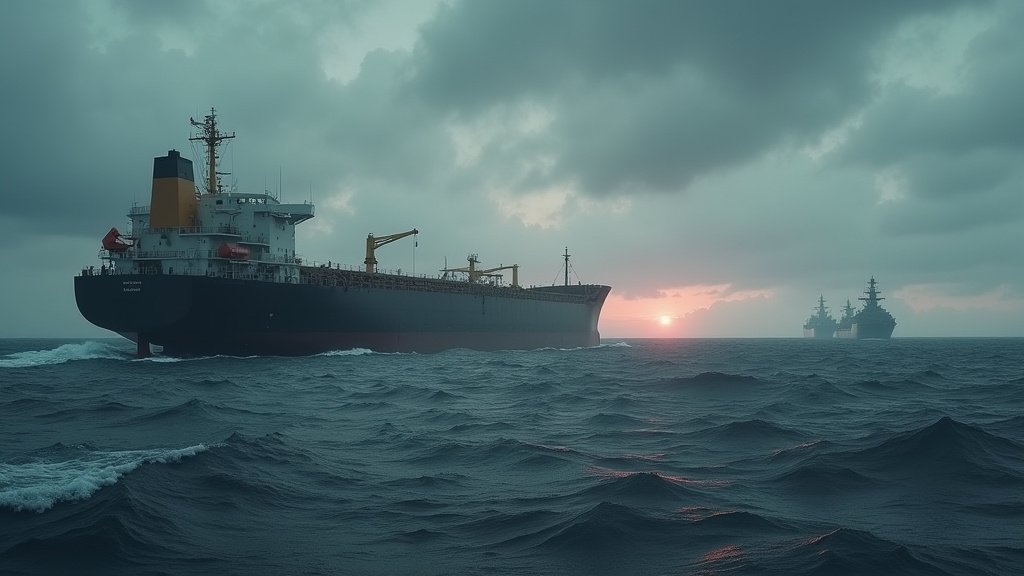
Former President Donald Trump issued a stark warning to Iran, threatening swift and severe retaliation should the nation target commercial shipping tankers in the Persian Gulf. The former commander-in-chief, speaking at a campaign rally, asserted that any such aggression would be met with a forceful response, implying military action.
Key Highlights:
- Trump declared that Iran targeting tankers would provoke a strong US response.
- The warning comes amidst ongoing tensions and concerns over maritime security in the Strait of Hormuz.
- Former President Trump’s remarks suggest a potential shift in US foreign policy towards Iran if he is re-elected.
- The threat highlights the volatile geopolitical landscape of the Middle East and its impact on global energy supplies.
Trump’s Hardline Stance on Iran’s Maritime Threats
Former President Donald Trump has escalated his rhetoric against Iran, directly addressing the nation’s alleged threats to disrupt shipping in the Strait of Hormuz. During a recent rally, Trump stated, “If they do anything with our great tankers, we’re going to hit them with a tremendous amount of force. We’re going to set a tremendous fire.” This strong language signals a potentially aggressive foreign policy posture should he regain the presidency, aiming to deter Iranian actions that could destabilize regional oil supplies and international trade routes.
Geopolitical Tensions in the Persian Gulf
The Persian Gulf, and specifically the Strait of Hormuz, is a critical chokepoint for global oil transportation. Iran has previously threatened to close the strait or disrupt shipping, leading to heightened tensions with the United States and its allies. These threats are often viewed as leverage in response to international sanctions or political disputes. Trump’s warning underscores the delicate balance of power in the region and the potential for miscalculation to lead to wider conflict. The international community closely monitors these developments due to their significant impact on global energy markets and economic stability.
Economic Ramifications of Maritime Disruption
Any disruption to tanker traffic in the Strait of Hormuz would have immediate and severe global economic consequences. Oil prices would likely surge as supply concerns mount, potentially triggering inflation and impacting economies worldwide. The shipping industry, a cornerstone of global commerce, would face increased insurance costs and operational risks. Furthermore, such disruptions could impact the supply chains of numerous industries reliant on the steady flow of oil and gas, from manufacturing to transportation. Trump’s emphasis on protecting tanker traffic highlights the economic dimension of this geopolitical standoff.
Historical Context of US-Iran Maritime Clashes
The US and Iran have a long history of naval confrontations and standoffs in the Persian Gulf. Incidents involving commercial shipping, including alleged mine attacks and seizures of vessels, have occurred periodically over the past decades. The US Navy frequently operates in the region to ensure freedom of navigation and deter Iranian aggression. Previous administrations have employed a mix of diplomatic pressure, sanctions, and military presence to manage these tensions. Trump’s assertive tone suggests a potential return to a more confrontational approach, reminiscent of his previous term’s policies.
FAQ: People Also Ask
What are the primary concerns regarding Iran and tanker traffic?
The main concerns revolve around Iran’s potential to disrupt global oil supplies by attacking or harassing commercial shipping tankers in vital waterways like the Strait of Hormuz, which could lead to escalating geopolitical tensions and economic instability.
What is the significance of the Strait of Hormuz?
The Strait of Hormuz is one of the world’s most important oil transit points, connecting the Persian Gulf to the open ocean. Approximately one-third of the world’s seaborne oil passes through it, making it strategically crucial for global energy security.
What kind of response did Trump threaten against Iran?
Former President Trump threatened a “tremendous amount of force” and to “set a tremendous fire” if Iran were to target commercial shipping tankers.
How have past US administrations dealt with Iran’s maritime threats?
Past administrations have typically used a combination of economic sanctions, diplomatic pressure, and maintaining a strong naval presence in the region to deter Iran and ensure freedom of navigation.
What are the potential economic consequences of a tanker attack in the Strait of Hormuz?
An attack could lead to a significant surge in global oil prices, increased inflation, disruption of supply chains, higher shipping insurance costs, and broader economic instability.