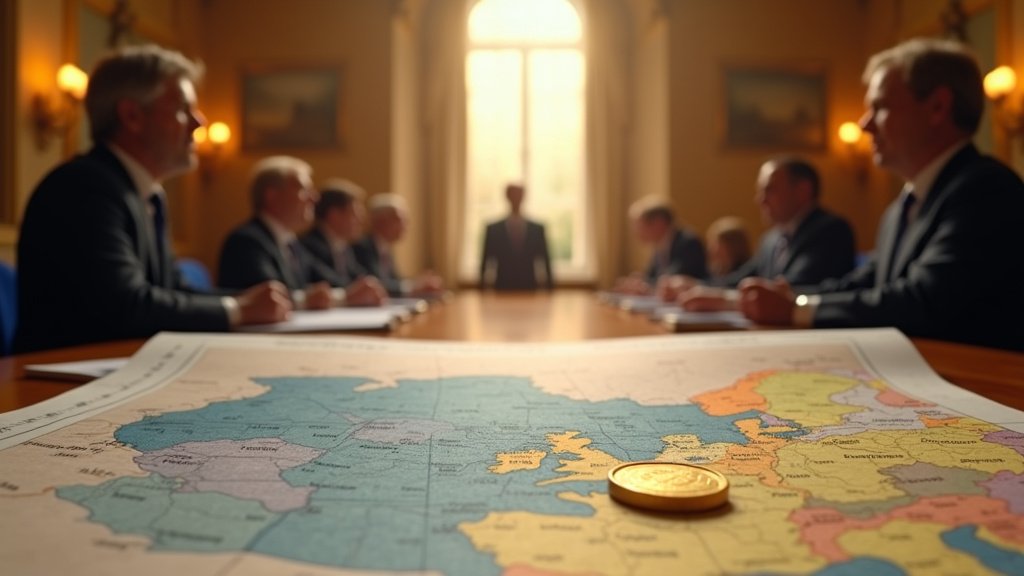
Former President Donald Trump has indicated that the United States and Iran are moving closer to a peace agreement, though he cautioned that significant obstacles still impede a final resolution. The remarks suggest a potential shift in diplomatic efforts, with Trump positioning himself as a key player in mediating a deal.
Key Highlights:
- Trump stated that the U.S. and Iran are nearing a peace deal.
- He acknowledged that substantial obstacles remain.
- The remarks signal a potential diplomatic breakthrough.
- Trump has previously taken a hard line against Iran.
Diplomatic Overtures and Lingering Challenges
Former President Donald Trump’s recent statements regarding a potential peace deal between the United States and Iran have drawn considerable attention, given the complex and often adversarial history between the two nations. Trump, speaking in a tone that suggested cautious optimism, revealed that significant progress has been made, bringing both sides closer to an agreement. However, he was quick to temper expectations by emphasizing that “obstacles remain,” a phrase that hints at the deep-seated issues that continue to complicate any resolution.
Historical Context of US-Iran Relations
The relationship between the United States and Iran has been fraught with tension since the Iranian Revolution in 1979. The U.S. has historically viewed Iran’s regional policies and its nuclear program with deep suspicion, leading to a series of sanctions and diplomatic standoffs. Trump’s administration, in particular, adopted a policy of “maximum pressure,” withdrawing from the Joint Comprehensive Plan of Action (JCPOA) in 2018 and reimposing stringent economic sanctions. This period was marked by heightened rhetoric and several near-confrontational incidents in the Persian Gulf.
Trump’s Evolving Stance
Trump’s current remarks appear to represent a departure from his previous “maximum pressure” strategy. While he has consistently advocated for a strong stance against Iran, his suggestion of nearing a peace deal implies a willingness to engage in direct or indirect negotiations. This shift could be interpreted in several ways: perhaps a strategic recalibration of foreign policy objectives, or a reflection of perceived shifts in Iran’s own posture. The specifics of what constitutes “progress” and the nature of the “obstacles” have not been detailed, leaving room for speculation about the core issues being addressed, which likely include Iran’s nuclear ambitions, its regional influence, and the lifting of sanctions.
Potential Obstacles to a Deal
Despite the optimistic tone, the path to a lasting peace agreement is undoubtedly laden with challenges. Key among these is Iran’s ballistic missile program and its support for regional proxy groups, issues that have been major sticking points in past negotiations. Furthermore, any deal brokered under Trump’s influence would need to navigate the complexities of international diplomacy, particularly concerning the stance of current U.S. administration and key European allies who were signatories to the original JCPOA. The internal political dynamics within both Iran and the United States also play a crucial role, as any agreement would require significant buy-in and long-term commitment to be sustainable.
FAQ: People Also Ask
What did Trump say about a US-Iran peace deal?
Donald Trump stated that the U.S. and Iran are nearing a peace deal, but also acknowledged that significant obstacles still exist.
What are the main obstacles in US-Iran relations?
Major obstacles include Iran’s nuclear program, its ballistic missile development, its regional influence, and support for proxy groups. The lifting of economic sanctions is also a key point of contention.
Did Trump withdraw the US from the Iran nuclear deal?
Yes, the Trump administration withdrew the United States from the Joint Comprehensive Plan of Action (JCPOA), commonly known as the Iran nuclear deal, in May 2018.
What was the “maximum pressure” policy?
The “maximum pressure” policy was implemented by the Trump administration to isolate Iran economically and diplomatically, aiming to force concessions on its nuclear program and other activities through stringent sanctions.
What is the current status of US-Iran relations?
Relations remain strained, characterized by sanctions and geopolitical tensions. While there have been indirect communications and occasional de-escalation efforts, a comprehensive diplomatic breakthrough has not been achieved under the current administration.