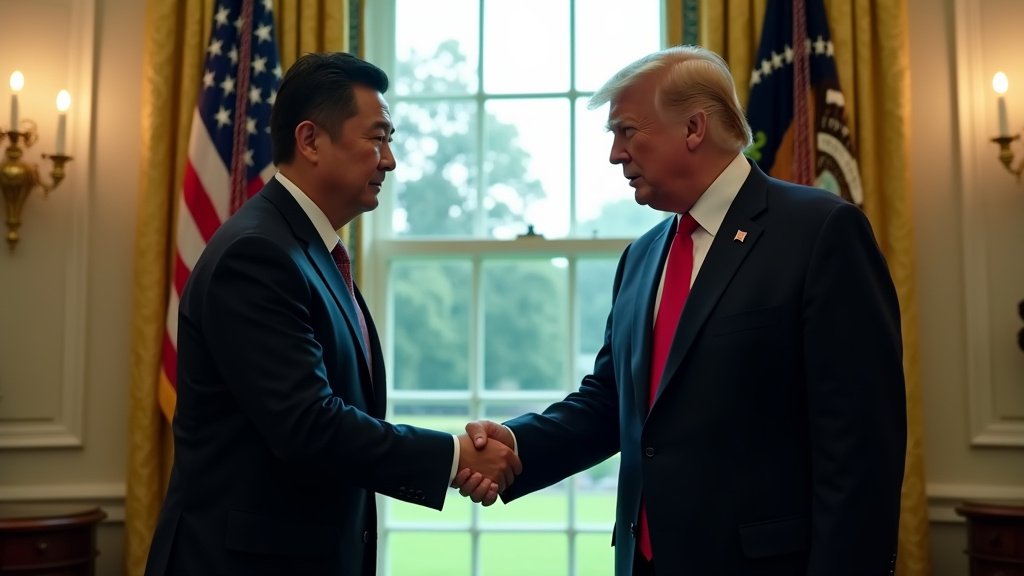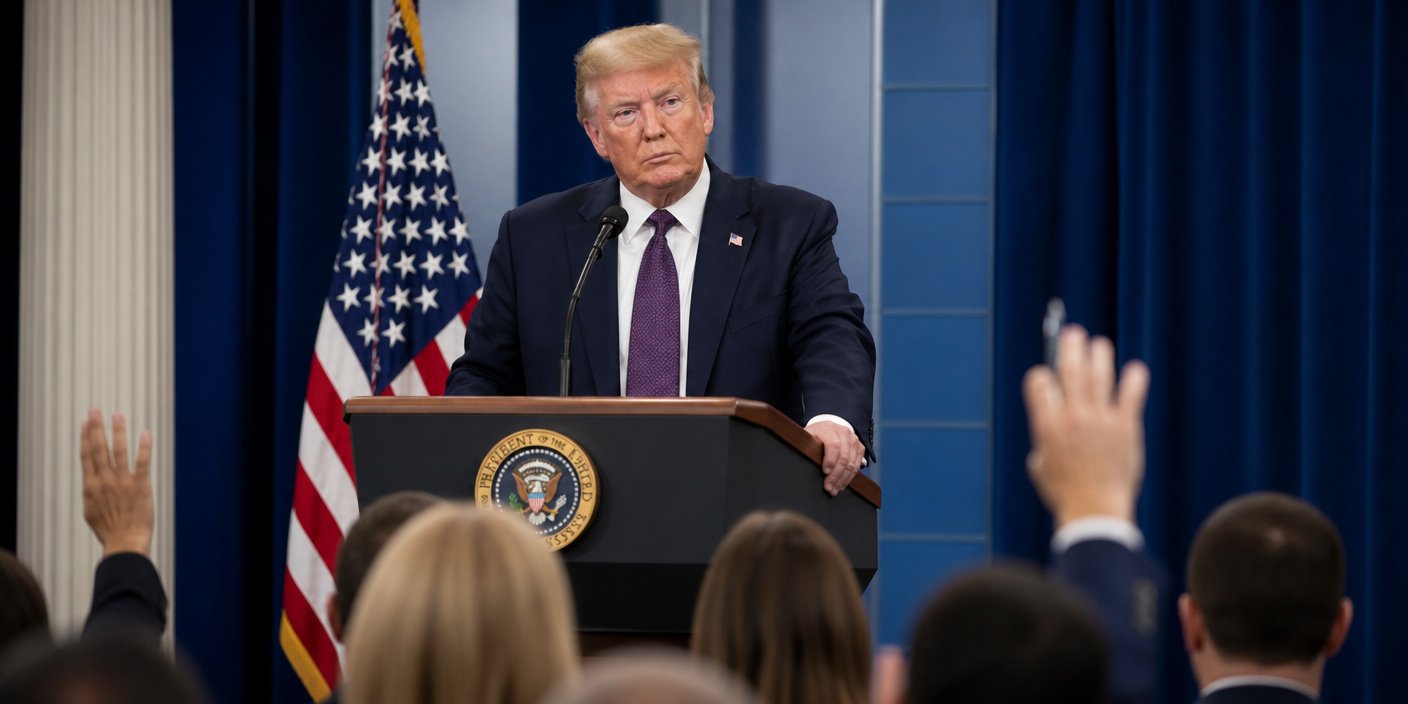
President Donald Trump has officially halted a planned military response against Iranian forces, opting instead to prioritize a diplomatic framework aimed at de-escalating the growing nuclear tensions and ensuring the safety of maritime transit through the Strait of Hormuz. The decision marks a critical turning point in Middle Eastern foreign policy, shifting the focus from kinetic military strikes to a negotiated settlement that seeks to balance national security interests with regional economic stability. By stepping back from the brink of conflict, the administration has signaled that while the military option remains on the table, the immediate priority is the establishment of a tangible peace agreement that addresses the root causes of the friction.
Key Highlights
- Military Pause: President Trump ordered a cessation of planned retaliatory strikes, favoring a diplomatic window to resolve the current standoff.
- Strategic Objectives: The proposed framework is designed to curb Iran’s nuclear development while guaranteeing the reopening and safety of the Strait of Hormuz.
- Economic Impact: Stabilizing the region is paramount for global oil markets, as the Strait serves as a vital chokepoint for roughly 20% of the world’s petroleum supply.
- Shift in Doctrine: The decision highlights a preference for back-channel negotiations and leverage-based diplomacy over direct military engagement in the Persian Gulf.
Diplomacy Over Conflict: The Strategic Pivot
The decision to pull back from a military offensive represents a complex calculation by the Trump administration, balancing the necessity of a forceful deterrent against the potential for an uncontrollable regional escalation. For days, the rhetoric had been escalating, with both sides mobilizing assets and intelligence briefings indicating an imminent clash. However, the pivot to a diplomatic framework suggests that intelligence gathering provided not just tactical updates, but also channels for communication that the White House deemed viable. This shift reflects a broader, albeit controversial, ‘maximum pressure’ campaign that seeks to bring Iran to the negotiating table not by destroying its infrastructure, but by squeezing its economy to the point where a diplomatic exit becomes the most logical path forward for Tehran.
The Strait of Hormuz: A Global Economic Chokepoint
Central to this crisis is the Strait of Hormuz, arguably the most important maritime oil chokepoint on Earth. A conflict in this region would not merely be a localized skirmish; it would threaten to spike global energy prices and disrupt supply chains that are already fragile. The administration’s focus on this specific geographic location indicates that the proposed peace deal is likely focused on guaranteeing safe passage for commercial tankers. If the framework succeeds in de-militarizing the transit corridors of the Persian Gulf, it would represent a significant win for global markets. However, critics argue that such agreements are often temporary, serving as a pause in hostilities rather than a permanent solution to the fundamental friction between the United States and Iran regarding their respective regional ambitions.
Assessing the Framework: The Challenges Ahead
While the halt in hostilities is welcomed by many, the details of the proposed ‘deal’ remain opaque. The history of the Iran nuclear negotiations—specifically the struggle to replace or amend the Joint Comprehensive Plan of Action (JCPOA)—demonstrates that bridging the gap between Washington’s demands for total transparency and Tehran’s desire for sovereignty is an immense challenge. The current framework likely involves a phased approach: sanctions relief in exchange for verifiable curtailment of nuclear enrichment activities. However, the political reality is that both the United States and Iran are operating under intense domestic pressure. Trump must show strength to his base, while the Iranian leadership must avoid the appearance of capitulation to Western demands. Navigating this paradox requires a highly sophisticated diplomatic ballet that few administrations have mastered.
Long-Term Implications for Regional Security
Looking beyond the immediate de-escalation, the incident raises profound questions about the nature of modern Middle Eastern security architecture. The reliance on executive authority to initiate or halt major military operations highlights the vulnerability of the current system to rapid, potentially volatile shifts in decision-making. If this current framework for peace holds, it could pave the way for a regional security dialogue that includes not just the U.S. and Iran, but also Gulf Cooperation Council (GCC) partners. Conversely, if the framework fails, it may prove that the era of conventional diplomacy has reached its limits, pushing the region into a more precarious, gray-zone conflict where traditional deterrence metrics no longer apply. The coming weeks will be a litmus test for whether this pause is merely a tactical retreat or the beginning of a meaningful thaw in one of the world’s most enduring geopolitical stalemates.
FAQ: People Also Ask
1. Why did the U.S. decide to halt the strikes against Iran?
President Trump halted the strikes to pursue a diplomatic framework that he believes offers a better chance of resolving nuclear proliferation concerns and securing the Strait of Hormuz without the risks associated with full-scale military conflict.
2. What is the significance of the Strait of Hormuz in this conflict?
The Strait of Hormuz is a narrow waterway connecting the Persian Gulf to the Gulf of Oman. It is a critical global chokepoint, with approximately 20% of the world’s total petroleum supply passing through it daily. Any threat to this lane has immediate consequences for global oil prices and economic stability.
3. Does this deal replace the previous Iran Nuclear Deal (JCPOA)?
The administration’s current approach aims to create a new framework that addresses the flaws they perceived in the JCPOA. While it shares the same goal of preventing nuclear armament, it operates under a different strategic logic and demands different criteria for compliance and verification.
4. What happens if the proposed framework for peace fails?
Should diplomatic efforts falter, the administration has signaled that the military option remains a credible and available alternative. The pause should be viewed as a window for negotiation, not a permanent renunciation of the right to use force to protect U.S. interests.