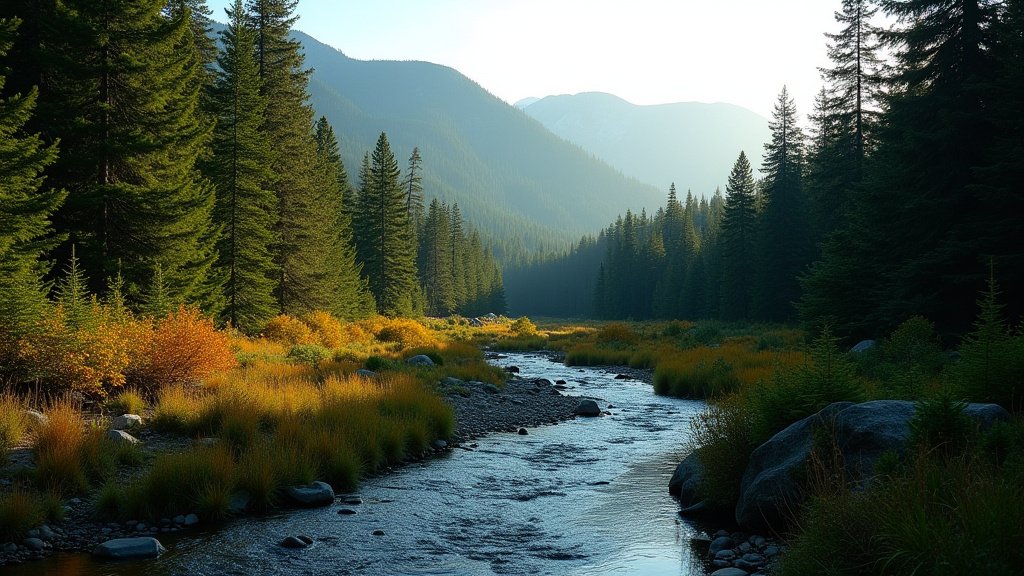
Public lands in the United States stand at a critical crossroads, facing a philosophical and legislative tug-of-war between those who view them as economic assets to be liquidated and those who define them as the foundational heritage of the American public. In a compelling recent commentary, Jeff Blackwood has emerged as a vocal critic of the growing movement to shift management of national forests from federal oversight to state-level control. This debate is not merely about administrative jurisdiction; it is a fundamental challenge to the Public Trust Doctrine, which holds that certain resources are preserved for public use and should be protected by the government for all generations. Blackwood’s critique underscores a growing apprehension that “state-level management” is often a thin veil for eventual privatization, resource extraction, and the permanent restriction of public access to what has historically been common ground.
Key Highlights
- The Privatization Risk: Critics like Jeff Blackwood argue that shifting national forest management to state entities creates a “slippery slope” toward privatization, where short-term revenue goals prioritize logging and drilling over conservation.
- The Economic Illusion: While proponents argue that state management increases efficiency, federal data suggests that federal lands provide substantial, often undervalued, ecosystem services worth billions annually in water filtration, carbon sequestration, and outdoor recreation.
- Statutory Protection: The Federal Land Policy and Management Act (FLPMA) serves as a primary legal check against the wholesale transfer of public lands, requiring that these assets remain under the management of the Bureau of Land Management (BLM) and the U.S. Forest Service (USFS).
- The Public Trust Doctrine: At the heart of the debate is the principle that public land is a non-fungible national asset that belongs to all citizens, not just those living within specific state borders.
The Sovereignty of Public Land: A Constitutional Tension
The fundamental premise of Jeff Blackwood’s critique is that public lands are not merely real estate; they are the physical manifestation of the American social contract. When the federal government holds land in trust, it operates under a mandate to balance multiple-use—a concept defined in the Federal Land Policy and Management Act of 1976 (FLPMA). This act mandates that public lands be managed in a manner that protects the quality of scientific, scenic, historical, ecological, environmental, air, and atmospheric, water resource, and archaeological values.
Blackwood points out that state governments, by contrast, are often structurally incentivized to favor short-term budgetary gains. State land boards and departments are frequently constitutionally mandated to generate revenue for specific beneficiaries, such as public schools or state infrastructure funds. When these pressures are applied to the vast, diverse ecosystems of national forests, the resulting management decisions often prioritize timber sales, grazing rights, and mineral leasing over the long-term biological health of the landscape. This divergence in mission—federal stewardship versus state revenue generation—is where the conflict intensifies.
The Historical and Legal Context of Federal Stewardship
The American system of public lands is not an accident of history; it is the result of over a century of policy decisions designed to prevent the monopolization of natural resources. Following the era of rapid westward expansion and the often-unchecked resource extraction of the 19th century, the U.S. government shifted toward a conservation model. The establishment of the U.S. Forest Service and the later implementation of the Wilderness Act of 1964 codified the idea that certain lands should remain wild and accessible to the public regardless of their commercial value.
Critics of federal management often cite the “bureaucratic inefficiency” of Washington, D.C., as a justification for transferring control to state capitals. However, legal scholars note that states often lack the financial resources to combat the massive costs associated with wildfire suppression, invasive species management, and infrastructure maintenance on such a vast scale. When state budgets face tightening, the first assets to be liquidated are often those “held in public trust,” leading to parcel-by-parcel sales to private developers. Blackwood’s argument aligns with this reality: once public land is sold or transferred to private hands, it is effectively removed from the public commons forever.
The Economic Fallacy of Resource Extraction
Proponents of land transfer often frame their arguments around an economic “value-add,” suggesting that local control will unleash untapped commercial potential. However, this perspective ignores the massive economic engine provided by the recreation and tourism industries. According to data from the Outdoor Industry Association and various federal reports, the outdoor recreation economy accounts for billions of dollars in annual GDP and supports millions of jobs.
When national forests are managed for extractive industries—such as mining, oil, and gas—the localized economic benefit is often outweighed by the long-term costs of environmental degradation. Water contamination, the loss of tourism appeal due to clear-cutting, and the degradation of critical wildlife habitats can have profound negative impacts on local communities that rely on public lands for non-extractive economic activities. Blackwood’s commentary emphasizes that the “economic commodity” view is short-sighted, failing to account for the ecosystem services—such as clean water production and carbon storage—that are essential to a functioning economy and society.
Future Predictions and the Resilience of Public Assets
Looking ahead, the pressure to privatize or transfer public lands is likely to intensify as global resource scarcity increases. As the value of timber, minerals, and water rises, so too will the legislative efforts to gain control over the federal lands that contain them. However, there is a counter-movement gaining momentum. Public advocacy groups, conservation organizations, and a growing segment of the American public are increasingly vocal about the need to protect these assets.
Future legislative battles will likely center on strengthening the federal mandate to prioritize long-term ecological health over immediate resource extraction. Blackwood’s perspective serves as a rallying cry for citizens to remain vigilant. The future of the American backcountry depends on recognizing that the true value of public land is not found in a ledger of immediate extraction profits, but in its permanence as an anchor for the nation’s environmental health and civic character. As climate change continues to stress ecosystems, the role of federal land as a climate buffer and biodiversity refuge will only become more critical, making the protection of these lands not just a political issue, but a survival imperative.
FAQ: People Also Ask
Q: What is the primary difference between federal and state land management?
A: Federal management, governed by acts like FLPMA, typically follows a ‘multiple-use’ mandate that requires balancing conservation, recreation, and industry. State management is often legally bound to generate revenue for specific state trusts (like education funds), which frequently drives a focus on short-term resource extraction.
Q: Why do critics argue that state control leads to privatization?
A: Critics argue that states lack the tax base to manage large tracts of land during economic downturns. Consequently, to balance budgets or avoid rising management costs, states are statistically more likely to sell or lease land to private developers, which permanently removes it from the public domain.
Q: Are public lands currently for sale?
A: Generally, no. However, federal laws allow for the ‘disposal’ of land deemed no longer necessary for federal purposes. Critics fear that a shift in political and administrative control could redefine what is ‘necessary,’ leading to a broad-scale divestment of public property.
Q: How does the Public Trust Doctrine protect these lands?
A: The Public Trust Doctrine is a legal principle asserting that certain natural resources are preserved for public use and that the government, as trustee, has a fiduciary duty to protect these resources for the benefit of all citizens, current and future, rather than for private profit.