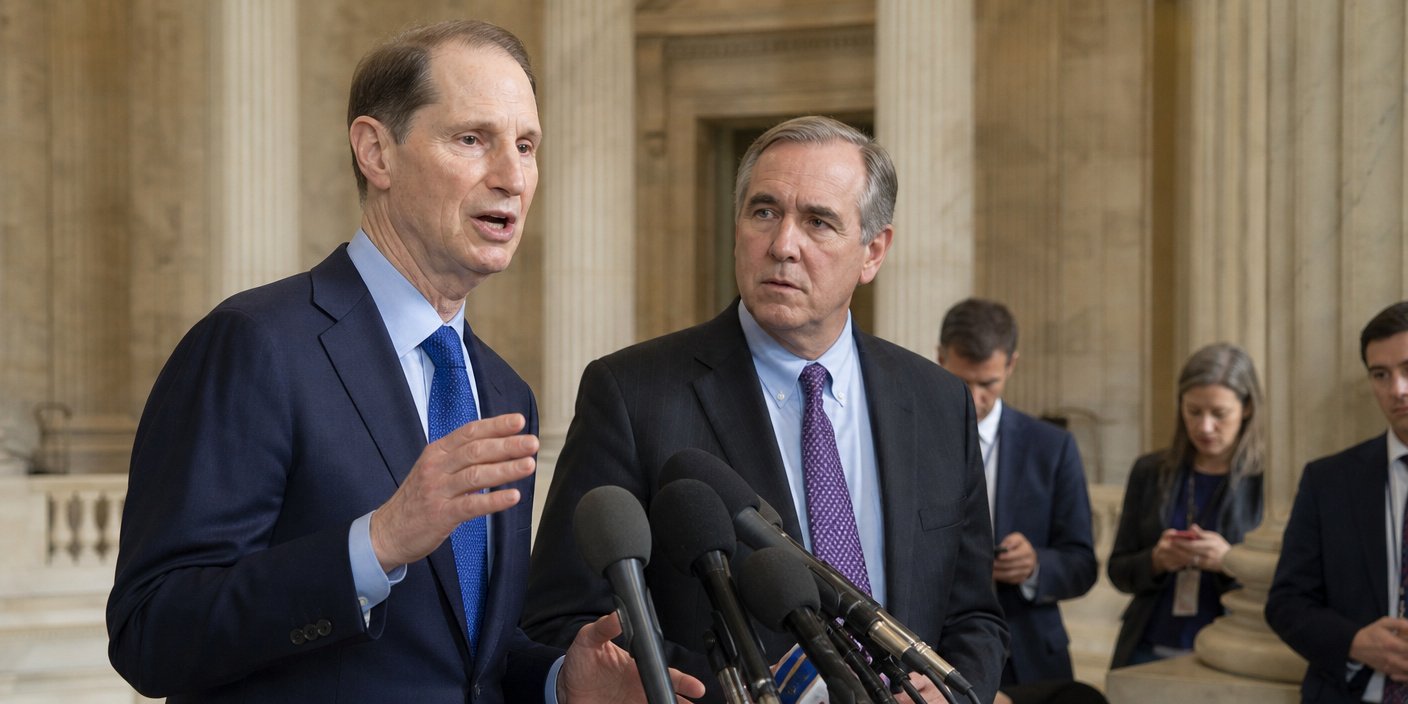
Oregon’s U.S. Senators, Ron Wyden and Jeff Merkley, have solidified their positions as the primary architects of aggressive ‘tax the rich’ legislative proposals in the United States, aiming to fundamentally reshape how the federal government treats accumulated wealth. While the debate over taxing the super-rich often remains rhetorical, Wyden, serving as Chair of the Senate Finance Committee, has moved beyond political discourse to draft concrete, technically complex legislative mechanisms designed to close long-standing loopholes that have allowed the nation’s wealthiest households to defer—and often avoid—income taxes on massive gains.
Key Highlights
- The Billionaires Income Tax: Sen. Ron Wyden’s flagship proposal seeks to tax unrealized capital gains for households with over $1 billion in assets or $100 million in income for three consecutive years.
- Closing the ‘Buy, Borrow, Die’ Loophole: The legislation explicitly targets the strategy of borrowing against appreciated assets to fund living expenses without triggering capital gains taxes, a tactic widely utilized by the ultra-wealthy.
- Structural Economic Shift: The proposal represents a pivot from taxing labor-based income toward taxing capital-based growth, addressing the widening gap between the growth of assets and wages.
- Legislative Hurdles: Despite the policy clarity of the proposals, both senators face significant opposition regarding the constitutionality of taxing unrealized gains and the potential impact on market liquidity.
The Legislative Frontier: Decoding the Wealth-Based Tax Shift
For decades, the American tax system has been predicated on the realization principle: you pay taxes on income only when you sell an asset. However, Oregon’s Senate delegation argues that this principle has been weaponized by the ultra-wealthy. By holding assets until death—at which point the cost basis of those assets is ‘stepped up’ to fair market value—the wealthiest Americans can pass down fortunes while effectively wiping out decades of capital gains tax liability.
The Mechanics of the Wyden Plan
At the center of this legislative effort is the ‘Billionaires Income Tax,’ a policy framework crafted by Senator Ron Wyden. Unlike a traditional wealth tax, which levies an annual percentage on a person’s total net worth, Wyden’s approach focuses on tradable assets. The proposal requires that billionaires pay taxes annually on the gains of their liquid assets, such as stocks and bonds, regardless of whether they have sold them.
This specific design is intended to satisfy potential constitutional challenges. By treating unrealized gains as taxable income for this narrow slice of the population—estimated to include fewer than 1,000 households nationwide—the policy seeks to bypass the complexities of valuing non-liquid assets like real estate or private equity, which have historically plagued wealth tax proposals in other jurisdictions.
The ‘Buy, Borrow, Die’ Strategy
Senator Jeff Merkley has frequently highlighted the disparity in how the tax code treats the average wage earner compared to the billionaire class. The ‘buy, borrow, die’ strategy, which Merkley and Wyden actively seek to dismantle, is the target of their reform. In this scenario, an ultra-wealthy individual buys assets (stocks, real estate), borrows money against those assets at low-interest rates to fund their lifestyle (bypassing the need to sell assets and trigger taxes), and eventually passes the assets to heirs, who receive the step-up in basis.
By requiring annual taxation of gains, the Wyden-Merkley framework aims to neutralize the tax incentive for this cycle. If the unrealized gains are taxed as they accrue, the incentive to hold assets indefinitely purely for tax avoidance purposes is significantly diminished.
Economic Implications: Liquidity and Investment
Critics of the Oregon-led proposals, including several prominent economists and business groups, argue that taxing unrealized gains could wreak havoc on capital markets. The primary concern is liquidity: if a billionaire is forced to sell stock to pay a tax bill on ‘paper gains’ that have not been converted to cash, it could force market volatility and disrupt long-term investment strategies.
However, proponents, including the senators’ offices, counter that the proposals are carefully calibrated to affect only the most liquid portfolios. They argue that the current system effectively subsidizes the ultra-wealthy, forcing the burden of federal revenue onto the middle class, whose income is primarily derived from labor—which is taxed at much higher rates than long-term capital gains.
The Political Calculus in a Divided Congress
While the ‘tax the rich’ platform is popular with the Democratic base, the path to passage remains steep. Senator Wyden, as Finance Chair, has the leverage to hold hearings and advance the bill through committee, but Senate-wide passage requires overcoming the filibuster.
Furthermore, the legislation must survive rigorous scrutiny regarding the 16th Amendment. While legal scholars remain divided, the Supreme Court’s involvement in cases regarding the Mandatory Repatriation Tax has created a window for debating whether the Constitution permits the taxation of unrealized gains. The outcome of these challenges will ultimately dictate the viability of the Oregon senators’ fiscal agenda.
FAQ: People Also Ask
1. Does the Billionaires Income Tax affect average taxpayers?
No. The proposal is strictly limited to households with more than $1 billion in assets or $100 million in annual income for three consecutive years. It is designed to capture only the absolute top tier of the nation’s wealth distribution.
2. What happens if an asset drops in value after tax is paid?
Legislative language for the proposal generally includes provisions for loss carrybacks, allowing taxpayers to offset future tax liabilities if the value of their assets declines after they have already paid taxes on previous gains.
3. Why is Oregon’s delegation specifically leading this?
Senator Ron Wyden chairs the Senate Finance Committee, giving him the unique legislative authority to draft and move tax code changes. Senator Jeff Merkley has established himself as a progressive voice on fiscal inequality, creating a potent duo in the Senate chamber.
4. Is this the same as a Wealth Tax?
A wealth tax is a flat tax on an individual’s total net worth. The Wyden proposal is an ‘income tax’ modification that treats unrealized gains as income for specific taxpayers, rather than a tax on the total principal of the wealth.