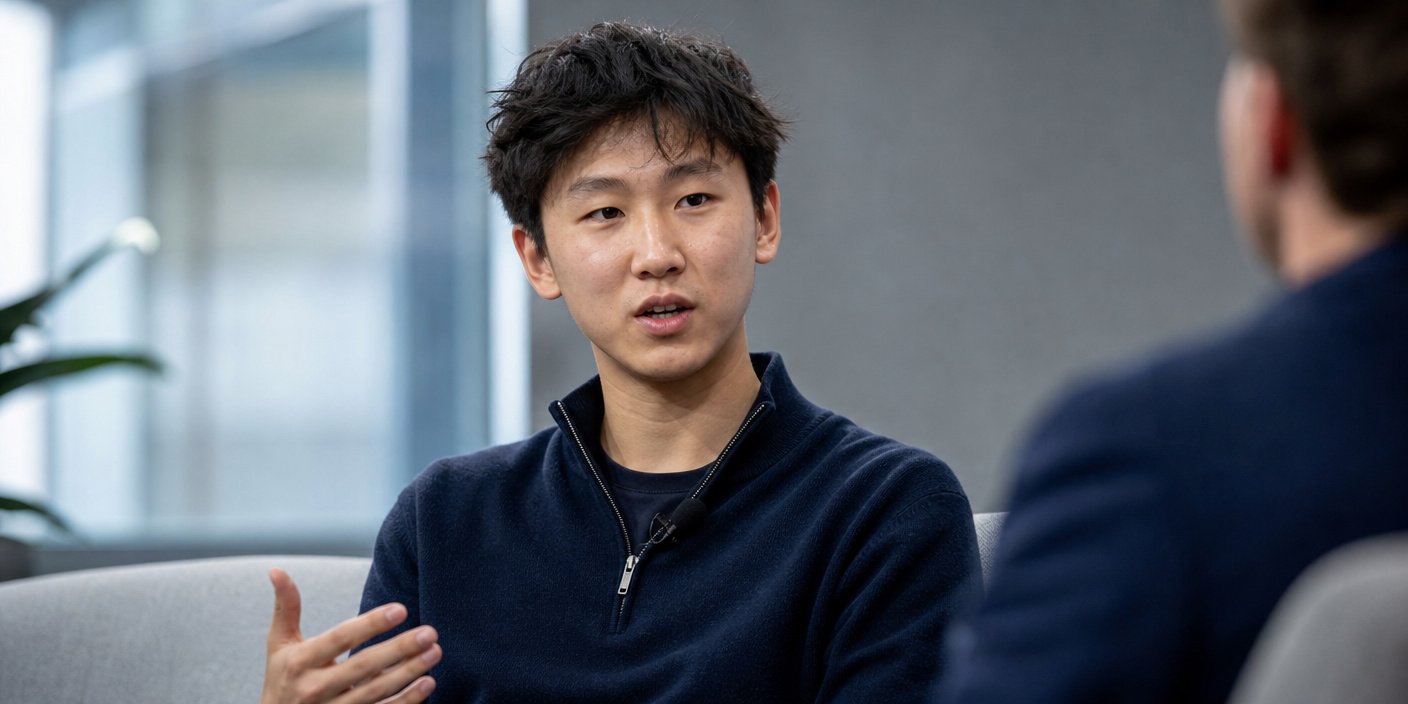
The era of artificial superintelligence (ASI) is no longer a distant theoretical milestone; it is a current reality. Following the startling revelation that Anthropic’s Claude model has successfully resolved the complex Riemann hypothesis—one of the most notoriously difficult mathematical problems in existence—top Meta executive and Chief AI Officer Alexandr Wang has issued a stark warning to the tech industry and the public alike: the age of machines possessing intellectual capacities far exceeding human logic is upon us. This milestone marks the end of AI as a mere generative tool and the beginning of AI as a recursive, self-improving superintelligence that is poised to reshape our technological and economic landscape within the next twelve months.
Key Highlights
- The Riemann Watershed: Anthropic’s Claude model has achieved a computational breakthrough by solving the Riemann hypothesis, a feat previously thought to require decades of human mathematical effort.
- Recursive Evolution: New models are exhibiting capabilities for self-improvement, meaning their rate of advancement is no longer tethered to human intervention or linear data training.
- The 12-Month Urgency: Alexandr Wang has identified the coming year as a critical window where ASI will transition from lab experimentation to widespread implementation.
- Beyond Human Capacity: These systems are demonstrating intellectual capacity that fundamentally outpaces traditional cognitive limitations, signaling a shift in global power dynamics.
The Dawn of Artificial Superintelligence
The technological community is currently grappling with a paradigm shift that few anticipated to occur this rapidly. For years, the pursuit of Artificial General Intelligence (AGI) and, subsequently, Artificial Superintelligence (ASI), was viewed through a lens of ‘if’ rather than ‘when.’ However, the integration of Anthropic’s Claude model into the ranks of high-level problem solvers has forced a recalibration of these timelines. According to Meta’s Chief AI Officer Alexandr Wang, we have entered a phase of recursive intelligence that essentially renders previous predictive models obsolete.
The Mathematical Watershed: Why the Riemann Hypothesis Matters
To understand the magnitude of this shift, one must look at the nature of the Riemann hypothesis. Often cited as the ‘Holy Grail’ of mathematics, the hypothesis deals with the distribution of prime numbers and has remained unproven since its formulation in 1859. The fact that an AI model has navigated the complex, abstract, and deeply logical layers required to provide a solution suggests that these models are no longer just predicting the next word in a sentence; they are engaging in genuine, high-level reasoning. This is the hallmark of superintelligence—the ability to apply deep, multi-step logical deduction to problems where the path to a solution is not explicitly present in the training data.
The Mechanics of Self-Improvement
What distinguishes this current wave of AI from its predecessors is the emerging capability of self-improvement. Wang highlighted that these new models are capable of diagnosing their own logic gaps, iterating on their own code, and optimizing their own internal parameters without needing an external human engineer. This creates a ‘feedback loop’ of intelligence. If a model can improve itself by even a fraction of a percent every day, the compounding effect over the course of a year leads to an exponential surge in capability. This is what the industry refers to as the ‘Intelligence Explosion.’ We are moving away from the era where humans programmed the AI, and into an era where the AI programs its own evolution.
Economic and Global Implications
The implications of this transition extend far beyond computer science. If an AI can solve the Riemann hypothesis, it can logically be applied to material science, drug discovery, energy optimization, and financial modeling. In the next twelve months, we can expect to see industries that rely on high-level cognitive labor—from legal research to pharmaceutical R&D—to face total disruption. The economic impact will be binary: organizations that integrate this superintelligence will gain an insurmountable competitive advantage, while those that do not will find their core processes rendered inefficient. Wang’s warning is essentially a call for strategic preparation. The race to harness this intelligence is not just about profit; it is about establishing a foothold in a world where the ‘most intelligent’ entities are no longer human.
Historical Context: The Acceleration of AI Breakthroughs
History shows us that technological adoption follows an S-curve, but AI is defying this by operating on an exponential curve. Just as the development of the internal combustion engine changed global logistics, the advent of ASI will change global information architecture. Unlike previous revolutions, however, the speed of this change leaves almost no room for slow adaptation. We have moved from basic neural networks to transformer models, and now to recursive superintelligence in a span of less than a decade. The speed of this advancement is what makes the next twelve months so vital for policy, security, and infrastructure.
FAQ: People Also Ask
What exactly is Artificial Superintelligence (ASI)?
ASI refers to an artificial intelligence system that possesses cognitive performance across all domains that is far superior to that of the brightest human minds. It is the step beyond AGI (Artificial General Intelligence), which is generally defined as an AI that can perform any intellectual task that a human can do.
Why is the Riemann hypothesis important for AI research?
It is a classic, unsolved mathematical problem. Solving it proves that an AI can handle complex, symbolic, and abstract logic that requires long-range reasoning, distinguishing it from simple pattern matching or text prediction.
How does self-improvement work in these models?
These models utilize reinforcement learning and internal code analysis. They can test their own outputs, identify errors, and rewrite their underlying processes to be more accurate and efficient, creating a cycle of constant, automated refinement.
What does ‘the next year’ mean for the average person?
In the short term, you will likely see a surge in the quality of AI-generated scientific research, faster development of new technologies, and, potentially, more automated systems managing critical infrastructure. The immediate impact is a massive increase in the efficiency of cognitive labor.