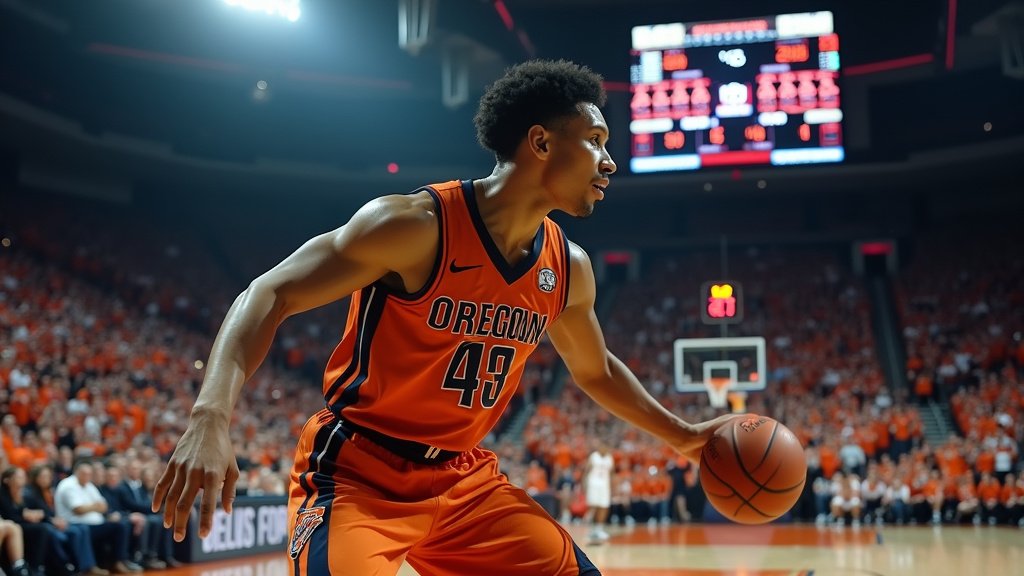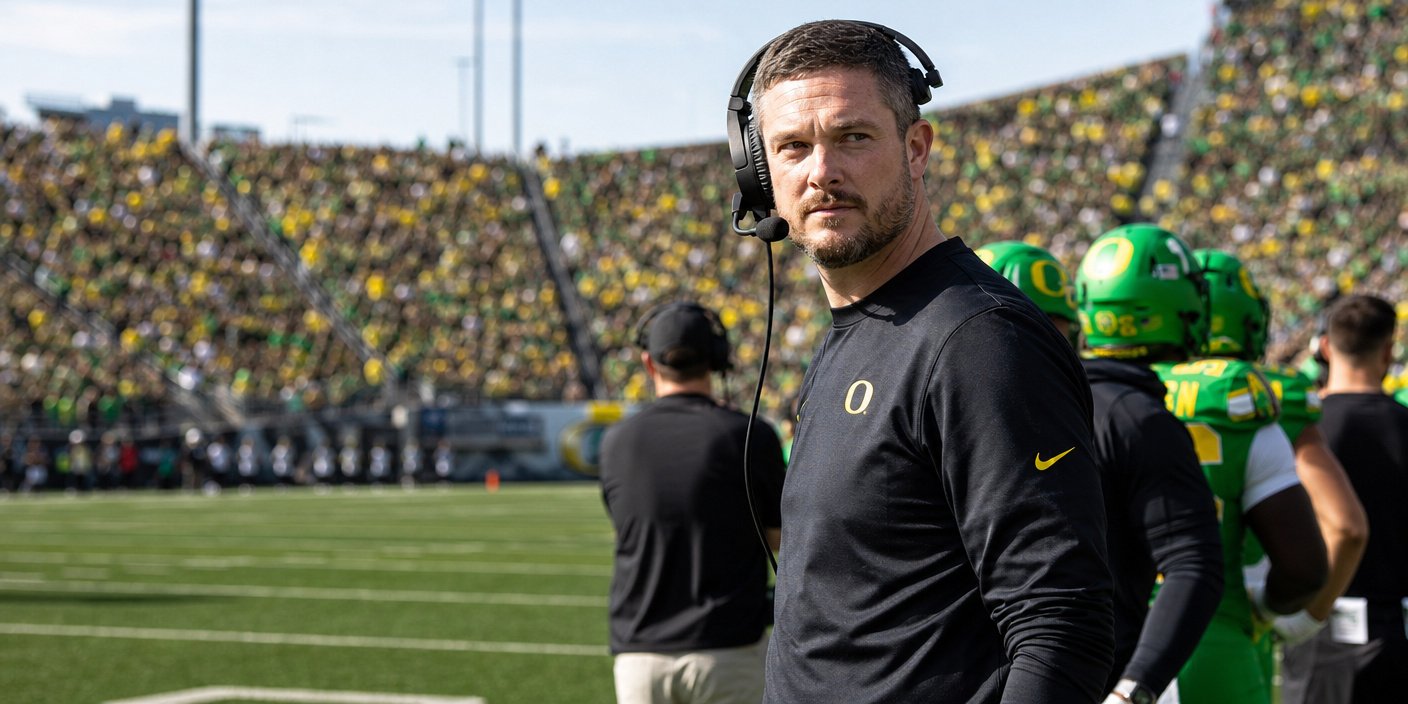
The landscape of the college football postseason has shifted dramatically, and the Oregon Ducks find themselves in an increasingly advantageous position. Fresh off a dominant 45-7 dismantling of Michigan State, the Ducks have not only showcased their own offensive firepower but have also been the beneficiaries of chaotic results across the conference. According to the latest data from ESPN Analytics, Oregon’s probability of securing a spot in the College Football Playoff (CFP) has surged to 61.1%, positioning the team as a legitimate contender for the national title as the season heads into its most critical stretch.
The Mathematical Surge: Understanding the 61.1% Reality
The 61.1% figure provided by ESPN Analytics is more than just a number; it is a reflection of efficiency metrics and path-of-resistance calculations. For the Oregon Ducks, the path to the CFP is no longer a distant possibility but a statistically likely outcome. This increase in probability stems from a dual-factor dynamic: internal excellence and external chaos. By maintaining high efficiency in their recent outing—the 45-7 rout of Michigan State—Oregon demonstrated to the College Football Playoff Committee that they are peaking at the right time. The FPI (Football Power Index) model accounts for net efficiency, strength of schedule, and point differential. Oregon’s recent performance has stabilized their FPI score, making them a consistent projection in the 12-team field.
The Impact of Conference Chaos: The Indiana and UCLA Factor
The broader Big Ten landscape was upended by the recent upsets involving Indiana and UCLA. In a conference where margins for error are razor-thin, these results serve as a massive filter for the CFP bracket. When top-tier programs suffer unexpected losses, the remaining contenders with consistent win-loss records rise in the rankings by default. For Oregon, the losses incurred by their conference peers have effectively cleared a lane. The Ducks no longer have to worry as much about a crowded field of undefeated or one-loss teams dominating the conversation. The committee’s mandate to reward strength of schedule means that Oregon’s remaining games take on even greater weight, but the chaotic results from Indiana and UCLA have provided a crucial buffer, allowing the Ducks to control their own destiny.
Strategic Evolution: The Dan Lanning Era
A critical, yet often overlooked, component of Oregon’s current trajectory is the structural stability brought by Head Coach Dan Lanning. The Ducks have transformed into a team that doesn’t just play for wins but plays for dominant statistical margins, which is exactly what the CFP committee looks for in tie-breaking scenarios. Under Lanning, the offense, led by quarterback Dillon Gabriel, has shown an ability to adapt to varying defensive fronts. This flexibility is vital as the Ducks prepare for the final month of the regular season. The team’s ability to put away a Big Ten opponent like Michigan State in such a convincing fashion—scoring 45 points while conceding only 7—proves that the program is not just competing but dominating.
Secondary Angles: Examining the Broader Implications
1. The Big Ten Power Shift: The recent upsets underscore the volatility of the expanded Big Ten. Historically, the conference was defined by the dominance of two or three perennial powers. This year, the parity—fueled by NIL-driven roster construction and transfer portal reliance—has created a “survive and advance” environment. Oregon’s ability to navigate this without suffering a “bad” loss puts them in the driver’s seat for a top-four seed.
2. Recruiting and Brand Equity: There is a tangible link between CFP visibility and high-school recruiting. As Oregon consistently appears in national playoff discussions, their brand equity skyrockets. For coaching staffs, the message to recruits is no longer hypothetical; it is evidence-based. Playing for a team with a 61.1% chance to make the CFP is an easier pitch than selling potential in a rebuild year.
3. Analytics-Driven Game Planning: The reliance on ESPN’s Football Power Index and other advanced metrics by fans and media is becoming more than just noise; it is influencing the narrative the committee follows. Oregon’s 61.1% isn’t just a prediction—it’s a reflection of how advanced models now view the Ducks’ overall strength compared to other teams across the country. This narrative traction is essential for keeping the program in the “safe” zone of the rankings.
FAQ: People Also Ask
Q: What does the 61.1% CFP probability actually mean for Oregon?
A: It means that based on current simulations of the remaining schedule and historical outcomes, Oregon is projected to finish in the top 12 of the CFP rankings over 60% of the time, assuming they maintain their current rate of play.
Q: How did the Indiana and UCLA upsets specifically help Oregon?
A: These upsets reduced the number of undefeated or single-loss teams within the Big Ten conference, thereby reducing competition for the limited CFP spots allocated to conference contenders and improving Oregon’s relative standing.
Q: Is the 45-7 win over Michigan State enough to impress the committee?
A: Yes. The CFP committee values “quality wins” and point differential. A commanding 38-point victory over a Big Ten opponent is exactly the type of data point the committee uses to differentiate top-tier teams from middle-of-the-pack contenders.
Q: What is the biggest hurdle for Oregon heading into the final games?
A: Remaining consistent. While the analytics are favorable, the team must avoid “trap games” and continue to win by clear margins to keep their FPI score and perception among the committee high.