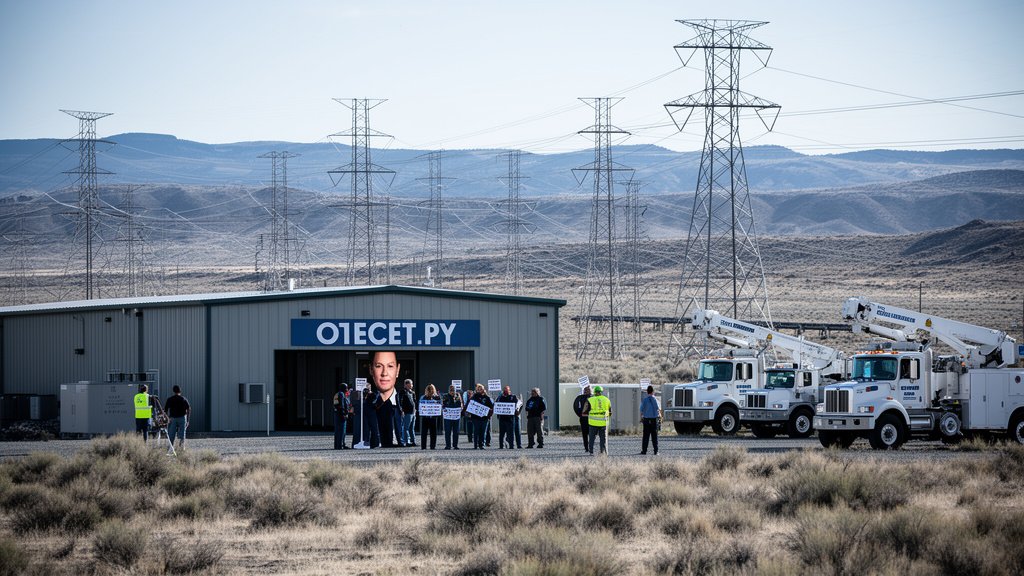
Union workers at the Oregon Trail Electric Cooperative (OTEC) have officially initiated a strike, citing months of unresolved grievances regarding unfair labor practices. This work stoppage puts the operations of the nonprofit utility at a critical juncture, directly impacting approximately 60,000 residents across Baker, Grant, Harney, and Union Counties. The strike marks a significant escalation in labor tensions for the cooperative, which serves as a vital infrastructure backbone for some of the most rural and geographically expansive regions in the Pacific Northwest.
Key Highlights
- Broad Geographical Impact: The strike affects the reliability and maintenance capacity of OTEC’s grid, which spans four critical Eastern Oregon counties: Baker, Grant, Harney, and Union.
- Unfair Labor Practice Claims: Union members allege that management has engaged in a sustained pattern of unfair labor practices, necessitating the move to picket lines.
- Cooperative Tension: Unlike investor-owned utilities, OTEC is a member-owned cooperative, placing pressure on the board of directors to resolve the standoff with the workforce to maintain the co-op mission.
- Service Continuity Concerns: While OTEC management has signaled intentions to maintain essential services, the absence of the primary unionized workforce raises questions about long-term grid maintenance and outage response times.
The Anatomy of the OTEC Labor Standoff
The decision to strike is rarely made lightly, particularly in the utility sector where the workforce often views themselves as essential public servants. The conflict at Oregon Trail Electric Cooperative is rooted in months of stalled negotiations and increasing friction between the IBEW (International Brotherhood of Electrical Workers) members—the typical bargaining unit for such cooperatives—and the OTEC administration. At the heart of the dispute are allegations of unfair labor practices, which, according to labor advocates, include failures to bargain in good faith, unilateral changes to working conditions, and potentially retaliatory actions against union organizers.
For a nonprofit utility, the stakes of such a dispute are exponentially higher than those of a standard corporation. Because OTEC is member-owned, the ‘shareholders’ are the residents of the four counties themselves. When the workforce strikes, it isn’t just a corporate balance sheet that suffers; it is the physical infrastructure of the community that faces potential neglect. The strike effectively creates a standoff where the employees are advocating for what they define as fundamental rights, while the cooperative leadership must navigate a shrinking operational capacity during a period of high demand for grid reliability.
The Cooperative Model and Labor Relations
One of the most complex elements of this situation is the cooperative structure of OTEC. Electric cooperatives were founded on the principle of democratic control and service to rural populations that were often ignored by larger, profit-driven energy companies. When labor practices fall into dispute within a co-op, it creates a unique political and ethical crisis. Members expect their cooperative to treat its employees with the same fairness they expect the cooperative to extend to its ratepayers.
Reports suggest that the union is pushing for transparent bargaining sessions and a remediation of the alleged labor violations filed with the National Labor Relations Board (NLRB). If the NLRB finds merit in these claims, the cooperative could be forced into a legally mandated settlement, which would further complicate the budgetary and operational outlook for the utility. The current standoff is not merely a contract negotiation; it is a battle over the internal culture of the cooperative and how it respects the collective bargaining rights of its technical and administrative staff.
Operational Risks to Eastern Oregon’s Grid
Infrastructure maintenance in Eastern Oregon presents unique logistical challenges. The territory is vast, rugged, and prone to harsh weather conditions that can cause significant grid stress. Unionized line crews are highly trained professionals who operate in specialized teams. When these workers are off the clock, the cooperative must rely on contingency plans, which often involve using non-union personnel or outside contractors.
From a safety perspective, the reliance on replacement workers during a strike is a major concern for union leadership. They argue that specialized local knowledge of the OTEC grid is irreplaceable. Any degradation in the quality of maintenance or the speed of response to outages could result in prolonged power failures, particularly if the strike coincides with severe weather events. For residents in Baker and Harney counties, where emergency services often depend on consistent electrical power, the duration of this strike is a matter of immediate public safety.
Future Implications and Economic Ripples
The outcome of this strike will likely have long-term consequences for OTEC’s recruitment and retention strategies. In an industry facing a national shortage of skilled electrical workers, aggressive labor tactics can cause reputational damage that persists for years. If the cooperative is seen as an employer that stifles labor or engages in unfair practices, it may struggle to attract the top-tier talent required to maintain complex electrical infrastructure.
Furthermore, this event serves as a bellwether for labor relations in the Pacific Northwest’s rural utility sector. As regional power needs evolve—driven by the electrification of heating, transportation, and agricultural systems—the demands on these utilities are increasing. The tension between the need for infrastructure growth and the need for fair compensation and safe working conditions is a dynamic that will likely play out in other rural cooperatives across the country if not addressed through constructive dialogue.
FAQ: People Also Ask
1. Are residents currently losing power due to the OTEC strike?
While management has stated they are attempting to maintain essential operations, residents should anticipate the possibility of delayed response times for non-emergency issues. OTEC has activated contingency plans, but the full impact on service reliability remains a developing situation.
2. What are ‘unfair labor practices’ in this context?
In this scenario, unfair labor practices typically refer to actions taken by management that interfere with the rights of employees to organize, bargain collectively, or participate in union activities, as protected by the National Labor Relations Act.
3. How long will the OTEC strike last?
There is no set timeline for the strike. It will conclude once the union and OTEC management reach a tentative agreement that is ratified by the membership, or if an intervention by federal labor authorities mandates a resolution. Both parties currently remain at an impasse.
4. Is my membership in the cooperative affected by the strike?
As a member-owner, your status remains unchanged, but you may experience changes in customer service availability. Residents are encouraged to monitor OTEC’s official communication channels for updates regarding billing, outages, and emergency service availability.