The Lower Umatilla Basin, a region renowned for its agricultural productivity in Eastern Oregon, currently finds itself at a critical intersection of public health policy and industrial evolution. Following a significant $6.2 million legal settlement involving Madison Ranches—a case centered on the contamination of private residential wells—the spotlight has intensified on the practices governing the Groundwater Management Area (LUBGWMA). Industry representatives, particularly the Northeast Oregon Water Association (NOWA), have begun a public-facing effort to articulate their perspective, emphasizing that the path forward requires a blend of technological precision, scientific rigor, and collaborative policy reform.
The Anatomy of the LUBGWMA Challenge
The nitrate issue in the Lower Umatilla Basin is not a recent phenomenon, but rather a decades-long accumulation of geological and anthropogenic factors. The region’s porous soil structure, combined with decades of intensive commercial farming, has led to nitrogen levels in groundwater frequently exceeding the U.S. Environmental Protection Agency’s (EPA) safe drinking water standard of 10 milligrams per liter. For residents of Umatilla and Morrow counties, this contamination has necessitated the reliance on bottled water, filtration systems, or deeper wells, turning a localized agricultural challenge into a pressing public health mandate.
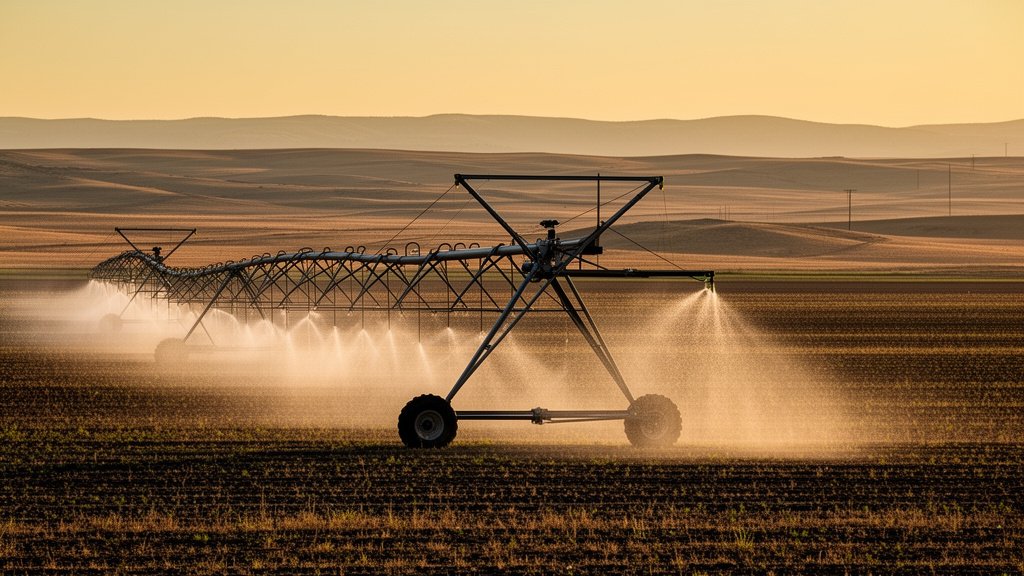
Historically, nitrogen application—essential for crop yields in high-output farming—often outpaced the crop’s uptake capacity. Excess nitrogen, in the form of nitrate, is highly mobile in water. When irrigation or precipitation events occur, this excess moves downward through the soil profile, eventually reaching the aquifer. The challenge is compounded by the region’s reliance on subsurface drip irrigation and center-pivot systems, which must be perfectly calibrated to avoid deep percolation.
Dissecting the $6.2 Million Settlement
The settlement involving Madison Ranches serves as a watershed moment for the regional agricultural economy. The class-action lawsuit, brought forward by residents whose well water was impacted, alleged that agricultural practices contributed directly to the degradation of their water sources. The $6.2 million payout is significant, not merely for its monetary value, but for the precedent it sets. It signals that growers, regulators, and the community are no longer operating in a vacuum of ambiguity; liability for groundwater contamination is becoming a central pillar of the regulatory landscape.
For the agricultural industry, this settlement is a clarion call. It highlights the vulnerability of current farming models to litigation and underscores the urgent need for a shift toward ‘social license’—the implicit permission from the local community to operate—which can only be maintained through verified, safe environmental stewardship.
The Industrial Pivot: Precision and Agronomy
Industry groups like the Northeast Oregon Water Association (NOWA) are now publicly championing a suite of solutions designed to stem the nitrate flow. These solutions are categorized into three primary vectors: precision agronomy, technological monitoring, and regulatory compliance.
1. Variable Rate Irrigation (VRI) and Fertigation: Modern center-pivot systems now allow for ‘fertigation,’ where fertilizers are applied through irrigation water in precise, metered doses. By coupling this with VRI, farmers can tailor water and nutrient delivery to the specific soil moisture requirements of different field zones, significantly reducing deep percolation.
2. Soil and Petiole Testing: Moving away from generic application charts, industry leaders are promoting hyper-local soil testing. By monitoring the soil profile weekly during the growing season, growers can ensure they are applying only the nitrogen necessary for the current crop’s developmental stage, rather than following outdated, static seasonal schedules.
3. Cover Cropping and Soil Health: There is a renewed focus on cover crops that act as ‘nitrate scavengers.’ These plants, grown during the off-season, absorb residual nitrogen left in the soil, preventing it from leaching into the groundwater during the winter months. This biological buffer is being integrated into standard crop rotation schedules.
Secondary Angles: Economic and Regulatory Impacts
The transition to these high-tech practices is capital-intensive. Smaller growers may struggle to afford the precision equipment and soil testing required to adhere to these new, stricter standards. This creates a secondary economic pressure: the potential for consolidation in the region as smaller farms are unable to bear the compliance costs. Regulators, primarily the Oregon Department of Environmental Quality (DEQ) and the Department of Agriculture (ODA), are faced with the delicate task of enforcing safety standards without crushing the agricultural economy that forms the backbone of Morrow and Umatilla counties.
Furthermore, the long-term prediction for the basin is one of slow recovery. Even with immediate implementation of these ‘best management practices,’ the nitrate legacy in the aquifer will take years, potentially decades, to attenuate. This suggests that the region will remain under intense regulatory scrutiny for the foreseeable future.
FAQ: People Also Ask
Q: What is the primary cause of the nitrate contamination in the Lower Umatilla Basin?
A: The contamination is attributed to a combination of legacy and current agricultural practices, including the application of synthetic fertilizers and manure, which, when coupled with the region’s porous geology, leads to nitrate leaching into the groundwater.
Q: How does the $6.2 million settlement affect individual farmers?
A: The settlement impacts the sector by increasing the urgency of liability and compliance. It compels operators to adopt more transparent monitoring and environmentally sound practices to avoid future litigation and potential regulatory fines.
Q: What specific technology are growers using to fix the issue?
A: Irrigators are increasingly using Variable Rate Irrigation (VRI) systems, real-time soil moisture sensors, and targeted fertigation to minimize the amount of excess nitrogen that moves past the root zone and into the groundwater.
Q: Can the groundwater in the region ever be fully restored?
A: While implementing precision agriculture stops the ongoing contribution to the contamination, the nitrate already present in the aquifer will take time to naturally degrade or disperse. Recovery is a long-term, multi-year, or even multi-decade process.