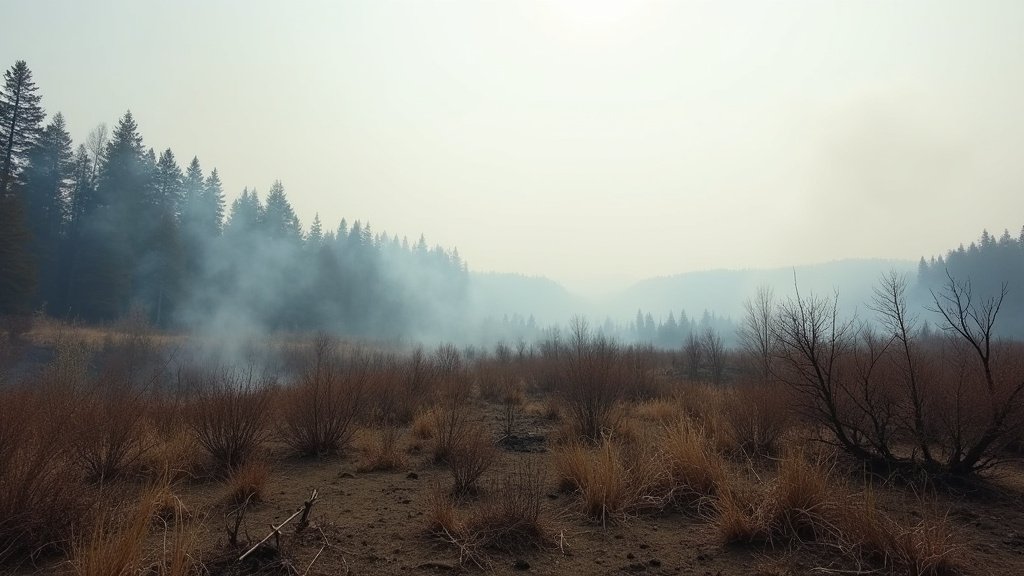
Oregon is currently standing at the precipice of one of the most destructive wildfire seasons in modern history. As of this week, 1.8 million acres of forest, grassland, and rural territory have been consumed by fire, a staggering figure that places the state dangerously close to its all-time historical acreage records. Perhaps most concerning to state officials and emergency management agencies is the calendar: the traditional peak fire season, characterized by the scorching temperatures and erratic winds of August and September, has yet to officially begin.
The Unprecedented Surge: Analyzing the 2024 Firestorm
The current crisis in Oregon is not merely a product of dry conditions; it is a convergence of compounding environmental stressors. While the 1.8 million-acre benchmark is a headline figure, the operational reality on the ground is far more complex. The Oregon Department of Forestry (ODF) and the National Interagency Fire Center (NIFC) have been stretched to their limits, managing multiple large-scale incidents simultaneously.
The Harney County Incident and the Burns Paiute Reservation
One of the most pressing flashpoints has been the Second Flat Fire in Harney County. This incident has transcended standard land management issues, directly impacting human lives and cultural heritage. The evacuation of tribal members from the Burns Paiute Reservation underscores the severity of this year’s fire behavior. These evacuations were not merely procedural; they were necessary to protect a vulnerable population from rapidly changing fire dynamics. The terrain in Harney County, characterized by high desert brush and intermittent timber stands, allows for aggressive, fast-moving fire spread when fueled by high-pressure atmospheric conditions.
Meteorological Drivers: Why August and September are Critical
Historically, August and September represent the “danger zone” for Oregon firefighters. By this time, fuel moisture levels in vegetation reach their lowest points of the year. The accumulated heat from the summer months dehydrates the landscape, turning lush forests and grasslands into tinder. When combined with the potential for dry lightning strikes—which trigger fires in remote, hard-to-access terrain—the state becomes highly susceptible to rapid, explosive fire growth. Current modeling suggests that even with recent suppression efforts, the landscape remains critically primed for new ignitions.
Resource Exhaustion and Strategic Deployment
Fire management is a resource-intensive endeavor. The scale of the 1.8 million-acre burn has necessitated a massive influx of personnel and equipment, drawing resources from across the Pacific Northwest and beyond. However, resource exhaustion is a mounting concern. When crews are rotated continuously for weeks on end, fatigue management becomes as critical as the physical firefighting. Strategic deployment is shifting toward “point protection”—focusing efforts on saving specific communities and infrastructure rather than attempting to contain every perimeter, a harsh reality of the modern, mega-fire era.
Beyond the Burn: Long-Term Environmental and Economic Ripples
The aftermath of such an extensive wildfire season extends far beyond the immediate smoke and evacuation notices. The economic implications for Oregon’s timber industry, agricultural sector, and local tourism are profound. Large-scale burns alter soil composition, increasing the risk of landslides and erosion during the upcoming winter rain season. Furthermore, the loss of vast tracts of wildland disrupts local ecosystems, creating recovery challenges that will persist for decades. As the state nears its record, policymakers and environmental agencies are being forced to re-evaluate land management strategies, specifically looking at how climate-driven drought cycles are fundamentally changing the fire ecology of the region.
FAQ: People Also Ask
Q: How does the current 1.8 million-acre statistic compare to historical records?
A: The 1.8 million-acre figure places this year near the top tier of historical wildfire events in Oregon. While exact records fluctuate based on how agencies classify “burn acreage” (including various grass and shrub-steppe fires), this current trajectory suggests the state is on track to rival or exceed its most destructive seasons, such as the 2020 Labor Day fire events.
Q: What makes the Burns Paiute Reservation evacuation particularly concerning?
A: The evacuation is significant because it highlights the vulnerability of established communities within the path of fast-moving fires. Tribal lands often hold critical cultural and historical significance, and the rapid displacement of community members emphasizes the speed at which the Second Flat Fire and similar incidents have escalated.
Q: If the peak season hasn’t started, what does the rest of the year look like?
A: The peak season for Oregon usually spans August and September. During this time, weather patterns often shift to include high-wind events and continued low humidity. This creates a high risk of “fire starts” that can rapidly become uncontainable, meaning the state is not necessarily in a “downward” trend of fire danger, but rather in a holding pattern awaiting further meteorological instability.
Q: Are there specific factors accelerating the 2024 wildfire season?
A: Yes. The season has been accelerated by an unusually dry winter and spring, which left fuel moisture levels in vegetation well below average. Additionally, sporadic heat waves have repeatedly “cured” (dried out) the fuels, making them highly receptive to ignition from lightning or human activity.