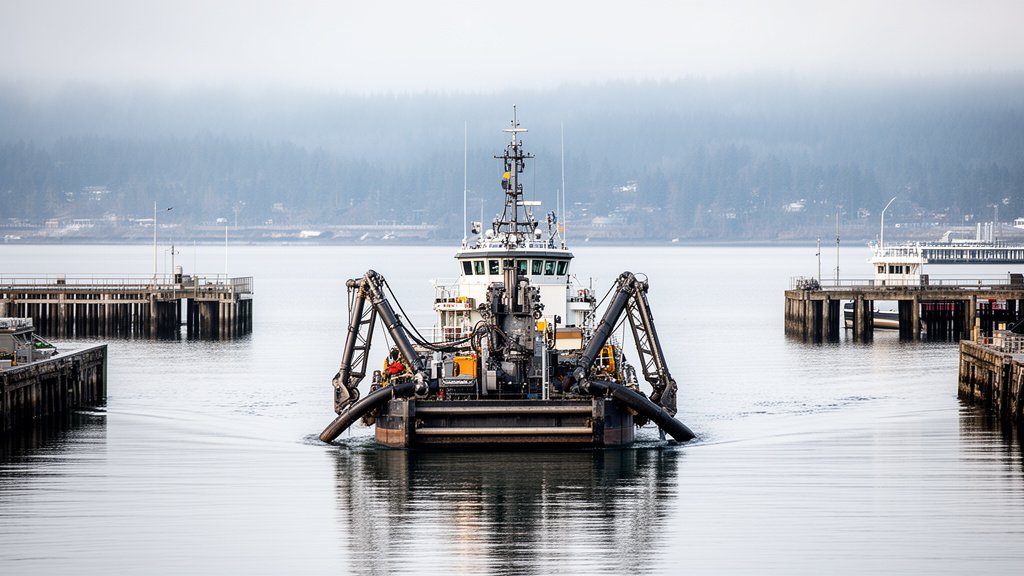
The Port of Coos Bay has confirmed it will officially end its management of Oregon’s state-owned dredging program following the conclusion of the current winter season. The move, which marks the end of a partnership dating back to 2016, arrives amidst a convergence of critical operational pressures, including acute staffing shortages and significant deferred maintenance backlogs at the Charleston Marina. As the state faces the potential loss of its primary mechanism for maintaining navigable waterways, the ripple effects are expected to be felt across the entire Oregon coast, where maintaining harbor depth is not merely a logistical necessity but an economic lifeline for fishing fleets and commercial shipping vessels.
Key Highlights
- Operational Departure: The Port of Coos Bay will cease all management and operation of state-owned dredging vessels after the upcoming winter season.
- Staffing and Maintenance Barriers: The decision is driven by persistent, industry-wide staffing shortages and a backlog of necessary maintenance at the Charleston Marina facility.
- Program History: The Port has held the responsibility for operating the state’s dredging assets since 2016, maintaining crucial harbor depth for ports across the region.
- Uncertain Future: The exit leaves the Oregon Department of State Lands, which owns the vessels, in a precarious position regarding the future management and operational continuity of the state’s dredging program.
The Operational Breakdown: Why Coos Bay is Walking Away
The decision to terminate the dredging agreement is not a sudden pivot but rather the culmination of years of mounting systemic pressure. For the better part of a decade, the Port of Coos Bay has acted as the steward of the state’s dredging assets, an infrastructure role that requires highly specialized expertise. Operating a dredge—a complex vessel designed to remove sediment from the bottom of harbors—requires a unique workforce of maritime engineers, deckhands, and crane operators who are currently in short supply nationwide.
The Human Capital Gap
Maritime staffing shortages are not isolated to Coos Bay; they represent a broader challenge facing the U.S. shipping and dredging industry. Attracting personnel to long-term dredging contracts has become increasingly difficult as private sector opportunities in offshore wind and larger-scale maritime projects compete for the same labor pool. The Port of Coos Bay cited these staffing challenges as a primary driver, noting that the inability to field a full, reliable crew jeopardizes the safety and efficacy of the dredging missions. When a dredge cannot operate at full capacity, harbors silt up, leading to reduced draft depths that prevent larger vessels from entering or leaving ports safely. This creates an immediate economic bottleneck for coastal towns reliant on consistent maritime access.
Deferred Maintenance and Facility Degradation
The Charleston Marina, the primary home base for the dredging program, has also faced operational headwinds. Deferred maintenance—the practice of delaying necessary repairs to save on short-term costs—has eventually created an environment where the facility struggles to support the technical requirements of the dredging fleet. As the infrastructure at Charleston ages, the cost of keeping the dredging equipment functional in that specific environment has risen. By ending its role as the operator, the Port is essentially forcing a re-evaluation of the entire program’s structural support and physical base of operations. The reality is that without a modernized facility and a consistent labor pipeline, the current model of state-directed dredging has become untenable for the Port to manage internally.
Economic Ripple Effects on Oregon’s Coastal Infrastructure
The departure of Coos Bay from the dredging program creates a vacuum that will likely be felt far beyond the local harbor. Oregon’s coastal ports function as a connected ecosystem; when one link fails, the chain becomes vulnerable. Smaller ports, which lack the budget or capacity to perform their own maintenance dredging, rely heavily on the state’s mobile dredging assets to clear channels after the winter storm season.
Secondary Angles: The Future of Navigation
1. The ‘Draft Depth’ Economic Multiplier: When a port’s entrance channel loses even a few feet of depth due to siltation, it directly limits the size of vessels that can enter. For the fishing industry, this means ships may have to wait for high tides or divert to other ports, adding significant fuel costs and delaying the delivery of fresh seafood. In the long term, insufficient dredging can result in a port being permanently closed to larger commercial traffic.
2. The Privatization Potential: With the Port of Coos Bay stepping down, the Oregon Department of State Lands must now decide whether to hire a private contractor to manage the vessels, lease the vessels out, or attempt to find a new public-sector partner. This transition creates an opening for private dredging firms to enter the market, potentially at a higher cost to the state taxpayer, but with more robust staffing models.
3. Climate and Sediment Patterns: Increased storm intensity along the Pacific Northwest coast has led to higher sediment deposition in harbor mouths. The timing of Coos Bay’s exit is particularly sensitive, as climate models suggest that the need for dredging will likely increase in the coming decade, not decrease. This creates a supply-demand mismatch where the infrastructure needed to keep ports open is becoming less available exactly when it is needed most.
FAQ: People Also Ask
Q: What happens to the dredging vessels once the Port of Coos Bay stops operating them?
A: The vessels remain the property of the Oregon Department of State Lands. The state is now tasked with determining the next phase of the program, which could include contracting a private firm, partnering with a different port, or assessing the feasibility of continuing the program in its current form.
Q: Will this immediately affect harbor depths this coming spring?
A: The Port of Coos Bay has committed to finishing the current season, which takes the operation through the end of the upcoming winter. Therefore, immediate impacts on harbor depths are not expected during this transition period, but long-term planning is now a priority for state officials.
Q: Why has it been difficult to staff these dredging positions?
A: Similar to many specialized maritime roles, dredging requires unique certifications and experience. High competition from private-sector maritime projects, offshore energy developments, and a general workforce shortage in skilled trades have made it increasingly difficult for public ports to retain the necessary specialized crews.