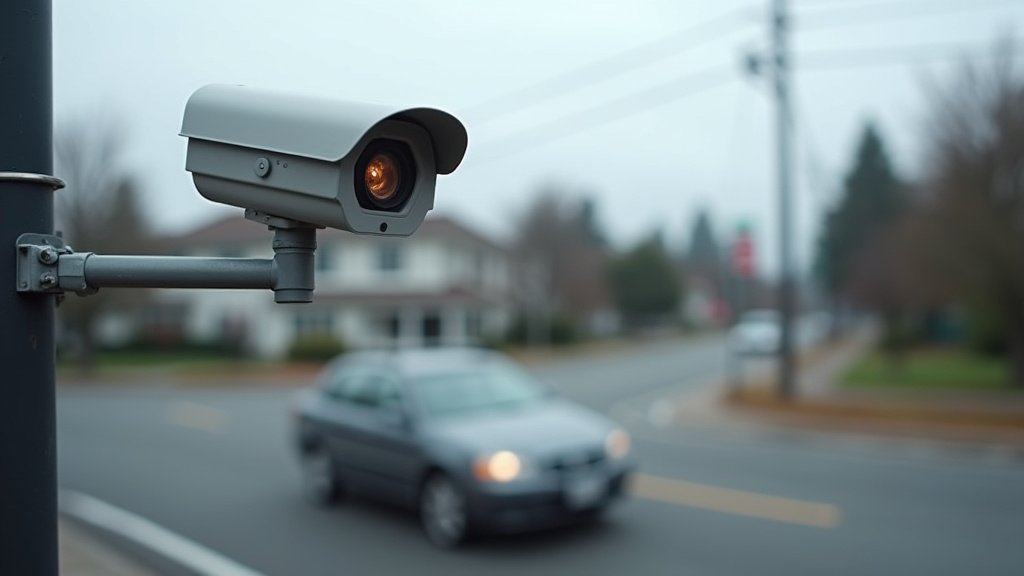
Oregon state representatives are preparing to introduce landmark legislation during the 2027 session that would effectively outlaw the use of Flock Safety automated license plate reader (ALPR) cameras across the state. This move signals a significant pivot in the ongoing battle between technological surveillance and individual civil liberties. Driven by a bipartisan coalition of lawmakers, the proposed bill challenges the assumption that rapid technological deployment in public safety is inherently beneficial, forcing a state-level reckoning with how data is collected, stored, and shared in an era of constant, automated monitoring.
Key Highlights:
- Legislative Proposal: Oregon lawmakers are drafting a bill for the 2027 session to ban the use of Flock Safety ALPR systems statewide.
- Bipartisan Motivation: The initiative is supported by both sides of the aisle, driven by shared concerns over privacy, data misuse, and Fourth Amendment implications.
- Technical Scrutiny: The bill directly addresses growing anxieties regarding algorithmic bias and the unreliability of automated identification technology.
- Future Uncertainty: The legislation aims to address the ‘innovation versus privacy’ paradox, challenging the unchecked expansion of surveillance tech in public spaces.
The Legislative Tide: Re-evaluating Surveillance
The proposed ban on Flock Safety technology in Oregon is not merely a rejection of a specific corporate product; it represents a fundamental questioning of the current ‘surveillance-as-a-service’ model that has permeated law enforcement across the United States. Flock Safety, known for its network of pole-mounted cameras that capture images of vehicle license plates, make and model, and identifying features, has become ubiquitous in many suburban and municipal police departments. While proponents often cite these cameras as essential tools for solving property crimes and missing persons cases, Oregon lawmakers are increasingly viewing the technology through a different lens: that of the panopticon.
The 2027 legislative session will serve as the battleground where these competing interests collide. The draft legislation suggests that the state government is prepared to prioritize the privacy rights of its citizens over the convenience offered by real-time tracking algorithms. This is not an isolated incident but part of a growing trend in state legislatures where the unchecked growth of private-public partnerships is being hauled before the court of public accountability.
The Tech Behind the Tension
At the heart of the controversy is the nature of Flock’s technology. Unlike traditional traffic cameras designed for speed enforcement, Flock cameras act as a proactive, persistent data-gathering network. The software utilizes machine learning to categorize vehicles and license plates, cross-referencing this data against a variety of law enforcement databases. This creates a dragnet effect where the movements of innocent citizens are logged and stored, creating a digital trail of their daily activities.
Lawmakers have expressed concern that the data retention policies of such systems remain largely opaque to the general public. Critics of the surveillance network argue that when local law enforcement agencies share this data with a centralized private server, the scope of surveillance becomes massive and effectively removes the local oversight traditionally inherent in police work. The legislative effort is designed to strip away the ‘innovation’ shield that corporations often hide behind to avoid regulatory scrutiny, forcing a disclosure of how long data is held and, more importantly, who has access to it.
The Privacy and Constitutional Debate
Central to the 2027 proposal are concerns regarding the Fourth Amendment. The legislative argument is grounded in the belief that persistent, automated monitoring of public movements constitutes a search that requires more robust legal boundaries than what currently exists. When a vehicle is tracked across multiple city zones, it is not simply ‘public observation’ in the traditional sense; it is a synthesis of data that reveals the intimate patterns of an individual’s life—where they work, where they worship, where they seek medical care, and whom they visit.
This debate transcends traditional party lines. Fiscal conservatives are wary of the long-term tax burden of maintaining these networks and the potential for government overreach, while progressive legislators are focused on the civil rights implications for marginalized communities. The synthesis of these two perspectives has created a rare, powerful coalition in the Oregon statehouse that views the current ALPR trajectory as an unsustainable path toward a society where anonymity in public space is effectively erased.
The ‘Black Box’ Accuracy Concerns
One of the most persistent, yet often overlooked, arguments against the widespread deployment of Flock cameras is the reliability of the underlying AI. The legislation focuses heavily on the potential for ‘false identifications.’ When a camera system relies on image recognition to identify a license plate or vehicle description, it is subject to errors—errors that, in a police context, can lead to dangerous confrontations, wrongful detainment, or the issuance of false warrants.
Legislators have highlighted that these algorithms act as a ‘black box.’ Because the specific neural network weighting and training data used by companies like Flock are often proprietary, there is limited independent validation of how often these systems misinterpret a plate in bad weather, low light, or obstructed conditions. The proposed bill would force a conversation about the standard of evidence required for an automated notification to trigger a police response, potentially setting a high bar for accuracy that current mass-deployment technologies struggle to meet.
Navigating the 2027 Transition
The 2027 implementation date provides a runway for police departments that have already integrated these systems into their infrastructure. However, it also acts as a clear signal: the era of unregulated, private-sector surveillance in Oregon law enforcement is drawing to a close. The legislative path ahead will be arduous, as law enforcement lobbying groups are expected to fight the bill, citing crime statistics and ‘detective efficiency.’
Nevertheless, the momentum in Oregon suggests that privacy advocates have successfully shifted the narrative. The conversation is no longer about whether these cameras ‘work’ to solve crimes—which is often anecdotally true—but whether the systemic cost to privacy and the constitutional risks of false positives are worth the bargain. If Oregon succeeds in passing this ban, it could establish a blueprint for other states to follow, marking a significant correction in the ongoing integration of AI surveillance in civic life.
FAQ: People Also Ask
1. What is the core function of Flock Safety cameras in this context?
Flock Safety systems are automated license plate readers (ALPR) that capture vehicle data, including license plates and descriptions, and store this information in a cloud-based network accessible to law enforcement agencies.
2. Why are Oregon lawmakers specifically targeting 2027 for a potential ban?
The 2027 timeframe is being proposed as a legislative window to allow existing infrastructure contracts to conclude and to provide a period for public debate and transition, rather than an immediate, overnight removal of the technology.
3. What are the primary privacy concerns driving this legislation?
The concerns center on the creation of mass surveillance networks, the lack of transparency regarding data storage, the sharing of private data with third parties, and the constitutional implications of tracking individuals’ daily movements without individualized suspicion.
4. How does this legislation address the ‘false positive’ issue?
The bill seeks to mandate stricter accuracy standards for any AI-assisted police technology. The goal is to prevent wrongful stops or incidents caused by algorithmic errors inherent in current license plate recognition software.