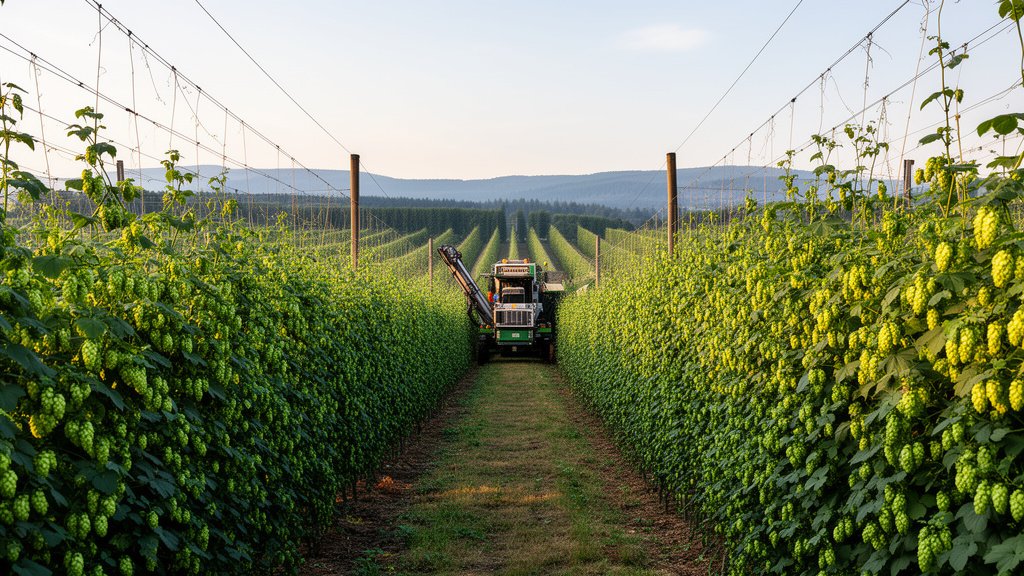
The Pacific Northwest’s premier agricultural tradition is arriving ahead of schedule. Oregon’s hop growers are preparing for the 2026 harvest, officially slated to commence the week of August 10th. Driven by an unseasonably mild spring that allowed bines to establish strong root systems without the thermal stress of early heat waves, producers are projecting an exceptional yield. This year’s crop is already drawing attention from craft brewers across the nation, who are eager to capitalize on the aromatic intensity of the incoming cones.
Key Highlights
- Harvest Start Date: Operations are officially scheduled to begin the week of August 10th, 2026, targeting early-maturing varieties like Cascade and Centennial.
- Climatic Advantage: A mild spring provided optimal growing conditions, reducing aphid pressure and maximizing the development of lupulin glands—the source of hop aroma.
- Economic Impact: The harvest marks a critical period for the “fresh-hop” beer segment, a multibillion-dollar sub-sector of the craft brewing industry that relies on rapid supply chains.
- Sustainability Trends: Growers are increasingly integrating precision irrigation technology to maintain yield consistency, offsetting unpredictable climate patterns.
The 2026 Harvest: A Return to Agricultural Excellence
For the agricultural backbone of Oregon, particularly in the fertile soils of the Willamette Valley, the 2026 growing season has been a masterclass in controlled development. Unlike the volatile weather patterns that have plagued previous seasons, this year benefited from a sustained, mild spring. This temperature stability is crucial for hop bines (the climbing plants), which require a delicate balance of moisture and temperate cooling to reach their full potential before the mid-August harvest window.
The Science of the Mild Spring
Agricultural experts suggest that the mild spring temperatures allowed for a deeper, more robust root development during the vegetative stage. In hop cultivation, the early season is defined by the plant’s climb up the trellis system. When heat spikes occur too early, the bines often experience stunted growth or premature flowering, which dilutes the concentration of essential oils. By avoiding these early stresses, Oregon growers have ensured that the plants allocated more energy toward producing healthy, resinous cones. The result is expected to be a crop with higher alpha-acid content and a more complex, expressive aromatic profile, characterized by the bright, citrusy, and pine-like notes that Oregon hops are world-renowned for.
The Fresh-Hop Brewing Phenomenon
With the harvest kicking off the week of August 10th, the clock immediately starts ticking for the fresh-hop beer season. Fresh-hop beers are a unique logistical challenge, requiring that harvested hops be introduced to the brewing kettle within 24 hours of being picked. This “farm-to-kettle” velocity is what preserves the volatile oils that give these beers their signature “green,” grassy, and intense floral character.
As the 2026 harvest arrives, breweries from Portland to San Diego are finalizing their logistics. The proximity of Oregon’s major hop farms to craft brewing hubs creates a strategic advantage, allowing local brewers to secure premium, un-dried hops in massive quantities. This year, the expectation is not just for quantity, but for a noticeable spike in quality—meaning we can anticipate some of the most vibrant fresh-hop ales in recent memory. The industry refers to this as the “green gold” rush, and with a strong yield forecast, the supply chain is expected to be more fluid than in years past.
Economic and Global Market Implications
Beyond the local craft scene, Oregon’s hop harvest remains a vital pillar of the global brewing economy. While global hop acreage has fluctuated due to market saturation and changing demand, the Pacific Northwest remains the undisputed leader in quality and consistency. The 2026 crop is particularly important for exporters who supply international markets with high-demand aromatic varieties like Citra, Mosaic, and Amarillo.
Industry analysts note that while the cost of production has risen due to labor and fuel, the projected increase in crop quality—driven by the mild spring—offers a premium valuation for growers. Buyers are willing to pay a premium for high-yield, high-aroma lots, which helps stabilize the economic forecast for Oregon’s multi-generational farming families. This balance of higher revenue per acre and stable, predictable yields is a positive indicator for the long-term health of the region’s agricultural sector.
Future Outlook: Technology in the Field
As we look beyond the 2026 harvest, the integration of technology remains the next frontier. Growers are moving toward AI-driven irrigation and pest management systems to protect their investment from the increasingly erratic climate. The success of this year’s mild spring provided a buffer, but the industry is not resting on its laurels. Future cycles will likely focus on even greater water efficiency, ensuring that Oregon remains the global standard for aromatic hops even as the climate changes. For now, however, the focus is entirely on the upcoming harvest, with optimism running high across the Willamette Valley.
FAQ: People Also Ask
Q: Why is the timing of the hop harvest so critical?
A: Hops must be harvested at the exact peak of maturity to ensure the lupulin glands—the yellow resin that contains the essential oils—are fully developed. If harvested too early, the beer will lack flavor; if too late, the hops can become over-ripe, leading to undesirable “cheesy” or oxidized flavors.
Q: What is a “fresh-hop” beer?
A: Unlike standard beers that use kiln-dried hops (which can be stored for months), fresh-hop beers use hops that go directly from the bine to the kettle in less than 24 hours. This creates a beer with a distinct, raw, and vibrant herbal character.
Q: How does the mild spring affect the final beer flavor?
A: The mild spring allowed the plants to store more energy, resulting in a healthier crop with a higher concentration of essential oils (terpenes). This leads to a more pungent, aromatic beer that is highly sought after by brewers.
Q: Will the 2026 harvest affect beer prices?
A: While harvest success generally stabilizes the raw material supply, beer prices are influenced by many factors including distribution, labor, and marketing. However, a good harvest prevents shortages that typically drive up commodity prices in the brewing industry.