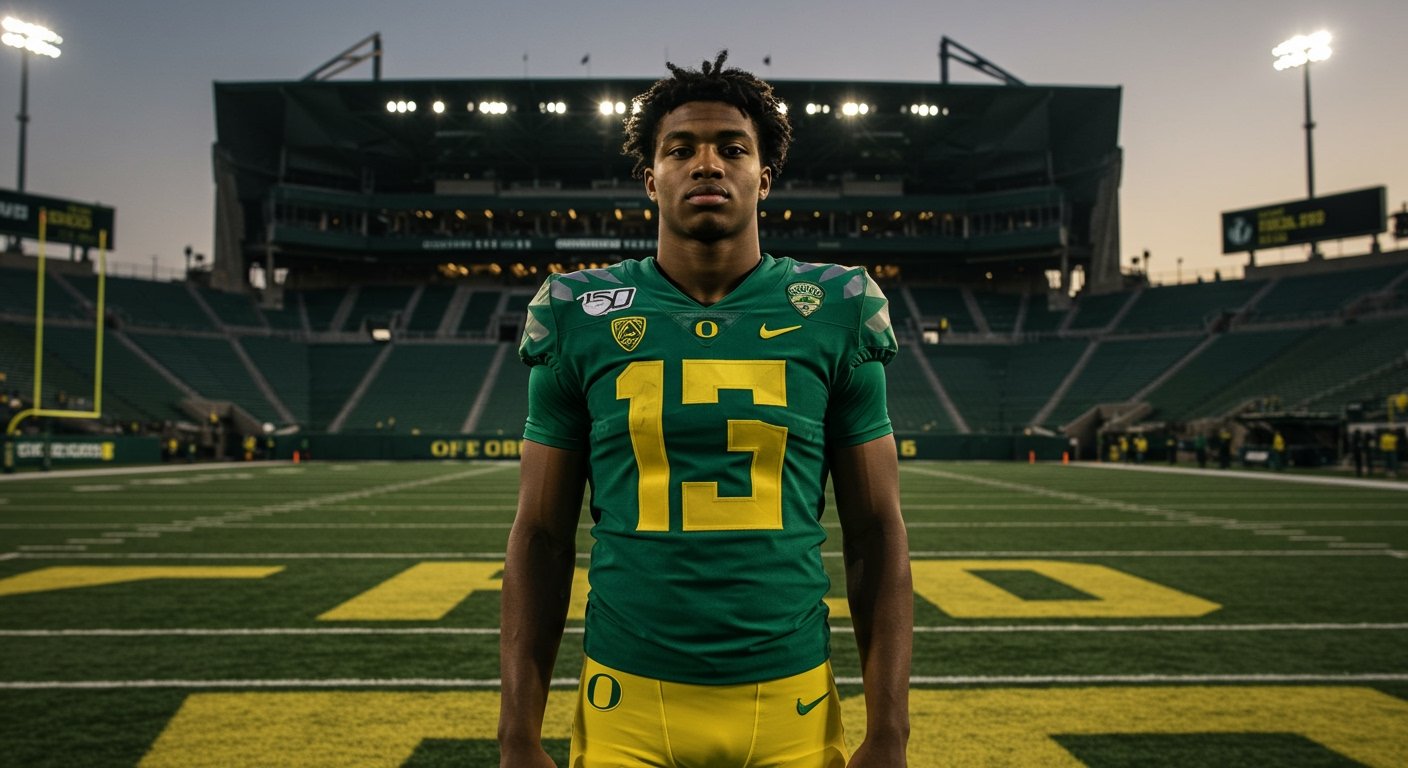
The landscape of college football recruiting is shifting, and currently, all eyes are fixed on the battle for four-star quarterback Josiah Boyd. The California-based signal-caller has become the focal point of a high-stakes standoff between the Oregon Ducks and the Kentucky Wildcats. This isn’t merely a contest of scholarship offers; it is a complex chess match defined by coaching connections, evolving offensive philosophies, and the intense pursuit of elite talent in a rapidly changing transfer and recruiting era.
The Nexus of the Conflict: The Will Stein Factor
The most compelling narrative in this recruitment is the central role played by former Oregon offensive coordinator Will Stein. Stein, who previously architected potent offensive schemes for the Ducks, has transitioned to a pivotal role with the Kentucky program. His move to Lexington has fundamentally altered the recruiting map for this specific prospect. Stein’s intimate knowledge of the Oregon system—and his proven ability to develop quarterback talent—provides Kentucky with a unique tactical advantage. By leveraging his past relationships and his deep understanding of what Oregon looks for in a quarterback, Stein is effectively presenting Kentucky as a viable, modernized alternative for Boyd. This situation creates a classic “inside-knowledge” scenario where Oregon must not only sell their program’s current trajectory but also counter the specific pitch of a former leader who knows exactly how to build a quarterback in the mold of the modern game.
Analyzing the Prospect: What Josiah Boyd Brings
Josiah Boyd is not merely a “name” on a roster; he is a prototype of the modern dual-threat quarterback. Hailing from the talent-rich fields of California, Boyd has demonstrated a unique combination of high-level arm strength and elite processing speed. Scouts have noted his ability to read complex coverage shells—a rarity for high school prospects—and his capacity to extend plays outside the pocket without sacrificing passing accuracy. For Oregon, capturing Boyd would mean securing the next generation of their high-octane, tempo-based offense. The Ducks have built their reputation on explosive plays and rapid ball movement, and Boyd’s skill set aligns perfectly with that vision. Conversely, Kentucky is attempting to pivot from a traditional SEC defensive-first identity to a more balanced, dynamic offensive approach under their current staff evolution, with Stein leading the charge. For the Wildcats, Boyd represents the cornerstone of a new offensive era.
The Strategic Tug-of-War: Program Dynamics
Beyond the individual coaching ties, this recruitment represents a collision of two distinct recruiting philosophies. Oregon enters this battle with the prestige of a West Coast powerhouse. Their ability to consistently produce high-draft-pick quarterbacks and their aggressive use of NIL (Name, Image, and Likeness) collectives make them a formidable destination for any elite prospect. The Ducks’ pitch is rooted in continuity, sustained success, and proximity to major media markets.
Kentucky, meanwhile, is betting on the allure of the SEC stage. By courting a California prospect, they are selling the opportunity to play in the country’s most competitive conference—an environment that provides massive national exposure and a physical, trench-warfare brand of football that is often seen as a prerequisite for NFL success. The competition between the two is a microcosm of the current college football climate, where geographic loyalty is increasingly secondary to development pathways and schematic fit. Will Stein’s influence allows Kentucky to bridge this gap, essentially offering a “West Coast offense” in an SEC environment, a pitch that is proving difficult for many prospects to ignore.
Assessing the Development Pathway
When a four-star prospect of Boyd’s caliber considers his options, the decision rarely comes down to a single offer. It comes down to the development plan. Oregon has a track record of elevating quarterbacks into Heisman contention, utilizing a scheme that emphasizes space and speed. Kentucky, however, is looking to disrupt that narrative. The involvement of Will Stein suggests that Kentucky is willing to alter its identity to accommodate a quarterback of Boyd’s specific profile. For the recruit, this is a choice between a system that is already humming at elite efficiency (Oregon) and a system being tailored explicitly for his talents (Kentucky).
The Future Implications
The outcome of the Josiah Boyd recruitment will send ripples through both programs. If Boyd commits to Oregon, it reinforces their dominance in Western recruiting and keeps their offensive momentum stable. If he chooses Kentucky, it serves as a massive proof-of-concept for Will Stein’s recruiting prowess and marks a significant recruiting victory for an SEC program raiding the West Coast. This battle is far from over, and as visit dates approach, the pressure on both coaching staffs to close the deal will only intensify. For fans and analysts, this is the story to watch as we head toward the early signing period.
FAQ: People Also Ask
How does Will Stein’s previous tenure at Oregon affect this recruitment?
Will Stein’s former role as Oregon’s offensive coordinator gives him a unique “insider” perspective. He understands Oregon’s internal evaluation metrics and recruitment pitch, allowing him to position Kentucky’s offer as a direct, and perhaps more tailored, alternative to the Ducks’ standard recruiting strategy.
Why is Josiah Boyd considered a priority recruit for both teams?
Boyd is a four-star recruit with the specific “dual-threat” skillset—arm talent combined with high-level pocket mobility—that modern college offenses require. His ability to process defenses at the high school level suggests a high ceiling for development at the collegiate level, making him a cornerstone prospect for any program.
Is this recruitment indicative of a broader trend in college football?
Yes. The recruitment of Boyd highlights the trend of SEC programs aggressively targeting West Coast talent and the impact of coaching staff mobility. Relationships are becoming as important as program prestige, as prospects follow coaches they trust, regardless of traditional geographic boundaries.