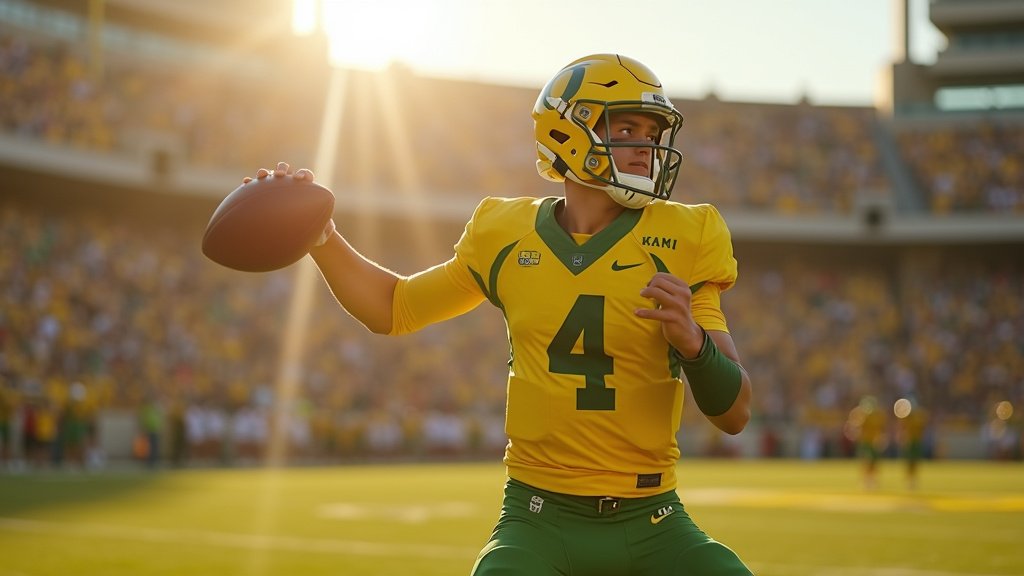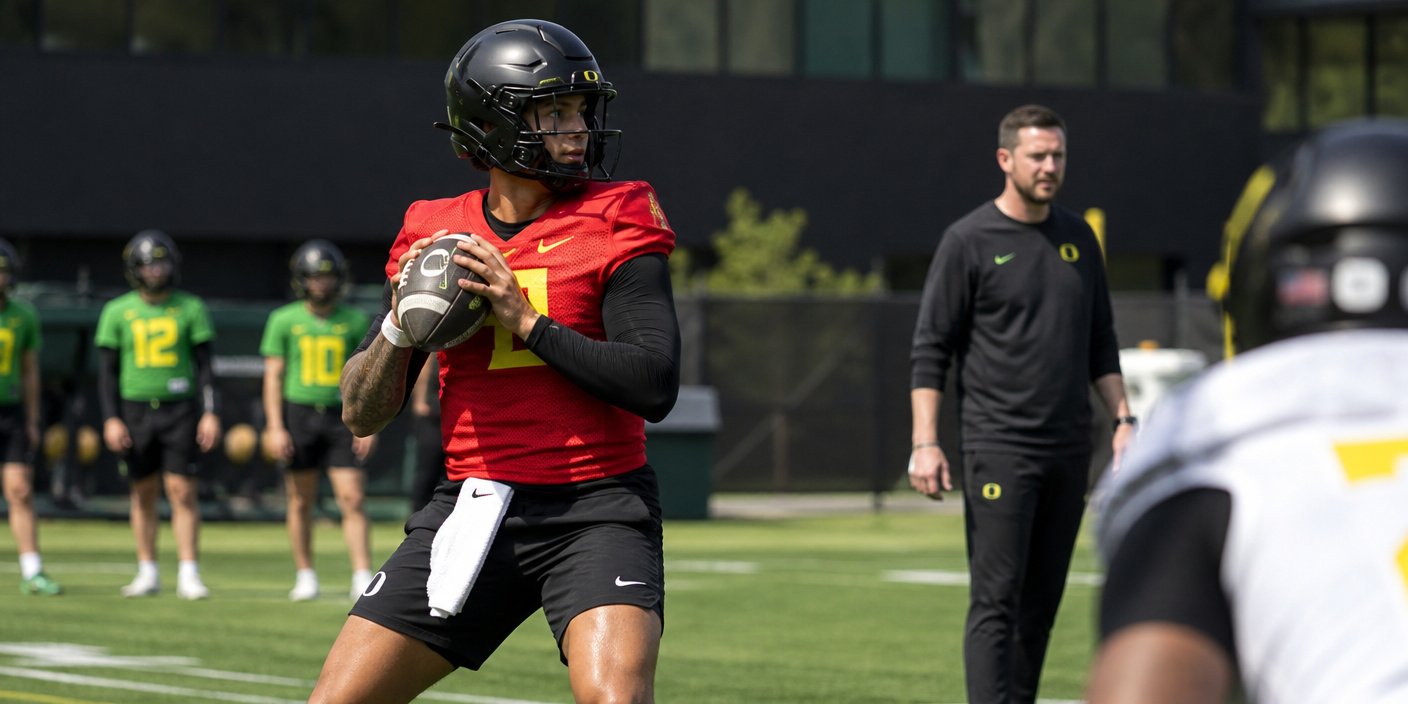
In a decisive move regarding player safety and long-term roster management, Oregon Ducks head coach Dan Lanning has officially ruled out starting quarterback Dante Moore for the high-stakes matchup against UCLA on October 10. The decision follows the concussion sustained by Moore during the team’s physically demanding September 26 contest against USC. While reports indicate that Moore has been cleared for a limited return to practice, the coaching staff has elected to maintain a conservative approach, prioritizing full neurological recovery over immediate game-day availability. Consequently, Dylan Raiola will step into the starting role, a transition that carries significant weight for Oregon’s offensive continuity and conference standing.
Key Highlights
- Injury Status: Dante Moore remains sidelined following a confirmed concussion sustained during the September 26 game against USC.
- Designated Starter: Dylan Raiola has been named the starting quarterback for the October 10 game against UCLA.
- Coaching Philosophy: Head coach Dan Lanning emphasized a ‘cautious’ approach to player welfare, rejecting the temptation to rush a key starter back into live-action play.
- Practice Participation: Moore has returned to practice in a limited capacity, but he has not been cleared for the level of contact required for competitive play.
The Strategic Pivot: Navigating a Critical QB Transition
The loss of a starting quarterback, particularly one of Dante Moore’s caliber, presents a formidable challenge for any program, yet Oregon’s internal protocols suggest a deliberate strategy designed to mitigate risk while maximizing potential. The decision to start Dylan Raiola against UCLA is not merely a reactionary substitution; it is a calculated tactical adjustment. Lanning’s commitment to medical transparency and caution underscores a fundamental philosophy often lost in the high-stakes world of modern college football: the health of the individual athlete is inextricably linked to the longevity of the season’s success.
The Anatomy of the Injury and Recovery
When Dante Moore left the field against USC on September 26, the silence in the stadium reflected the uncertainty that often accompanies head injuries. Concussions, by their nature, do not adhere to a standardized timeline. While Moore’s return to practice is a positive indicator, the gap between ‘limited practice’ and ‘game-ready’ is vast. By ruling him out early in the week, Oregon has effectively eliminated the distraction of a ‘game-time decision,’ allowing the coaching staff to focus entirely on preparing Dylan Raiola for the complexities of the UCLA defensive front.
This approach reflects a broader trend in NCAA football where concussion protocols have evolved from simple ‘return-to-play’ checklists into comprehensive neurological monitoring programs. Lanning’s refusal to gamble on Moore’s health against UCLA highlights the shifting culture of the sport—where a long-term future is prioritized over the immediate gratification of a single regular-season win.
Scouting the Shift: Raiola’s Opportunity
Dylan Raiola’s ascent to the starting role offers a fascinating sub-plot to this conference matchup. Raiola, who has spent the season refining his mechanics under the tutelage of Oregon’s offensive coordinators, now faces the acid test of starting in a conference game. Analysts point to Raiola’s arm strength and ability to process defensive coverages as his primary strengths, though his lack of live-game reps in high-pressure scenarios remains the single largest variable. The offense, which has historically relied on Moore’s agility to extend broken plays, may undergo a subtle transformation under Raiola. Expect the coaching staff to emphasize quick, rhythmic passing and a heavier reliance on the running game to insulate the young quarterback and keep the chains moving against a hungry UCLA defense.
Tactical Implications for the UCLA Matchup
Facing UCLA, Oregon’s offense must contend with a defense that thrives on chaos and aggressive blitz packages. With Raiola at the helm, the ‘cat-and-mouse’ game between the sideline and the field changes. UCLA will likely test the young signal-caller early, utilizing simulated pressures to see how he manages the blitz. The onus now falls on the offensive line to establish a clean pocket and on the wide receiving corps to provide consistent outlets for check-downs. This isn’t just about replacing a player; it is about adjusting an entire offensive identity to maintain efficacy without a foundational piece of the puzzle.
Secondary Angles: Beyond the Sideline
The Concussion Protocol Evolution
Oregon’s handling of the Dante Moore injury serves as a case study for contemporary sports medicine. The transition from the ‘suck it up’ era to the current data-driven, caution-heavy approach is nowhere more evident than in the Big Ten. By choosing to sit a star player, Oregon is setting a precedent that protects both the player’s brain and the institution’s reputation. This is an era where the long-term health of student-athletes is becoming a critical component of institutional E-E-A-T (Experience, Expertise, Authoritativeness, and Trustworthiness) within the medical field.
Deep Bench Management
This scenario illuminates the immense value of a deep quarterback room. In an era of the transfer portal, maintaining talent density is difficult. Oregon’s ability to plug in a capable player like Raiola speaks volumes about their scouting and development infrastructure. Other programs often suffer a catastrophic drop-off when the QB1 is sidelined, but Oregon’s developmental pipeline suggests that the drop-off might be more of a lateral shift in style than a decrease in efficiency.
Recruiting and Future Aspirations
Finally, the decision to prioritize player health may actually serve as a powerful recruiting tool. High school recruits and their families are increasingly cognizant of player safety. By demonstrating that Oregon prioritizes the long-term well-being of its players even at the expense of a short-term conference result, the program builds significant trust with future prospects. It paints a picture of a ‘player-first’ organization that can weather adversity without compromising its core values.
FAQ: People Also Ask
1. What is the official status of Dante Moore for the October 10 game?
Head coach Dan Lanning has officially ruled Dante Moore out for the matchup against UCLA due to a concussion sustained on September 26.
2. Who is starting at quarterback for Oregon against UCLA?
Dylan Raiola will take over as the starting quarterback for the Ducks.
3. Will Dante Moore return to practice this week?
Dante Moore has returned to practice, but only in a limited capacity. He has not been cleared for full contact, leading to his exclusion from the game-day roster.
4. Is this a long-term injury for Dante Moore?
The team has not provided a specific timeline for his full return, but they have emphasized a cautious, health-first approach, suggesting the team is avoiding rushing him back.
5. Why did Oregon choose not to play Moore?
Coach Lanning stated the decision is rooted in caution following the concussion sustained during the USC game. The team prioritizes neurological recovery over the urgency of the upcoming game.