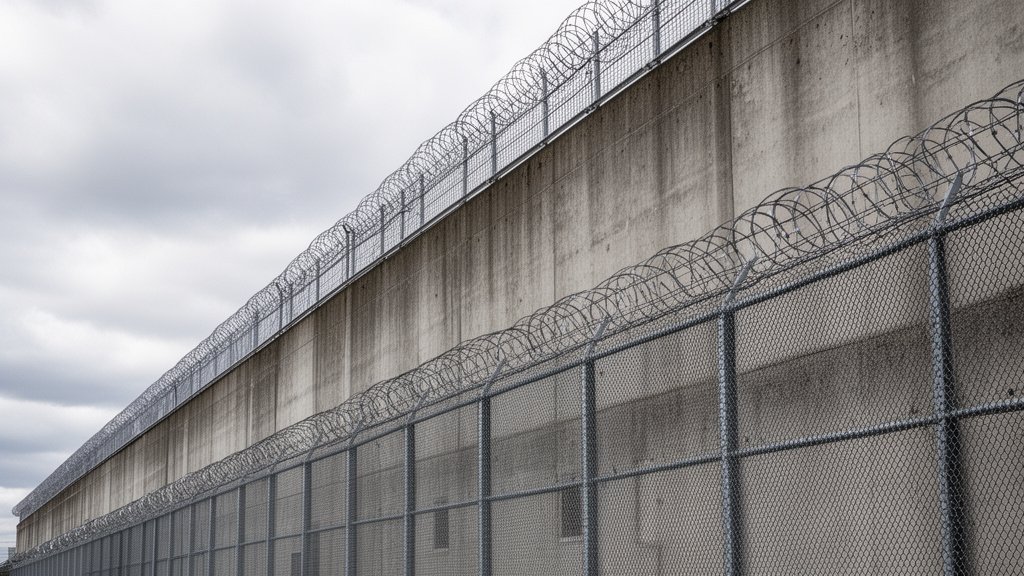
The Oregon Department of Corrections (DOC) recently released data indicating that the use of disciplinary segregation—the state’s term for solitary confinement—has reached its lowest point in the last twelve months. According to the November report, 456 prisoners are currently held in isolation, a statistic that state officials cite as evidence of their ongoing commitment to reducing extreme isolation practices while maintaining prison security. However, this statistical dip has immediately triggered a firestorm among civil rights watchdogs and advocacy organizations, who contend that the numbers rely on a narrow, misleading definition that fails to account for the full scale of incarceration in isolation across the state.
Key Highlights
- The Numbers: As of November, 456 individuals are held in disciplinary segregation, marking the lowest count recorded by the Oregon DOC in the past year.
- The Official Stance: Prison administration maintains that solitary practices are essential tools for managing institutional safety and responding to violent infractions.
- The Advocate Argument: Organizations like the ACLU of Oregon and the Oregon Justice Resource Center argue the data is a ‘statistical mirage’ that excludes other forms of isolated confinement.
- The Defining Gap: The debate centers on the distinction between ‘disciplinary segregation’ and other categories such as ‘administrative segregation’ or ‘protective custody,’ which are often omitted from official solitary confinement counts.
Unpacking the Data: A Step Toward Reform or Statistical Manipulation?
The reporting of 456 individuals in disciplinary segregation serves as a significant marker in the ongoing national debate surrounding prison reform. For years, the Oregon DOC has faced mounting pressure from judicial oversight and legislative bodies to decrease the reliance on isolation. When prison officials point to the November data, they are highlighting a tangible trend: a reduction in the number of inmates being placed in restrictive housing specifically as a punitive response to rule violations. To the administration, this figure is proof that de-escalation tactics, revised behavioral management programs, and updated staff training are yielding concrete results.
However, to understand why this news is met with such sharp skepticism, one must navigate the bureaucratic architecture of the Oregon prison system. The term ‘disciplinary segregation’ is highly specific. It refers to prisoners who have been placed in isolation due to a proven infraction within the facility. Critics argue that this metric is a poor proxy for the true ‘solitary confinement’ experience. When a prisoner is placed in ‘administrative segregation’—often to wait for an investigation, or due to gang affiliation, or even for protective custody—they are essentially experiencing the same conditions: twenty-two to twenty-four hours in a confined cell with minimal, if any, social interaction. Advocates argue that if the state were to include all categories of restrictive housing, the actual number of individuals living in solitary-like conditions would be substantially higher than 456.
The Human Cost of the Classification Gap
The fundamental disconnect between the DOC’s reporting and the reality experienced by inmates is not merely academic; it has profound implications for mental health. Research consistently demonstrates that prolonged isolation—regardless of the bureaucratic label attached to the prisoner’s status—leads to severe psychological degradation. Depression, anxiety, psychosis, and a higher risk of self-harm are well-documented side effects of extended solitary time.
Advocates emphasize that by categorizing these inmates into different silos, the state effectively avoids public scrutiny regarding the total volume of isolated individuals. If an inmate is held in administrative segregation for months while awaiting a transfer, the current reporting metrics do not ‘count’ them in the solitary confinement total. This leads to a public perception of progress that advocates claim is disconnected from the reality of daily operations behind prison walls. The pressure is mounting for the Oregon Department of Corrections to adopt a universal definition of solitary confinement that includes all forms of restrictive housing, thereby providing the public with a transparent view of the system’s true impact on human lives.
Security vs. Safety: The Institutional Perspective
To provide a balanced view, one must address the arguments put forward by the Oregon DOC. For prison staff and administrators, segregation is often presented as the only viable tool when managing high-risk populations. In a prison environment where physical violence is an ever-present reality, the ability to isolate an individual who has committed a violent assault is viewed as a necessary safety valve.
Officials often argue that their primary mandate is the safety of the facility—protecting both guards and the general inmate population from individuals who pose an immediate threat. When staff reductions occur, or when facility budgets are tight, the reliance on segregation often increases, as it is a less labor-intensive way to manage volatile individuals than integrated housing. However, critics point out that this reliance is a self-fulfilling prophecy. Over-reliance on isolation can exacerbate behavioral issues, leading to more incidents, which in turn leads to more segregation. The cycle is difficult to break without significant investment in rehabilitative programming, mental health support, and adequate staffing levels that allow for safe, integrated management.
Secondary Angles: Historical Context, Legal Trends, and Future Projections
Historical Context: A Shifting Legal Landscape
Looking back at Oregon’s prison history, the state has been part of a broader national reckoning regarding ‘supermax’ facilities and isolation units. In the last decade, legal challenges have forced many state departments of corrections to rethink their reliance on long-term isolation. Oregon is not an outlier in facing these challenges; however, its legislative climate has been particularly active in attempting to codify reforms. This November data comes amidst a backdrop of potential future legislation that seeks to limit the length of stay in any form of restrictive housing, regardless of the internal category.
The Economic Impact of Housing Categories
There is also an underlying economic argument that often goes undiscussed in the headlines. Managing restrictive housing is expensive. Maintaining distinct units for segregated prisoners requires specialized infrastructure, different staffing ratios, and unique security protocols. As the state evaluates its long-term budget, the reduction in disciplinary segregation may not only be driven by policy changes but by an internal, fiscally-minded effort to maximize efficiency. Reducing the number of segregated inmates can free up staff for other parts of the prison, potentially improving the overall institutional climate.
Predicting the Future of Oregon’s Prison Reform
Looking ahead, the next six to twelve months will be critical. If the numbers remain low, the DOC will likely double down on its current strategies. Conversely, if advocates continue to expose the ‘hidden’ population in other forms of segregation, it is highly likely that the state legislature will step in to redefine what constitutes ‘solitary confinement.’ Expect to see a move toward a more unified, state-wide tracking system that eliminates the current loopholes. This would essentially force the DOC to report every individual who is not integrated into the general population, providing the transparency that watchdog groups are demanding.
FAQ: People Also Ask
Q: What is the official definition of disciplinary segregation in Oregon?
A: Disciplinary segregation is a specific status assigned to inmates who have committed a documented rule violation within the prison. They are held in restricted housing for a specific duration as a punitive measure.
Q: Why do advocates say the 456 number is misleading?
A: Advocates argue that the number excludes inmates in ‘administrative segregation,’ ‘protective custody,’ and other forms of restrictive housing. They claim these individuals are functionally in solitary confinement, even if the DOC uses a different administrative label.
Q: Does the November data show an actual improvement in prison conditions?
A: It shows a reduction in disciplinary placements. Whether this translates to an overall improvement in prison conditions is debated; some argue that without broader systemic reform, the decrease in one category may simply mask shifts in how inmates are classified and housed.
Q: What are the risks associated with long-term isolation?
A: Prolonged isolation is linked to significant mental health decline, including increased rates of anxiety, depression, cognitive impairment, and a higher propensity for self-harm and suicidal ideation, according to various psychological studies and human rights reports.