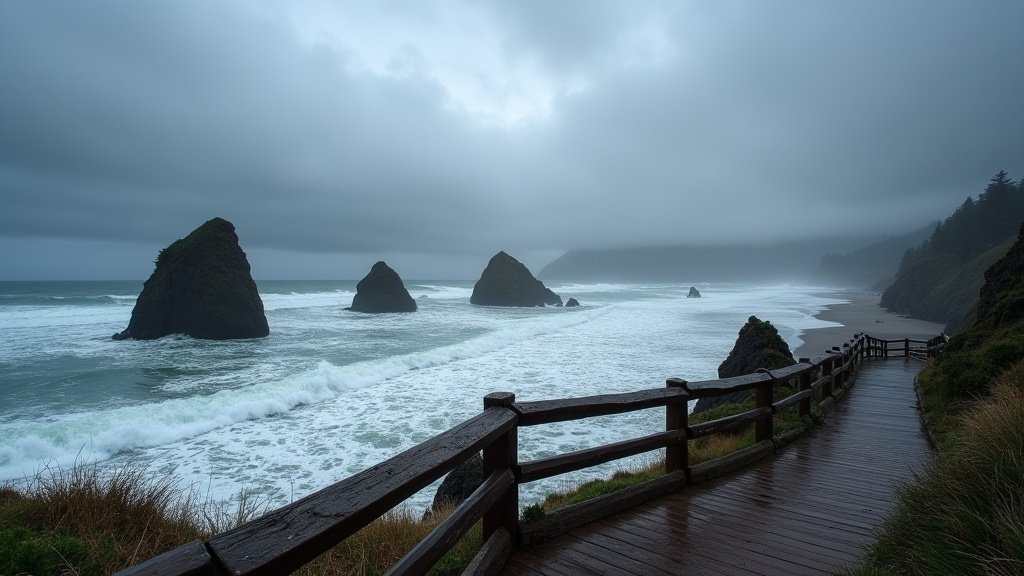
The Pacific Northwest has long been a siren song for those who appreciate the raw, unfiltered power of nature. When Sunset Magazine recently designated Cannon Beach as a top ‘storm-watching paradise’ for the fall, it confirmed what locals have known for decades: the Oregon Coast transforms from a sunny summer playground into a dramatic, atmospheric stage once the seasonal rains roll in. While Cannon Beach—with its iconic Haystack Rock and sophisticated lodging—is rightfully a star attraction, the true magic of the Oregon Coast lies in its diversity. From the rugged, basalt-strewn shores of the central coast to the mild microclimates of the south, travelers looking for the quintessential ‘Pacific Storm’ experience have a wealth of options that offer seclusion, spectacle, and safety.
The Allure of the Shoulder Season
Transitioning from the peak travel months of July and August into the ‘storm season’—typically spanning from late October through February—is a strategic move for the discerning traveler. While the weather patterns change, the coastal energy shifts into something contemplative and grand. This period, often referred to as the shoulder season, provides a unique economic boost to coastal towns that rely on tourism. Local businesses, from cozy coffee roasters in Yachats to artisan galleries in Bandon, embrace this turn in the weather. It is not merely about seeing the rain; it is about engaging with the geography of the Pacific at its most potent. For the uninitiated, storm-watching requires a shift in mindset: it is an activity of observation, comfort, and deep respect for the volatility of the ocean.
Oregon’s Untamed Coast: A Guide to Fall Storm-Watching
Cannon Beach: The Established Icon
Sunset Magazine’s choice of Cannon Beach is astute for good reason. The area is highly developed, offering high-end amenities that allow guests to witness the majesty of the Pacific while remaining physically shielded from the elements. The Hallmark Resort and Stephanie Inn provide the classic ‘glass-front’ experience where one can sit in warmth with a hot beverage while watching the North Pacific hammer the shoreline. Haystack Rock, standing as a stoic sentinel, provides scale and perspective during high-wind events. The town’s walkability means that even in torrential downpours, you are never far from a hot meal or a bookstore to retreat into. It remains the gold standard for those who want their nature served with a side of high-thread-count luxury.
Bandon: The Photographer’s Muse
Traveling south along Highway 101, Bandon offers an entirely different aesthetic. If Cannon Beach is the polished, family-friendly face of the coast, Bandon is the moody, artistic soul. Known for its extensive network of sea stacks—massive, jagged rock formations that rise abruptly from the surf—Bandon provides the perfect backdrop for storm photography. The Face Rock State Scenic Viewpoint offers a vantage point where the churning ocean waves crash against the monoliths, creating incredible spray and light effects during the ‘golden hours’ of a storm. The town itself feels more isolated, which adds to the allure of the experience. Storm-watchers here should seek lodging on the bluffs, where the elevated view offers a sweeping panorama of the tumultuous water below.
Yachats: The Geological Theater
For the visitor who prefers raw, tectonic drama over sandy beaches, Yachats (pronounced YAH-hots) is essential. Unlike the northern coastal towns, Yachats sits on basalt rock, not sand. This geological distinction is critical for storm-watching. When a storm surge hits the basalt, the waves do not simply wash ashore; they explode. Sites like Thor’s Well—a sinkhole in the ocean that appears to drain the sea—become chaotic, mesmerizing fountains of water during high tides and heavy weather. It is a place where you feel the rumble of the earth beneath your feet. The town has a tight-knit, ‘hidden gem’ vibe, and the Yachats coastline offers dramatic, rocky tide pools that are constantly refreshed and recharged by the stormy swells.
Brookings: The Southern Escape
Located near the California border, Brookings is often called the ‘Banana Belt’ of the Oregon Coast. If the storms in the north become too oppressive, Brookings offers a unique reprieve with a slightly milder microclimate. However, do not mistake ‘milder’ for ‘calm.’ The Samuel H. Boardman State Scenic Corridor, which starts just north of town, features some of the most dramatic cliff-side views in the Pacific Northwest. During a storm, the winds here can be fierce, funneling through the rugged headlands. The juxtaposition of the lush, green temperate rainforest and the grey, angry ocean creates a visual contrast that is unmatched anywhere else on the coast. It is the perfect destination for travelers who want to hike between storms, taking advantage of the shorter, brighter windows of weather.
Secondary Angles: Safety, Economy, and Education
Beyond the aesthetic pleasure, storm-watching requires a baseline of education. The Oregon Coast Visitors Association and the National Weather Service frequently remind travelers about the dangers of ‘sneaker waves’—rogue swells that can surge much higher up the beach than expected. Responsible tourism means never turning your back on the ocean, regardless of how calm it may appear during a lull. Economically, this form of tourism sustains the coast during the winter. It encourages a different type of visitor—one who values conservation, quiet, and local history over beach volleyball and sandcastles. Furthermore, the climate is currently shifting; recent patterns show that while we still experience classic coastal winters, the intensity of storm fronts is becoming a point of meteorological interest, making the Oregon Coast a living laboratory for climate observers and environmental enthusiasts alike.