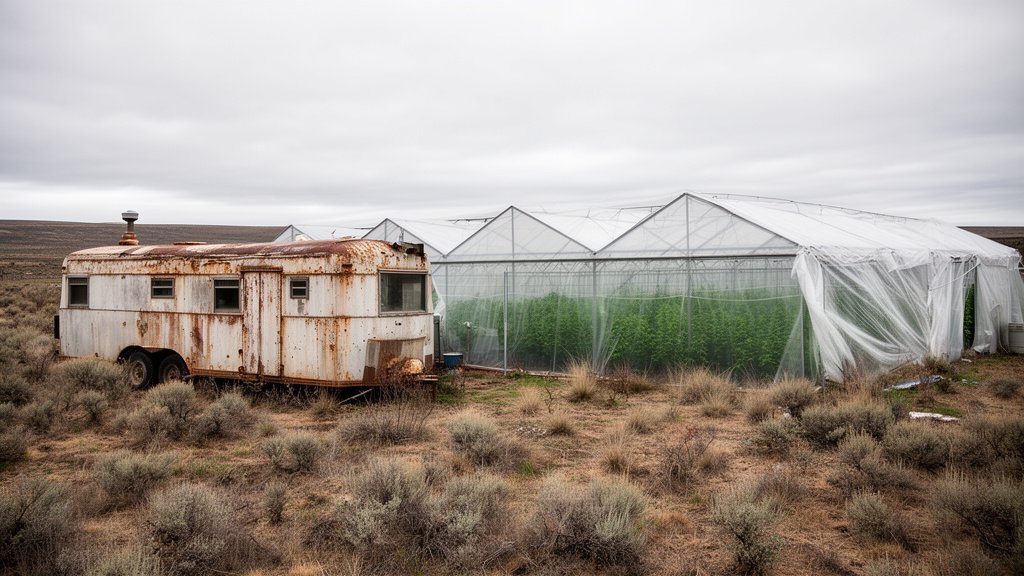
The “Green Rush” in Oregon has long been touted as a model for economic growth and industry regulation, but a recent investigation by InvestigateWest has peeled back the veneer of prosperity to reveal a stark, hidden reality. Thousands of migrant farmworkers, the backbone of the state’s cannabis harvesting season, are being subjected to substandard, hazardous, and frequently illegal housing conditions. As the industry matures, the glaring discrepancy between legal compliance in production and the reality of worker welfare has become a focal point for state oversight and public scrutiny.
The InvestigateWest Findings: A Systemic Failure
The report by InvestigateWest provides a damning account of conditions at various cannabis operations across Oregon. Investigators documented instances where workers were housed in dilapidated trailers, crowded greenhouses, and structures that lacked basic amenities such as potable water, functional sewage systems, and adequate ventilation. For many migrant workers, the promise of seasonal agricultural income is being overshadowed by the immediate threat of illness and unsafe living quarters.
The findings are not merely anecdotal; they represent a documented pattern. The investigation highlights recent enforcement actions taken by the Oregon Occupational Safety and Health Division (Oregon OSHA). These actions were triggered not just by routine inspections, but by mounting reports of structural instability, fire hazards, and sanitary violations that clearly bypass standard labor housing regulations. By documenting these specific sites, the investigation forces a conversation about whether Oregon’s existing regulatory framework is equipped to handle the unique challenges of the cannabis sector.
The Regulatory Gap: Oregon OSHA vs. The Green Rush
A primary question emerging from this investigation is why these conditions have persisted for so long. Experts suggest that the rapid proliferation of cannabis farms, many of which operate in rural, remote locations, has created a “policing gap.” While traditional agricultural operations often face rigorous scrutiny regarding labor housing, the nascent cannabis industry—despite its legalization—has often fallen into a jurisdictional gray area. Oregon OSHA has recently ramped up enforcement, but the sheer volume of new licenses issued by the Oregon Liquor and Cannabis Commission (OLCC) has outpaced the state’s capacity to monitor the welfare of the workers laboring on these sites.
The Economic Paradox: Wealth vs. Welfare
There is a profound economic contradiction at play. Cannabis remains one of Oregon’s most lucrative agricultural exports, with tax revenues funding education, law enforcement, and addiction services. Yet, the cost of housing workers appears to be treated as a disposable expense rather than a fundamental operational necessity. The investigation suggests that some contractors prioritize short-term profit margins over long-term compliance, operating on the assumption that remote locations will remain unvisited by inspectors. This environment creates a race to the bottom, where the most vulnerable workers—often migrant populations with limited resources to challenge their employers—are forced to absorb the costs of this negligence.
Secondary Angles: Examining the Broader Impact
1. The Historical Context of Agricultural Labor: This crisis mirrors historical struggles in traditional agriculture, such as berry and vegetable harvesting, where migrant housing has long been a flashpoint for labor rights organizations like the United Farm Workers (UFW). The cannabis industry is essentially repeating these historical mistakes under the guise of a modern, “legal” industry.
2. Zoning and Land Use Intersection: Many of these farms are located in rural zones where local government oversight is minimal. The intersection of rural zoning laws and state labor housing requirements has created a scenario where county officials and state regulators pass the buck, leaving workers in the middle of a bureaucratic vacuum.
3. Future Regulatory Predictions: Industry analysts predict that this investigation will serve as a catalyst for legislative reform. We are likely to see “housing certification” requirements becoming a prerequisite for renewing cannabis production licenses. This would link a grower’s ability to operate directly to their track record on worker safety, effectively forcing compliance through the threat of license revocation.
Addressing the Human Cost
Beyond the statutes and the violation notices, the human cost is mounting. Workers are not only dealing with physical dangers like fire and structural collapse but also the psychological toll of being isolated in unsafe environments. As Oregon continues to brand itself as a leader in progressive agriculture, these findings pose a significant reputational risk. Industry leaders and policymakers are now under immense pressure to bridge the gap between high-tech growing operations and low-standard worker accommodation, ensuring that the economic gains of the cannabis industry do not come at the expense of human dignity.