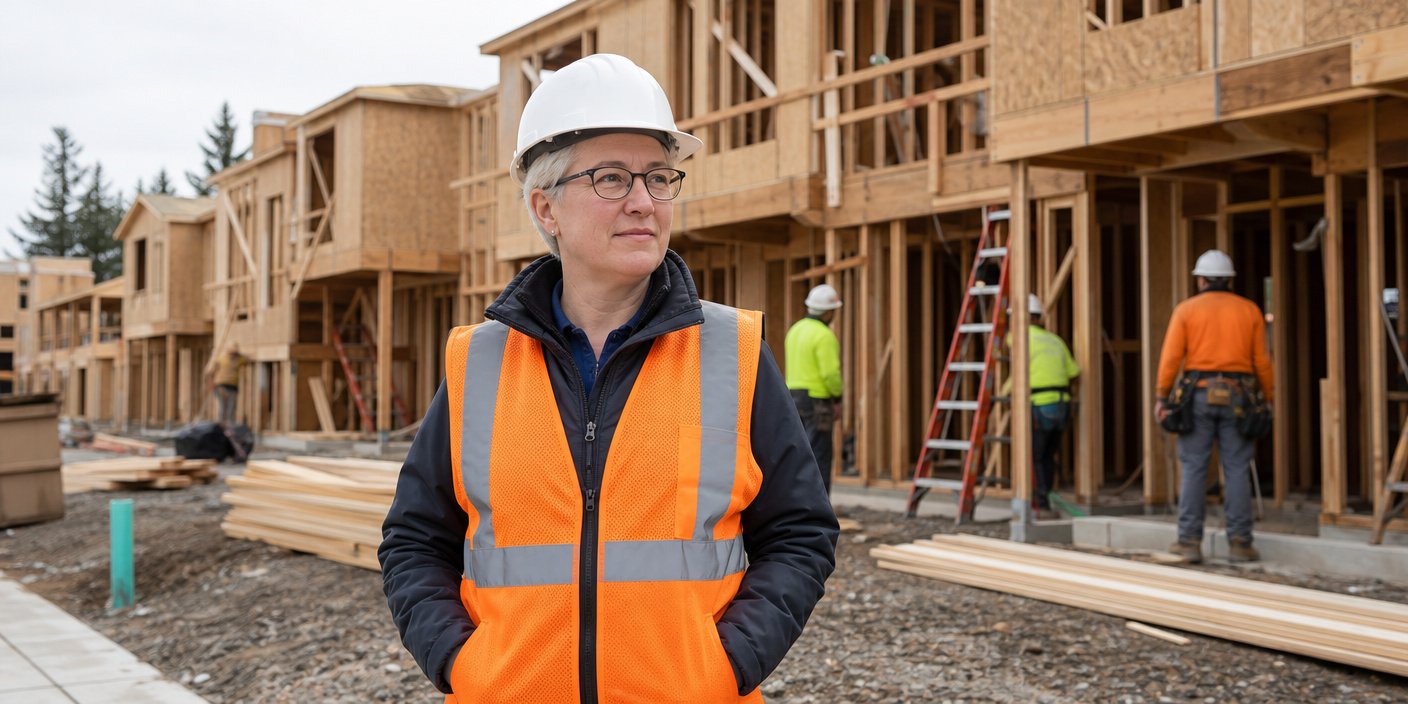
Governor Tina Kotek announced this week that Oregon has officially reversed a multi-year statewide decline in housing production, marking two years of consecutive growth. Data released by the state indicates an 11.3% year-over-year increase in new housing starts during the first half of 2026, a milestone that significantly outpaces the sluggish recovery seen across many other parts of the United States. This surge signals a potential turning point for a state that has long struggled with affordability and inventory shortages, driven by a deliberate, top-down strategy to dismantle systemic barriers in the permitting and zoning processes.
The Policy Shift: Dismantling the Red Tape
The reversal is largely attributed to the aggressive implementation of recommendations from the Housing Production Advisory Council (HPAC), a body convened early in Governor Kotek’s tenure to identify and eliminate bottlenecks. For years, developers cited the ‘death by a thousand cuts’—a complex web of local land-use restrictions, multi-agency permit reviews, and environmental impact assessments—as the primary deterrent to new construction in Oregon.
By streamlining these processes through the Department of Land Conservation and Development (DLCD) and incentivizing municipalities to prioritize ‘shovel-ready’ sites, the administration has successfully shortened the time between project conception and ground-breaking. This legislative strategy, which heavily leverages the framework laid out by previous initiatives such as HB 2001, has successfully moved the needle from theoretical policy to physical construction. The data reflects a shift in both urban densification and suburban development, showing that the regulatory relief is benefiting a wide cross-section of the market, rather than just luxury high-rises.
Economic Implications: Construction and Affordability
The 11.3% spike is not merely a number on a ledger; it represents a significant expansion in the state’s construction labor market. To support this influx of new starts, the state has invested heavily in the Construction Workforce Development Pipeline, addressing the chronic labor shortages that plagued the industry during the 2023-2024 stagnation period. By fostering trade apprenticeships and promoting housing construction as a stable career path, the state has managed to keep labor costs relatively controlled despite the sharp increase in activity.
For the average Oregonian, the hope is that this increase in supply will eventually exert downward pressure on rental and homeownership costs. Economists caution, however, that while starts have increased, the time-lag between breaking ground and issuing certificates of occupancy means the full impact on housing availability will likely not be felt until late 2027 or early 2028. Nonetheless, the trend is moving in the right direction, defying national headwinds characterized by high interest rates and tighter credit markets.
Regional Disparities and Urban Planning
While the 11.3% growth figure is a statewide average, the distribution of this growth remains nuanced. The Portland Metro area continues to be the primary driver of high-density housing units, benefiting from transit-oriented development incentives. However, mid-sized cities like Bend, Eugene, and Salem are showing unexpected resilience, with smaller-scale multi-family developments filling gaps that were previously neglected by developers.
This growth in secondary cities is critical. It suggests that the ‘Missing Middle’ housing strategies—allowing for duplexes, triplexes, and townhomes in areas historically zoned only for single-family homes—are finally gaining traction outside of the state’s largest urban core. This decentralization of growth is vital for Oregon’s long-term goal of fostering an equitable housing market that supports working-class families across the entire state, rather than concentrating development in already dense, expensive corridors.
The Road Ahead: Maintaining Momentum
The challenge for the second half of 2026 and into 2027 will be sustainability. Governor Kotek’s administration acknowledges that maintaining this pace requires continued vigilance regarding material costs and the potential for a softening national economy. The state’s focus is shifting toward ‘smart-growth’ metrics, ensuring that the new units coming online are connected to essential infrastructure like sewage, power, and schools.
Furthermore, there is a push to integrate more sustainable building practices. As Oregon moves forward, the pressure to balance rapid construction with the state’s stringent climate goals remains a central point of negotiation. If Oregon can continue to hit these growth targets while adhering to its environmental standards, it could serve as a national model for how states can balance the urgent need for shelter with the necessity of sustainable, long-term urban planning. For now, the 11.3% growth rate stands as a testament to the fact that when legislative intent meets operational execution, the housing gridlock can indeed be broken.
FAQ: People Also Ask
Q: What specific policies contributed to this 11.3% growth?
A: The growth is primarily driven by the implementation of Housing Production Advisory Council (HPAC) recommendations, which focused on expedited permitting, reducing state-level regulatory hurdles, and offering financial incentives for cities that meet or exceed housing production goals.
Q: Does this increase apply only to expensive luxury condos?
A: No. Data indicates that the growth is broad-based, with significant gains in ‘Missing Middle’ housing—townhomes, duplexes, and multi-family apartments—that are designed to be more accessible for middle-income earners compared to traditional single-family homes.
Q: How does Oregon’s housing growth compare to the rest of the US?
A: While many states are seeing a decline or stagnation in new housing starts due to high interest rates and labor shortages, Oregon’s 11.3% year-over-year increase in the first half of 2026 indicates the state is currently outperforming the national average, suggesting that local policy interventions are offsetting broader economic headwinds.