In a display of strategic defiance, Ukrainian forces synchronized a high-impact drone offensive against oil infrastructure in the Moscow region to coincide with the conclusion of Russia’s presidential elections. This maneuver, widely interpreted as a direct rebuke to the Kremlin’s assertion of domestic stability, shattered the illusion of a war safely confined to the borderlands. By extending the reach of their asymmetric capabilities directly into the Russian heartland during a period of tightly controlled political celebration, Kyiv underscored a new reality: the Russian energy sector—and by extension, the state’s economic lifeline—is no longer shielded from the realities of the conflict.
Key Highlights
- Synchronized Targeting: Ukrainian long-range drones struck key oil processing facilities within the Moscow region precisely as ballots were being tallied for Vladimir Putin’s re-election.
- Strategic Signaling: The assault served a dual purpose: disrupting the carefully managed optics of ‘normality’ during the election while simultaneously targeting the economic underpinnings of Russia’s war machine.
- Technological Evolution: The strikes confirmed the operational maturity of Ukraine’s indigenous drone program, which has successfully bypassed advanced Russian air defense systems like the S-400 and Pantsir-S1, even in heavily guarded regions.
- Economic Vulnerability: By targeting refineries, Ukraine is exploiting a critical chasm in Russia’s economic defense, forcing the Kremlin to choose between domestic fuel supply and lucrative export revenue.
Escalation in the Heart of the Empire: The New Frontline
The decision to strike the Moscow region during the peak of Russia’s parliamentary and presidential theater was not merely a tactical choice; it was a calibrated psychological operation. For years, the Russian state narrative has relied on the insulation of the capital—the seat of power—from the physical destruction characterizing the frontline territories. By penetrating this defensive perimeter, the Ukrainian Main Directorate of Intelligence (GUR) and the Armed Forces of Ukraine (AFU) have signaled that the ‘Special Military Operation’ has entered a phase where the distance between the front and the rear is rapidly collapsing.
The Technological Shift: Drones vs. The S-400
Traditionally, the Moscow region was considered the most defended territory in Russia. The deployment of S-400 Triumf missile systems and sophisticated electronic warfare suites was designed to create a ‘no-fly zone’ for conventional aerial threats. However, Ukraine’s adoption of low-altitude, long-range unmanned aerial vehicles (UAVs)—often modified civilian or specialized long-range designs—has exposed a fundamental vulnerability in this defensive grid. These drones utilize terrain-masking, flying at extremely low altitudes to avoid radar detection, and utilize GPS-denied navigation systems to strike fixed, high-value industrial targets.
This shift represents a democratization of precision strikes. Ukraine no longer needs expensive, state-level ballistic missiles to threaten Russian assets; instead, they are utilizing swarms of cost-effective drones to overwhelm defensive sensors, causing significant damage that often requires months of repairs. The Moscow region strike demonstrated that even if a drone is intercepted, the potential for collateral damage to the refinery infrastructure remains high, creating a high-stakes dilemma for Russian air command: shoot down the drone and risk debris hitting a volatile fuel depot, or allow the impact and face total facility shutdown.
The Economic Calculus: Targeting the Refineries
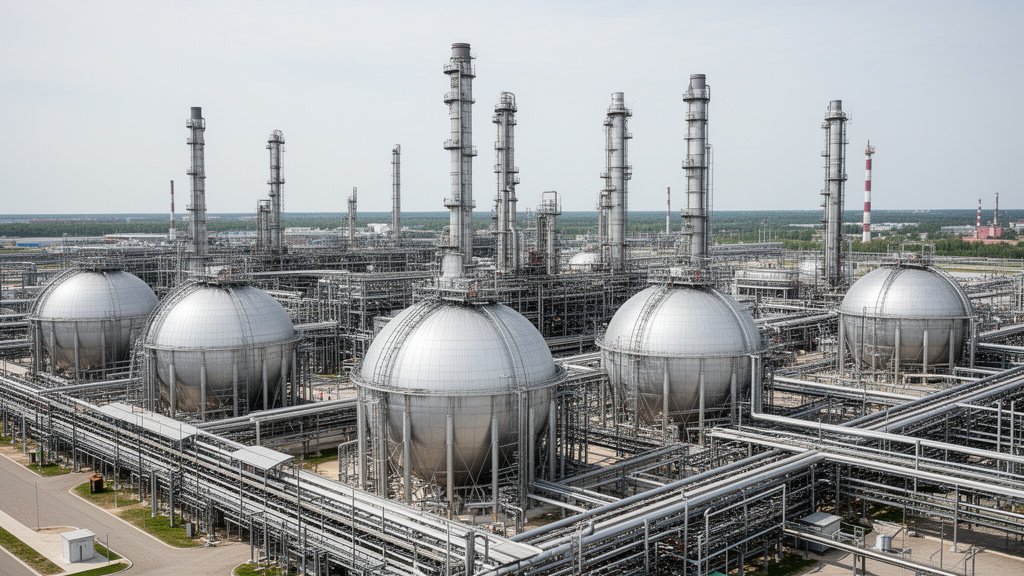
While the political messaging was loud, the economic intent is long-term. Russia’s federal budget remains heavily reliant on hydrocarbon exports. By systematically targeting oil refineries (NPZs), Ukraine is attempting to induce a localized ‘fuel crisis.’ If domestic refining capacity is crippled, the Russian government is forced to pull supplies from reserves or reduce exports to ensure internal demand is met—directly impacting the state revenue required to finance the ongoing war in Ukraine.
This is a war of attrition on Russia’s balance sheet. Analysts have noted that the refinery strikes in the Moscow region and beyond are precisely calculated to impact crude processing units, which are complex and difficult to repair without imported Western components now under sanctions. This creates a compounding effect: the more refineries are struck, the harder it becomes to repair the previous ones, creating a widening gap in Russia’s production capabilities.
Secondary Angles: Why This Matters Now
1. The ‘Normality’ Myth: Putin’s re-election campaign was predicated on the idea that the country is functioning normally, with the war happening somewhere else. Strikes on Moscow force that reality into the living rooms of the political elite, complicating the Kremlin’s messaging.
2. Defensive Resource Drain: Every drone that reaches a target in the Moscow region forces Russia to relocate valuable air defense assets from the frontlines to the interior, potentially creating gaps for the Ukrainian Air Force to exploit in occupied territories.
3. Global Market Instability: As Russia is a major global energy exporter, these strikes introduce a new ‘risk premium’ into the global oil market. Even if physical supply isn’t immediately halted, the volatility creates uncertainty, which remains the single greatest antagonist to global energy price stability.
FAQ: People Also Ask
Q: Why target the Moscow region specifically instead of military bases?
A: Targeting the Moscow region serves a dual purpose: military and psychological. While military bases are key targets, striking energy infrastructure near the capital creates a direct economic impact and disrupts the narrative of domestic security that the Russian leadership projects to its citizens during election cycles.
Q: Are these drones manufactured in Ukraine?
A: Yes, Ukraine has significantly ramped up its domestic production of long-range, one-way attack drones. These indigenous systems, designed to avoid reliance on Western-supplied long-range missiles, allow Kyiv to strike targets deep inside Russia without violating prohibitions on the use of Western weapons for strikes on Russian territory.
Q: How effective are Russian defenses against these drones?
A: Russia has robust air defenses, but they were optimized for high-flying aircraft and ballistic missiles. Low-flying, slow-moving drone swarms are notoriously difficult for these radar systems to detect and intercept reliably. The success of the strikes suggests that while Russia can stop some incursions, they cannot stop them all, and the cost of intercepting a cheap drone with a multi-million dollar missile is strategically unsustainable.
Q: Will this change the outcome of the war?
A: These strikes are not a ‘silver bullet’ that will end the war immediately. Rather, they are part of a broader strategy of attrition. By degrading Russia’s industrial capability and forcing the diversion of defensive resources, Ukraine is raising the cost of the war for Russia to a level that may eventually become unsustainable or politically damaging for the Kremlin.