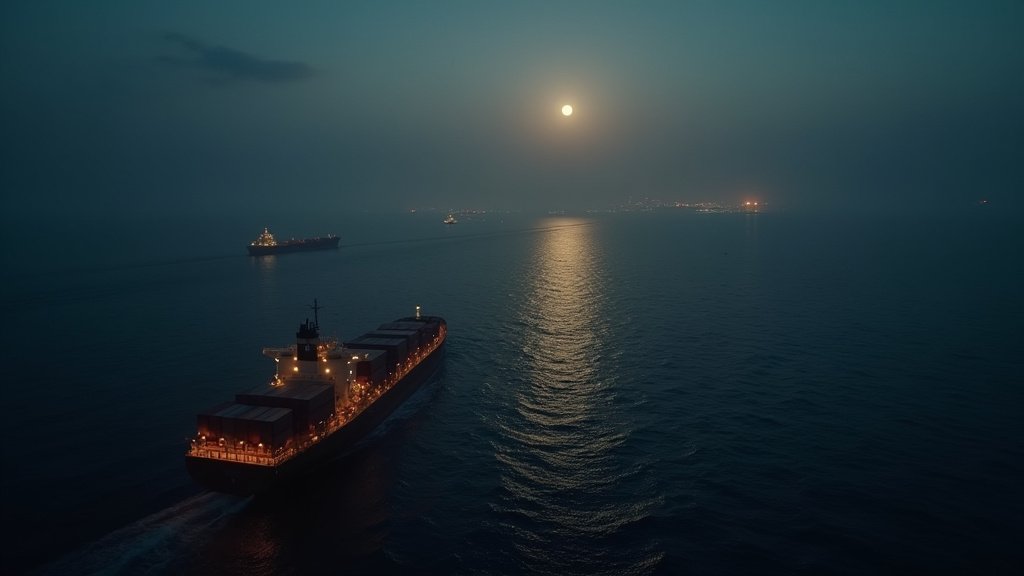
Iran’s seizure of a cargo ship in the Strait of Hormuz has abruptly halted United Nations evacuation operations, escalating regional tensions. The incident occurred amidst ongoing diplomatic efforts and has raised concerns about maritime security in a critical global waterway.
- A cargo ship was attacked and seized by Iran in the Strait of Hormuz.
- The attack has forced the suspension of UN evacuation plans.
- The Strait of Hormuz is a vital chokepoint for global oil and trade.
- The incident raises significant concerns over maritime security and regional stability.
Escalation in the Strait of Hormuz
The Strait of Hormuz, a narrow waterway connecting the Persian Gulf to the open ocean, has once again become a focal point of geopolitical friction following Iran’s seizure of a cargo ship. This brazen act has not only disrupted international shipping but has also had immediate, far-reaching consequences for humanitarian efforts in the region. The United Nations, which was reportedly in the process of coordinating evacuation plans, has been forced to suspend its operations due to the heightened security risks. This suspension jeopardizes the safety of individuals requiring immediate relocation and underscores the volatile nature of the current geopolitical climate.
Maritime Security Under Threat
The incident directly challenges the established norms of maritime security and international law. The Strait of Hormuz is one of the world’s most critical chokepoints, with a significant volume of global oil and trade passing through it daily. Any disruption or threat to navigation in this area carries substantial economic and strategic implications. The seizure of a commercial vessel by Iranian forces, regardless of the stated reasons, is seen by many as an act of aggression that further destabilizes an already precarious region. International maritime organizations are likely to be reviewing protocols and response strategies in light of this development.
Impact on UN Operations
The halt in UN evacuation plans is a direct and severe consequence of the maritime incident. While the specific nature of the evacuations and the individuals involved have not been fully detailed, the suspension implies a significant security threat that made continuing the operations untenable. This raises questions about the safety of personnel and the feasibility of humanitarian missions in areas of high geopolitical tension. The UN’s ability to conduct its operations smoothly is crucial for maintaining stability and assisting vulnerable populations, and this incident highlights the challenges faced by such organizations in conflict zones.
Diplomatic Ramifications
This event is poised to have significant diplomatic repercussions. It comes at a time when international focus is already heavily on the Middle East, with various ongoing conflicts and diplomatic initiatives. The seizure of the cargo ship is likely to draw condemnation from several nations and could complicate ongoing diplomatic efforts to de-escalate tensions. It may also lead to renewed calls for international maritime patrols and a stronger collective response to ensure freedom of navigation and the safety of commercial vessels. The incident could potentially reshape regional alliances and international strategies concerning Iran’s maritime activities.
Secondary Angles
Historical Context: The Strait of Hormuz has a long history of being a strategic flashpoint, with various incidents and naval standoffs occurring over the decades. Understanding past events in this waterway provides crucial context for the current situation.
Economic Repercussions: The disruption of shipping in the Strait of Hormuz can have immediate and significant impacts on global oil prices and supply chains. This could affect economies worldwide, depending on the duration and severity of the disruption.
Future Predictions: The incident raises concerns about potential future escalations. Analysts will be closely watching for retaliatory measures, increased naval presence, and shifts in diplomatic stances from regional and international powers.
FAQ: People Also Ask
What is the Strait of Hormuz?
The Strait of Hormuz is a strategically important, narrow channel connecting the Persian Gulf to the Gulf of Oman and the open sea. It is a vital chokepoint for international oil and gas shipments.
Why is the Strait of Hormuz important?
Approximately 30% of the world’s liquefied natural gas and about 20% of global oil consumption passes through the Strait of Hormuz, making it critical for global energy markets.
What was the UN evacuation plan?
Details of the specific UN evacuation plan have not been released, but its suspension indicates a severe security threat that made continuing the operations impossible.
What are the potential consequences of this attack?
Potential consequences include further regional instability, disruption to global energy supplies, economic repercussions, and intensified diplomatic tensions between Iran and international powers.
What is the response from international bodies?
International bodies are likely to express concern and condemnation, potentially leading to calls for de-escalation, increased maritime security, and diplomatic interventions.