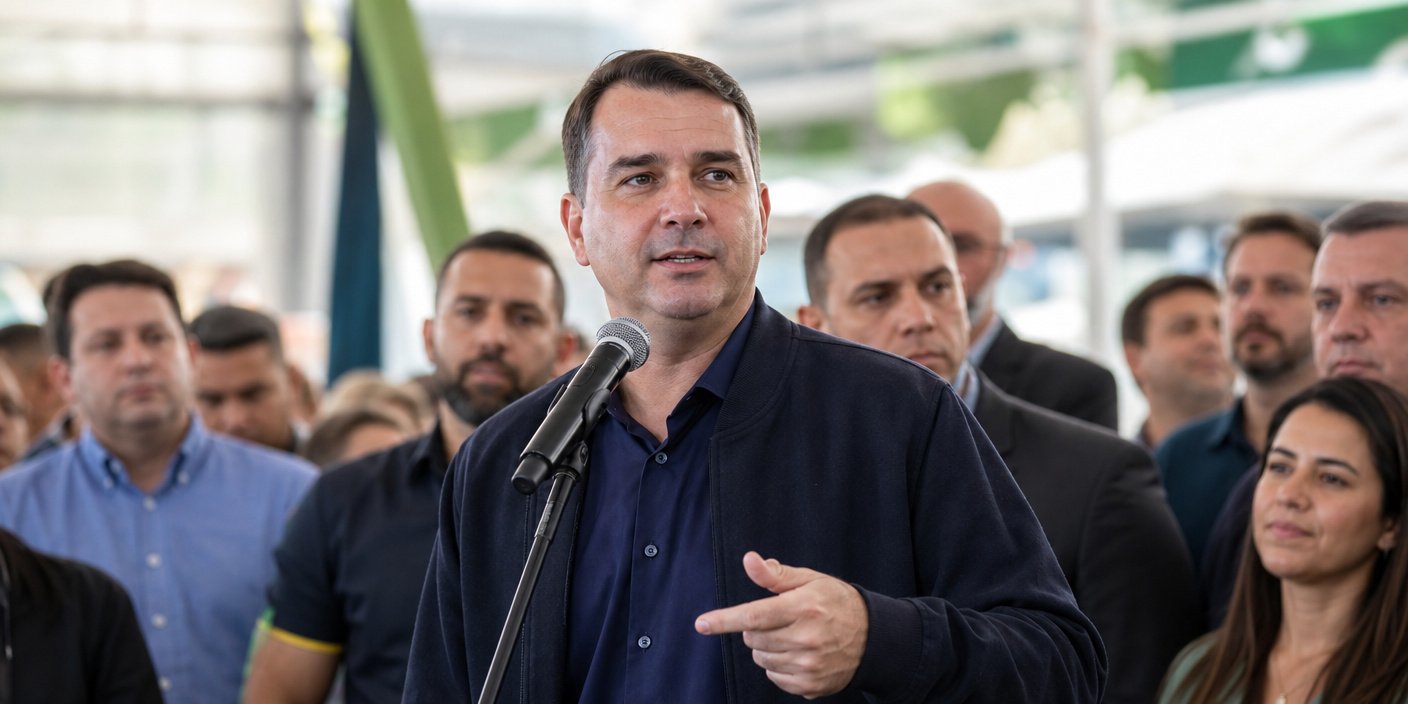
In a stunning electoral realignment that has sent shockwaves through South America, Flávio Bolsonaro has secured a first-round lead in Brazil’s presidential election, capturing 47.08% of the vote. The results represent a decisive challenge to the candidacy of incumbent Luiz Inácio Lula da Silva, who now faces the daunting prospect of a critical runoff election scheduled for October 25. This development marks a pivotal moment in the nation’s political trajectory, highlighting a significant surge for right-wing influence in the region.
Key Highlights
- Flávio Bolsonaro has captured 47.08% of the vote, outperforming initial polling and securing a lead in the first round.
- Incumbent Luiz Inácio Lula da Silva has been pushed to a runoff, failing to secure a majority mandate in the first instance.
- A high-stakes runoff election is officially scheduled for October 25, which will decide the presidency.
- The results indicate a substantial shift in voter sentiment, challenging the established political order in Brazil.
The Reshaping of Brazil’s Executive Future
The unexpected electoral success of Flávio Bolsonaro signals a profound transformation in Brazilian politics. For months, pollsters and political analysts had engaged in fierce debates regarding the stability of the incumbent government, yet the definitive 47.08% showing by Bolsonaro clarifies that a significant segment of the electorate is demanding radical change. This outcome is not merely a rejection of the status quo but a complex consolidation of conservative ideology that has been bubbling beneath the surface of the Brazilian political landscape.
The Mechanics of the Vote
As the data from the Electoral Court (TSE) began to flow, the narrative of the election shifted hourly. The early indicators suggested a tighter race, but as rural districts and suburban strongholds reported their tallies, the momentum swung firmly in favor of Bolsonaro. The ability to pull 47.08% of the vote in a crowded field is a testament to an efficient grassroots mobilization effort. This mobilization capitalized on deep-seated concerns regarding economic inflation, the cost of living, and the ideological divide that has characterized the nation’s public discourse for the last four years.
Lula da Silva, who campaigned on a platform of restoration and social cohesion, now finds his campaign in a state of urgent re-evaluation. The incumbent’s strategy of leaning into historical legacy has seemingly collided with a younger, more digitally mobilized demographic that is prioritizing immediate economic relief over long-term political stability. With the October 25 runoff looming, both campaigns are now forced to pivot. For Lula, the task is twofold: he must re-engage disillusioned voters who either abstained from the first round or opted for third-party candidates, and he must effectively communicate why his platform remains the superior path forward.
The October 25th Runoff: A Strategic Pivot
The period between the first-round results and the October 25 runoff will be defined by intense political maneuvering. Historically, runoffs in Brazil have served as a filter for moderation; however, this cycle is proving to be different. The ideological chasm between Bolsonaro and Lula has created an “all-or-nothing” atmosphere. We can expect to see an aggressive deployment of capital into media markets, particularly on social platforms where the battle for the undecided voter will be won or lost.
Analysts suggest that the coalition-building phase is now the most critical component of the election. Small parties that failed to reach the threshold will now find themselves courted by both camps. The endorsements of these minor candidates will likely serve as the kingmakers in this contest. For Flávio Bolsonaro, maintaining his current momentum while expanding his reach into the urban centers—where Lula historically maintains stronger support—is the vital objective. For Lula, the goal is to reclaim the narrative that the current surge is a flash in the pan rather than a permanent ideological realignment.
Economic Implications and Investor Sentiment
The markets have reacted to the election news with a mixture of caution and anticipation. Brazil is a crucial player in the global commodities market, and institutional investors are sensitive to the volatility that this election brings. A pivot to a more right-leaning executive administration could signal a change in the nation’s trade policy, tax structures, and relationship with international trade blocs.
Multinational corporations currently operating in Brazil are watching these developments closely, specifically regarding the potential for deregulation and the acceleration of privatization programs. The 47.08% figure has provided a level of certainty that Bolsonaro is a viable force, which may encourage capital flight or investment depending on how the market perceives the policy trajectory of a potential Bolsonaro administration. Conversely, should the October 25 runoff tilt back toward Lula, we might see a rapid re-pricing of assets as markets recalibrate for a continuation of current social and economic policies.
FAQ: People Also Ask
What does the 47.08% result mean for the future of Brazil?
This percentage confirms that Flávio Bolsonaro has a substantial mandate moving into the runoff. It signifies that the incumbent, Lula da Silva, does not have the majority support required to win in the first round, effectively turning the October 25 election into a referendum on the current administration’s direction.
When is the runoff election taking place?
The runoff election is scheduled for October 25. This date is critical as it provides a narrow window for both candidates to consolidate their bases and court undecided voters.
Is the outcome of this election guaranteed?
No. The results of the first round merely advance both candidates to the runoff. History has shown that runoffs in Brazil are highly volatile, and the lead can be overcome depending on coalition-building and voter turnout strategies in the final weeks.
Why did the polls not predict this gap?
The polling discrepancy highlights a recurring theme in modern global elections: the challenge of capturing the sentiment of “shy voters” or those who are not engaged with traditional polling methodologies. The results indicate that the ground-level support for Bolsonaro was underestimated by centralized polling entities.