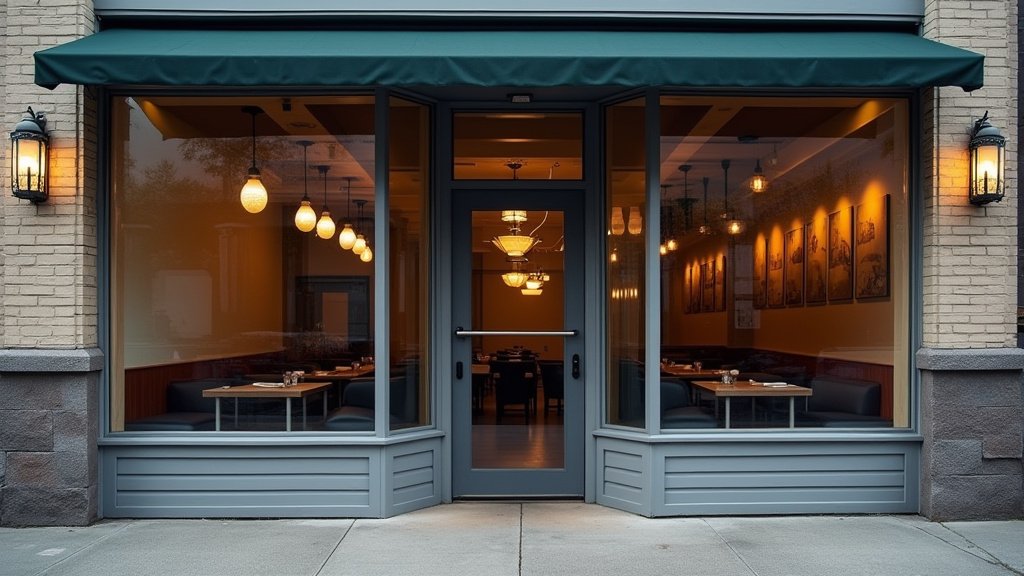
Bo & Vine officially shuttered its doors in Eugene on August 1, 2026, bringing a definitive end to a six-year tenure that had made the establishment a staple for local diners. The closure, which follows a period of mounting economic pressure and shifting consumer patterns, serves as a poignant reminder of the volatility currently impacting the hospitality industry in the Pacific Northwest.
Key Highlights
- Bo & Vine permanently ceased operations at its Eugene location on August 1, 2026.
- The business served the local community for more than six years before the shutdown.
- Official reasoning for the closure includes declining sales and significant economic challenges.
- The departure of the brand highlights broader trends in Eugene’s changing culinary economy.
The Economic Reality Behind the Closure
The closure of Bo & Vine in Eugene is not an isolated incident but rather a symptom of a broader economic shift affecting independent and medium-sized restaurant chains. For over six years, the burger bar managed to maintain a consistent presence in the local food scene, surviving the turbulence of the mid-2020s. However, the accumulation of operational costs—ranging from rising supply chain expenses to labor market adjustments—eventually created a financial landscape where maintaining the Eugene location was no longer viable.
Industry analysts have noted that the 2025-2026 fiscal cycle has been particularly punishing for brick-and-mortar establishments. With discretionary spending tightening across the region, restaurants have faced a “double squeeze”: the need to maintain quality standards amidst inflating ingredient costs while simultaneously dealing with a more price-sensitive consumer base. Bo & Vine’s decision to close reflects a strategic, albeit difficult, move to consolidate resources in response to these declining sales figures.
The Shifting Culinary Map
As Eugene’s downtown and peripheral dining sectors experience turnover, there is a noticeable migration of culinary interest toward smaller hubs. The recent emergence of Glenwood’s new restaurant expansion into Junction City underscores this trend. While Eugene’s urban core has long been the primary destination for restaurant growth, the saturation of the market, combined with rising commercial rents, has led operators to look toward nearby municipalities like Junction City.
This shift is driven by a search for lower overheads and a captured local demographic that is increasingly seeking convenience outside the central metropolitan area. The success of newer ventures in Junction City contrasts sharply with the recent contraction in Eugene, suggesting that the local food scene is undergoing a structural realignment rather than a simple decline.
Economic Impact and Employment
Beyond the loss of a popular dining venue, the closure of Bo & Vine represents a loss of local employment opportunities. For a restaurant that operated for over six years, the impact extends to the staff who built their careers there and the local suppliers who relied on the restaurant’s consistent demand. When an establishment of this tenure closes, the ripples are felt throughout the local food supply chain, impacting everything from local distributors to the neighborhood foot traffic that once energized the block.
Analyzing the Future of Local Dining
Looking ahead, the market is expected to remain tight for the remainder of 2026. Experts predict that successful restaurants will need to balance lean operational models with unique brand identities to survive. The “middle-of-the-road” restaurant—one that lacks either the high-end appeal of fine dining or the hyper-efficiency of quick-service giants—often finds itself the most vulnerable to the current economic stressors.
For residents of Eugene, the loss of Bo & Vine is a call to support remaining local businesses. The local food ecosystem depends on a delicate balance of volume and profit margin, and as Bo & Vine’s closure demonstrates, even well-established names are not immune to the pressures of the modern economy. The challenge for the city’s remaining operators will be to navigate these headwinds while maintaining the character that makes the local food scene unique.
FAQ: People Also Ask
Q: Why did Bo & Vine close in Eugene?
A: The closure was formally attributed to a combination of declining sales and broader economic challenges that made the long-term operation of the Eugene location unsustainable.
Q: How long was Bo & Vine open in Eugene?
A: Bo & Vine served the Eugene community for more than six years before permanently closing on August 1, 2026.
Q: Does this closure signal a trend in the local restaurant market?
A: Yes, it highlights a trend of market realignment. Many restaurants are currently facing significant economic headwinds, leading some to close while others shift focus toward emerging suburban hubs like Junction City.
Q: Are there any plans for the space?
A: As of now, there has been no public announcement regarding the future use of the former Bo & Vine site. The property transition is typically handled by commercial real estate partners once a lease is concluded.