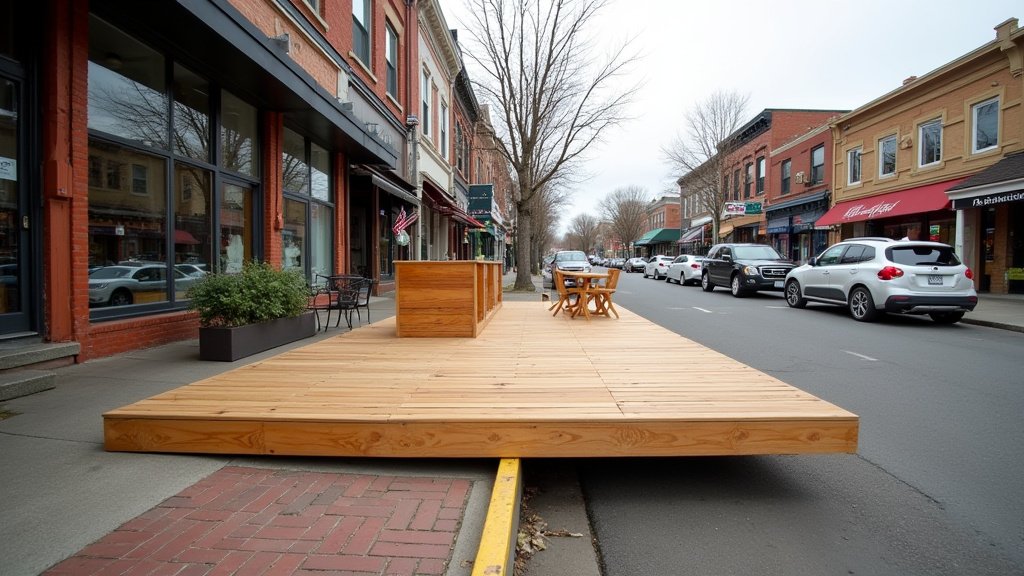
The vibrant outdoor dining scene in Eugene, Oregon, has taken a significant hit this week. Bar Purlieu, a beloved establishment, has officially removed its in-street dining parklet following a series of three separate vehicle collisions into the structure. The decision marks a poignant surrender to the realities of urban traffic safety, as ownership cites a recurring pattern of dangerous driving and a persistent lack of tangible infrastructure improvements from local municipal officials. This move is not merely a logistical change for a local business but a cautionary tale regarding the fragility of “pandemic-era” urban design when confronted with the high-speed realities of modern traffic.
Key Highlights
- Three Strikes Policy: Bar Purlieu was impacted by vehicles on three separate occasions, creating an untenable environment for staff and patrons.
- Infrastructure Failure: Ownership reported that repeated requests for enhanced safety barriers, bollards, or municipal traffic calming measures went unaddressed.
- Safety First: The removal of the parklet signals that the business is prioritizing the physical safety of their community over the operational benefits of increased outdoor capacity.
- Municipal Friction: The situation has spotlighted a widening disconnect between the City of Eugene’s vision for street vitality and the practical enforcement of safety standards.
The Price of Vitality: Safety vs. Streetscape
The “parklet” concept—the conversion of street-side parking into functional outdoor dining space—was one of the few silver linings of the 2020 pandemic era. It promised a vision of urban centers that were more European, more social, and less reliant on the primacy of the personal automobile. However, for Bar Purlieu, located on the busy artery of Willamette Street, this dream manifested as a recurring nightmare. The decision to dismantle the structure is a stark admission: the current urban infrastructure, designed primarily for the flow of cars, is fundamentally incompatible with the static, vulnerable nature of outdoor dining without aggressive physical protection.
The Anatomy of an Incident
To understand the magnitude of this decision, one must look at the frequency and nature of the incidents. A parklet is a static, rigid structure. It exists in the transition zone of a street—the space where human activity meets the chaotic kinetic energy of vehicular traffic. For Bar Purlieu, these three crashes were not merely “scrapes” or “near misses”; they were intrusions of heavy machinery into a space intended for fine dining and social gathering. Each impact shattered the illusion of safety that flimsy delineator posts or temporary barriers provided.
When a car strikes a dining structure, the consequences are binary: either there is someone sitting there, or there is not. In the case of Bar Purlieu, luck played a significant role in preventing physical injury to patrons or staff. However, business owners cannot operate on luck. The cumulative psychological toll—waiting for the sound of grinding metal or shattered glass—eventually necessitated the removal of the structure, proving that the economic boon of extra seating is not worth the liability of human safety.
The Municipal Response Gap
Central to this controversy is the role of the City of Eugene and the Planning Department. Critics argue that when cities incentivize the use of “Streeteries” and parklets, they assume an implicit responsibility to “harden” those spaces. This includes installing crash-rated bollards, high-visibility barriers, and traffic calming measures that physically prevent a vehicle from leaving its lane of travel.
In the case of Bar Purlieu, the frustration expressed by the owners highlights a common municipal failure: the approval of permits for outdoor use without the concurrent investment in safety infrastructure. While city officials often praise the “vibrancy” these spaces bring to the local economy, the lack of a standardized, protective mandate suggests that many municipalities are treating parklets as temporary, ephemeral installations rather than permanent pieces of urban architecture. This “permission without protection” approach forces small business owners to bear the brunt of traffic violence, effectively privatizing the risk of public infrastructure design.
The Future of the Pandemic-Era Parklet
Is this the end of the streatery in mid-sized American cities? Likely not, but it signifies a maturation phase. The era of “anything goes” temporary outdoor dining is ending. Businesses like Bar Purlieu are demonstrating that future iterations of outdoor dining must be built to the standard of a fortress, not a cafe.
We are likely to see a pivot toward “curb-extensions” that are structurally integrated into the sidewalk rather than simply bolted onto the asphalt. This involves civil engineering—curbing, drainage, and permanent vertical infrastructure—rather than plastic cones and planters. This requires capital and planning, two things that small businesses often lack and municipalities are often slow to provide. The lesson from the Willamette Street situation is clear: if the city wants the benefits of a vibrant, street-oriented culture, it must be willing to pay the price of protecting it.
Urban Planning Implications
The Bar Purlieu incident provides a case study for urban planners and city councils nationwide. It underscores the concept of “Traffic Violence,” a term increasingly used by urbanists to describe the systemic danger posed by car-centric road design. By prioritizing traffic throughput over pedestrian safety, municipalities create environments where accidents are not merely possible, but statistically inevitable. When a dining structure occupies the edge of the street, it must be considered part of the traffic safety equation. Failure to account for this leads to the removal of these spaces, resulting in a net loss for the city’s “placemaking” goals.
FAQ: People Also Ask
1. Why did Bar Purlieu remove their parklet instead of just repairing it?
After the third vehicle collision, the risk became unsustainable. The owners determined that no amount of repair would mitigate the underlying issue: the lack of adequate safety protections from passing traffic, making it a danger to staff and customers.
2. Did the City of Eugene offer any solutions?
The business owners expressed significant frustration, citing a lack of meaningful or timely response from city officials to requests for enhanced traffic calming or safety barriers to protect their in-street dining area.
3. Is this part of a larger trend in Eugene?
Yes. This incident has sparked a local conversation about the viability of in-street dining infrastructure. Many business owners are now reconsidering whether the temporary increase in capacity is worth the safety liability, particularly on streets without heavy traffic-calming measures.
4. What are the legal implications for businesses like Bar Purlieu?
Operating an in-street parklet carries significant liability. When a structure is repeatedly struck, the business faces not only property damage but also potential lawsuits from injured patrons, soaring insurance premiums, and the operational nightmare of constant rebuilding.