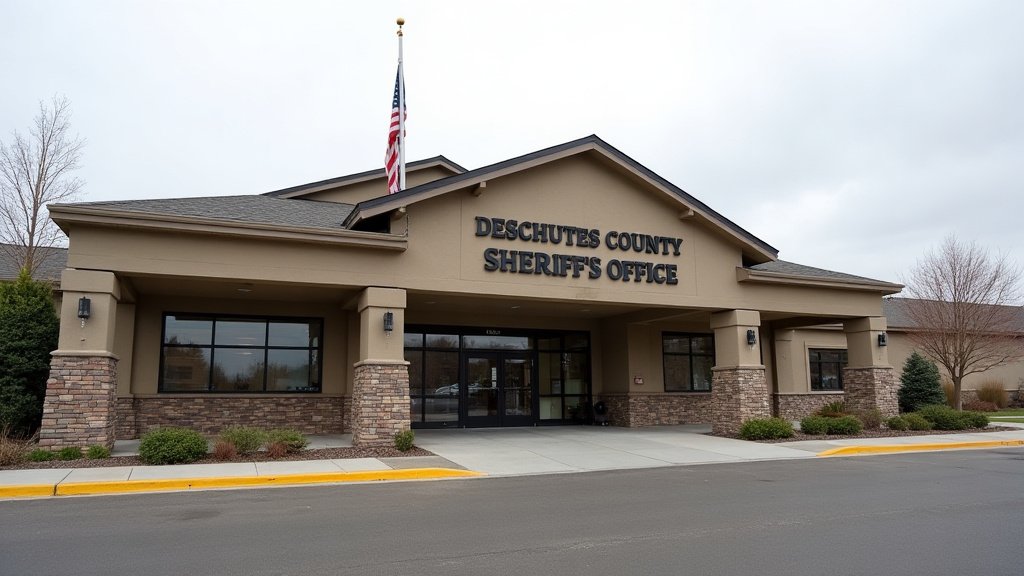
The editorial board of The Source Weekly has ignited a necessary, albeit uncomfortable, conversation regarding the Deschutes County Sheriff’s Office (DCSO). By posing the provocative question, “Even If We Want to Back the Blue, Can We?”, the publication has cut through the noise of partisan rhetoric to address a fundamental tenet of civil society: the requirement for law enforcement to police itself with integrity. When the badge, a symbol of protection, becomes a veil for internal misconduct, the entire social contract begins to fray. The editorial highlights a pattern of behavioral issues and institutional failure that suggests the Deschutes County Sheriff’s Office may be prioritizing the preservation of its own reputation over the rigorous maintenance of justice.
Key Highlights
- Institutional Failure: The Source Weekly editorial underscores a consistent failure of the Deschutes County Sheriff’s Office to hold its members accountable for clear misconduct.
- The Trust Deficit: The tension between the public’s desire to support law enforcement (“Back the Blue”) and the reality of observed behavior is creating a widening chasm in community relations.
- The Transparency Gap: Investigations into internal office conduct are often criticized for their lack of transparency, leading to public skepticism regarding the integrity of the Sheriff’s department.
- Call for Reform: The narrative shifts from mere criticism to an implicit call for structural change, suggesting that internal affairs mechanisms in Deschutes County are currently insufficient or compromised.
The Crisis of Institutional Integrity in Deschutes County
The relationship between a local sheriff’s office and the community it serves is built entirely on the currency of trust. When that trust is eroded by repeated instances of internal misconduct—and, more importantly, the subsequent failure to address that misconduct adequately—the institution loses its moral authority. The Source Weekly’s assessment brings to light a troubling reality: in Deschutes County, the perception of “Back the Blue” has been weaponized as a shield against legitimate inquiry rather than a rallying cry for public safety.
The Mechanics of Internal Opaque-ness
One of the most concerning aspects highlighted in recent critiques of the DCSO is the perceived opacity of internal affairs investigations. When the public perceives that “accountability” is nothing more than a closed-door proceeding with predetermined outcomes, faith in the justice system evaporates. This is not merely an issue of a few “bad apples”; it is an issue of the barrel itself. If the system is designed to protect the officer rather than the public, the “Back the Blue” sentiment becomes untenable for the average citizen. The editorial board points out that the Deschutes County Sheriff’s Office faces a recurring challenge: the inability to transparently address personnel failures, which ultimately damages the credibility of the entire department.
Can We “Back the Blue” if the Blue Won’t Self-Correct?
The phrase “Back the Blue” originated as a gesture of support for law enforcement officers who put their lives on the line. However, the editorial poses a modern, nuanced challenge: support for a profession should not equate to blind allegiance to an institution that refuses to police its own. This is the crux of the Deschutes County dilemma. Citizens are increasingly sophisticated in their understanding of legal and ethical standards; they can distinguish between an officer performing a dangerous job and an office that systematically ignores or excuses unprofessional conduct. The DCSO finds itself at a crossroads where silence and internal defensiveness may be causing more damage than the misconduct itself.
Secondary Angles: A Broader Context
Historical Precedent of Sheriff Accountability in Oregon
Oregon has historically had a decentralized law enforcement structure, where the Sheriff is an elected official, making them directly accountable to the voters. However, this structure also makes them prone to political insulation. In recent years, several Oregon counties have faced similar crises of confidence. The DCSO is currently navigating a trend where sheriff’s offices are under increased scrutiny not just for their actions on the street, but for their administrative cultures. Historical analysis shows that when departments fail to provide transparent disciplinary outcomes, public sentiment inevitably shifts from support to adversarial watchdog behavior.
The Impact on Community Policing Strategies
Community policing relies on the idea of partnership. If the community views the DCSO as an entity that does not share their values regarding accountability, the effectiveness of community policing vanishes. Officers on the ground, many of whom may indeed be operating with integrity, find their work harder because they are representing a brand that the public has begun to distrust. This creates a cultural vacuum where the police are viewed as an occupying force rather than a service provider, which is arguably the most dangerous outcome for any sheriff’s office.
The Role of Independent Oversight Models
One potential solution being discussed in the wake of these controversies is the adoption of independent oversight boards. If the Deschutes County Sheriff’s Office cannot or will not hold itself accountable, external pressure may force the county to implement civilian oversight committees. This shift would represent a significant change in the power dynamics of local law enforcement, moving from an insular “self-policing” model to a public-facing, transparent, and externally reviewed structure. This is the future direction for many departments nationwide, and Deschutes County is essentially being told: adapt, or have transparency forced upon you.
FAQ: People Also Ask
1. What exactly triggered the editorial by The Source Weekly regarding the DCSO?
The editorial was prompted by a pattern of internal behavioral issues and documented instances of misconduct within the Deschutes County Sheriff’s Office, coupled with a lack of clear, public-facing accountability for those involved.
2. Is “Back the Blue” inherently problematic according to the editorial?
No, the editorial does not condemn the movement entirely. It challenges whether it is logically possible or morally consistent to support the institution of law enforcement when that institution fails to address its own internal systemic failures.
3. Who is the primary subject of these accountability concerns?
The concerns center on the administrative and internal culture of the Deschutes County Sheriff’s Office, overseen by Sheriff Shane Nelson, specifically focusing on how personnel misconduct is handled behind closed doors.
4. What are the proposed solutions for better accountability?
While the editorial focuses on exposing the problem, the broader discourse suggests a need for greater transparency in internal affairs processes, potentially involving independent civilian oversight to ensure that disciplinary actions are consistent and impartial.