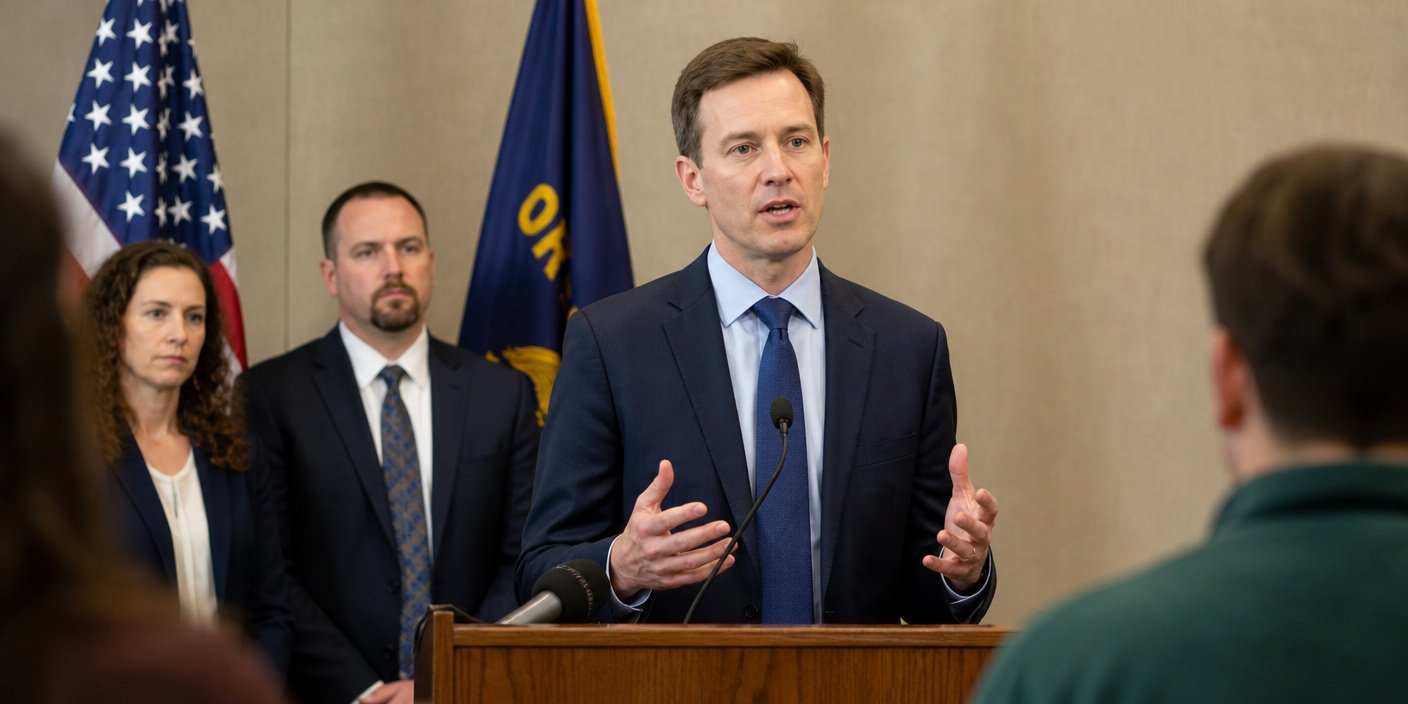
Oregon Attorney General Dan Rayfield has officially initiated a $2 billion lawsuit against OpenAI, marking one of the most significant legal escalations by a state regulator against a major artificial intelligence developer. The litigation, filed as a cornerstone of the state’s newly unveiled ‘Keeping Kids Safe Initiative,’ alleges that OpenAI’s suite of products has created systemic risks for minors and engaged in deceptive practices that misinformed the general public regarding the safety and capabilities of their generative AI systems. This move signals a seismic shift in how state authorities are scrutinizing the rapid, often unchecked expansion of Large Language Models (LLMs) and their integration into everyday consumer products.
Key Highlights
- $2 Billion Damages: The lawsuit seeks $2 billion in penalties, citing extensive harm caused by OpenAI’s business practices.
- Keeping Kids Safe Initiative: This litigation is the flagship action of Oregon’s broader legislative push to regulate Big Tech’s impact on youth development.
- Endangerment Allegations: The complaint asserts that OpenAI failed to implement adequate safeguards to prevent minors from accessing potentially harmful content or developing unhealthy dependencies on AI interactions.
- Deceptive Conduct: Oregon prosecutors allege that OpenAI intentionally misled the public and stakeholders about the risks associated with their platforms, prioritizing aggressive market growth over user protection.
Challenging the AI Frontier: The Oregon vs. OpenAI Litigation
The filing by Attorney General Dan Rayfield represents a pivotal moment in the ongoing national conversation surrounding the responsibility of AI developers. By focusing specifically on child safety, the state of Oregon is tapping into a bipartisan concern that unites parents, educators, and regulators: the unchecked proliferation of algorithmic interactions in the lives of minors. The lawsuit argues that the design architecture of OpenAI’s models does not sufficiently account for the cognitive and developmental vulnerabilities of young users, effectively turning the user base into a massive, unregulated testing ground.
The ‘Keeping Kids Safe’ Initiative Framework
The ‘Keeping Kids Safe Initiative’ is not a one-off legal strategy; it is a systemic effort by the Oregon Department of Justice to force transparency on tech giants. AG Rayfield’s office has indicated that this initiative will prioritize consumer protection laws, specifically those governing how data is harvested from minors and how algorithms are curated for young audiences. By targeting a $2 billion figure, the state is making a clear economic argument: the costs of mitigating harm to the next generation are significantly higher than the profit margins currently being generated by potentially reckless AI deployment. This litigation could set a precedent for ‘algorithmic negligence,’ a legal concept that would hold tech companies liable for the psychological and social outcomes dictated by their automated systems.
Dissecting the Allegations of Algorithmic Harm
Central to the lawsuit are specific claims regarding how OpenAI’s products interact with minor users. The complaint alleges that the company failed to implement robust age-gating mechanisms and that the AI’s responses were not sufficiently filtered to prevent exposure to age-inappropriate, sexually explicit, or extremist content. Furthermore, the suit alleges that OpenAI knowingly marketed its products in ways that downplayed the addictive nature of conversational AI. By framing the AI as a ‘helpful assistant’ or ‘tutor,’ the lawsuit claims the company deliberately obscured the risks of anthropomorphization—where children attribute human qualities to an AI—which can lead to profound emotional dependency and developmental stalling. The documentation submitted to the court includes internal communication logs that the state claims suggest a culture of ‘growth-at-all-costs,’ where safety measures were routinely delayed to ensure product deployment remained ahead of competitors.
Transparency, Misleading Public Perception, and Corporate Duty
Beyond the direct impact on children, the second pillar of the lawsuit focuses on public deception. The state argues that OpenAI provided false or incomplete information to the public regarding the reliability and safety of their systems. This accusation strikes at the heart of the trust gap currently widening between AI companies and the general public. If an entity claims a technology is safe for educational environments while knowing that the training data contains biases or hallucinatory pathways that could be exploited by minors, that constitutes a violation of consumer protection statutes.
This aspect of the case could have far-reaching implications for AI development standards globally. If Oregon wins, it may force companies to adopt an ‘auditable safety’ model, where they must provide transparent, verified documentation of how their models are tested for safety against specific demographic risks. This would effectively end the ‘black box’ era of AI development, wherein companies could release products without external verification of their social impacts.
Secondary Angles: Future Implications
1. The Regulatory Ripple Effect: This lawsuit is likely to trigger a cascade of similar litigation across other states. Attorneys General in states with strong consumer protection laws, such as California, New York, and Washington, will be watching the Oregon filing closely to see if they can replicate the strategy.
2. AI Development Lifecycle: We may see a shift in the AI development lifecycle. Companies might move away from rapid iteration toward ‘safety-first’ deployment, where external ethical audits become a mandatory, expensive part of the pre-release process.
3. Federal vs. State Power: This case highlights the vacuum in federal AI legislation. Because Congress has not yet passed comprehensive AI safety laws, states are stepping in to fill the gap. This creates a patchwork of regulations that could force tech companies to lobby for federal intervention just to standardize the rules they must follow.
FAQ: People Also Ask
Q: What is the primary goal of the Oregon lawsuit against OpenAI?
A: The lawsuit aims to hold OpenAI accountable for alleged harms to children caused by its AI products and to penalize the company for misleading the public about the safety of its technology. The $2 billion figure is designed to compensate for potential damages and deter future negligence.
Q: What is the ‘Keeping Kids Safe Initiative’?
A: This is a broader legal and policy campaign launched by the Oregon Attorney General to prioritize the protection of minors in the digital age, focusing on regulating how big tech companies and AI developers interact with younger demographics.
Q: How does this lawsuit affect current OpenAI users?
A: In the immediate term, there will be no disruption to services. However, if the lawsuit is successful or leads to regulatory settlements, it could force OpenAI to implement stricter age verification, more robust content filters, and greater transparency regarding how their models function.
Q: Is this lawsuit likely to lead to federal AI regulation?
A: Legal experts suggest that high-profile state actions like this often catalyze federal interest, potentially pressuring Congress to establish national standards for AI safety and consumer transparency to prevent a fragmented regulatory landscape.