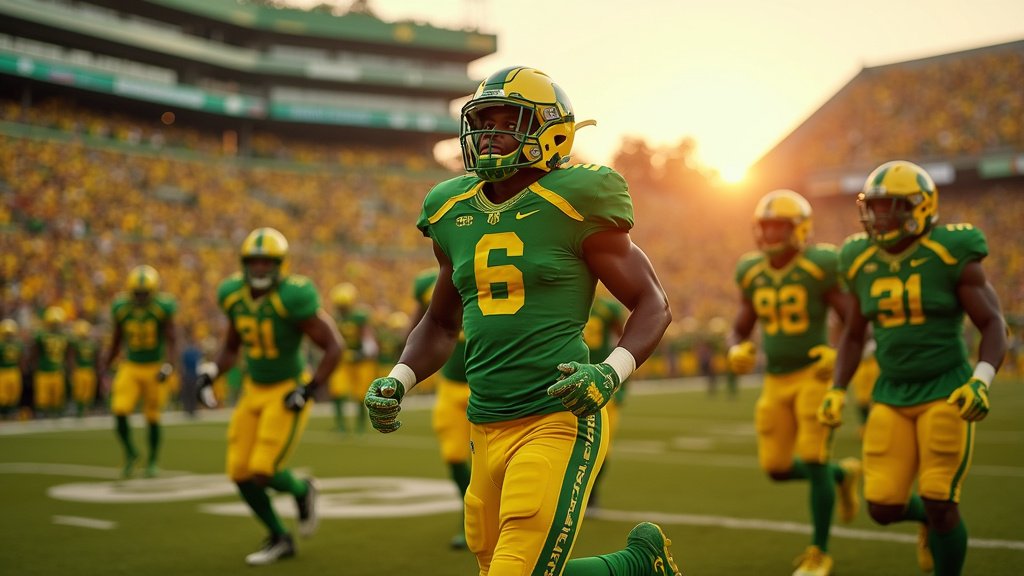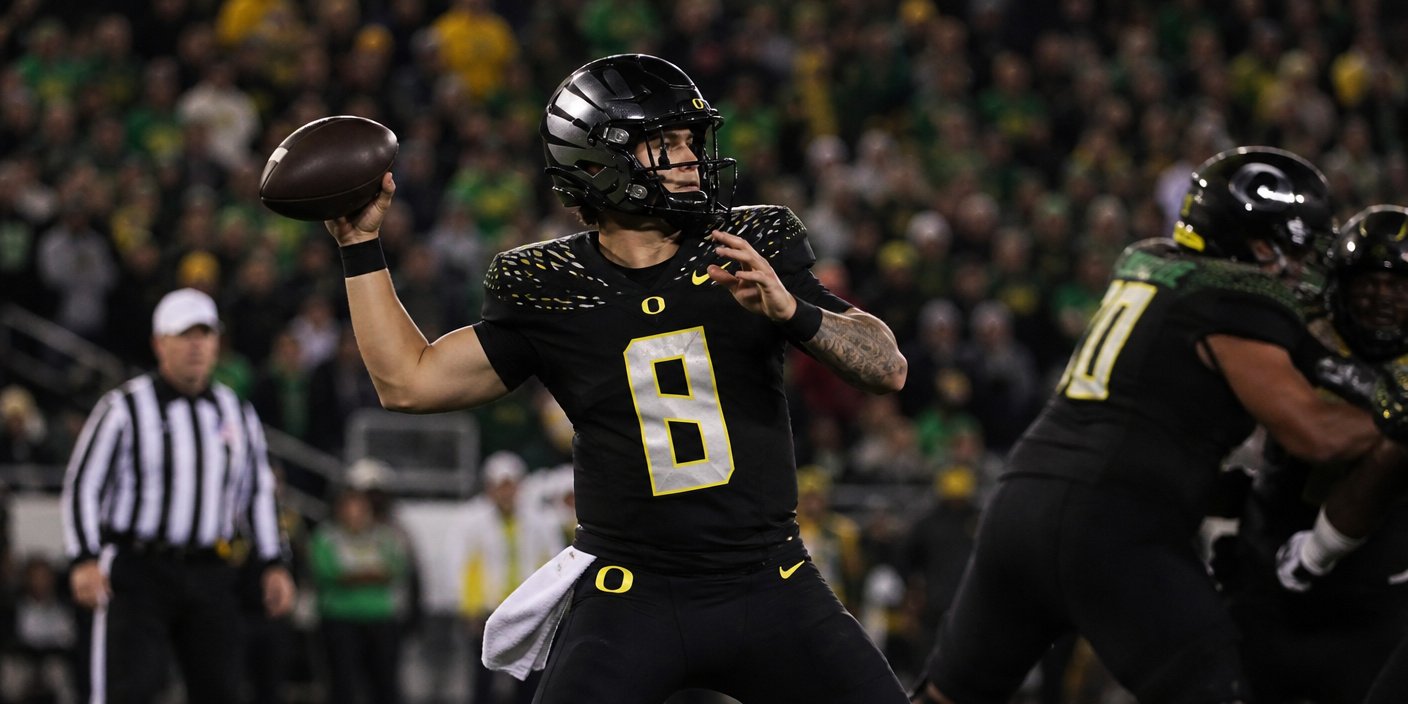
Oregon secured a dominant 31-7 victory over Michigan in Eugene, fueled by a stellar performance from quarterback Dillon Gabriel, who threw for 341 yards and four touchdowns. The result was not merely a win; it was a physical and tactical manifesto delivered on the national stage, signaling that the Ducks are not just participating in the Big Ten—they are dictating its future.
Key Highlights
- Offensive Explosion: Oregon’s passing attack decimated the Michigan secondary, amassing 341 yards and four touchdowns through the air.
- Defensive Fortress: The Ducks’ defense held Michigan to a single touchdown, effectively neutralizing their rushing attack and forcing turnovers.
- Big Ten Statement: This victory reshapes the conference power dynamic, establishing Oregon as a frontrunner for the College Football Playoff.
- Atmosphere Impact: The deafening roar of Autzen Stadium proved to be a tangible factor, rattling Michigan’s composure early and often.
Oregon’s Tactical Supremacy and the Path Forward
The 31-7 scoreline at Autzen Stadium does not fully capture the sheer magnitude of Oregon’s performance. From the opening kickoff, it was evident that the Ducks had prepared a game plan designed to expose the vulnerabilities that have plagued Michigan throughout the season. This was a showcase of speed, precision, and coaching acumen that has now positioned Oregon as a terrifying prospect for any opponent in the postseason.
The Air Attack: A Surgical Dissection
At the heart of the offensive dominance was the performance of the signal-caller, whose 341-yard, four-touchdown outing will be remembered as the defining sequence of the game. The strategy was clear: attack the seams and utilize the verticality of the receiving corps to force Michigan’s linebackers to defend too much space. The precision in the red zone was particularly noteworthy. In recent weeks, teams have struggled to convert yardage into points; Oregon, however, moved the ball with clinical efficiency, refusing to settle for field goals and consistently finding the end zone. The four touchdown passes were distributed across the field, proving that this offense is not reliant on a singular star but rather a cohesive system that exploits defensive over-pursuit.
The Defensive Wall
While the passing stats will dominate the headlines, the defensive effort was equally impressive. Holding a program like Michigan to just seven points in a high-stakes environment requires more than just luck—it requires disciplined gap control and elite tackling. Oregon’s defense consistently forced Michigan into 3rd-and-long situations, allowing their pass rushers to pin their ears back. The pressure off the edge was unrelenting, forcing errant throws and preventing Michigan from ever establishing the tempo required for a comeback. By neutralizing the run early, the Ducks forced Michigan into a one-dimensional offense, playing right into the hands of a secondary that was clearly prepared for every vertical threat.
Michigan’s Identity Crisis
For the Wolverines, this loss serves as a stark reality check. The post-championship hangover has been a narrative thread all season, but this game confirmed it. The team lacked the cohesiveness and physical dominance that defined their previous runs. The coaching staff seemed to have no answer for Oregon’s tempo, and the lack of adjustment in the second half was glaring. If Michigan is to salvage the remainder of their season, they must address the fundamental breakdowns in their secondary and their inability to protect the quarterback under sustained pressure. This is a program at a crossroads, needing a total re-evaluation of its offensive identity before the final stretch of the schedule.
Secondary Angles: The Future of the Program
1. The Recruiting Dividend: Dominant performances in high-profile night games are the best recruiting tools a program can have. The optics of this win—the crowd, the energy, the blowout nature—will pay dividends in the upcoming recruiting cycles. Prospects want to play for winners, and Oregon proved they are at the top of that hierarchy.
2. Big Ten Realignment Implications: As the Big Ten continues to integrate new members, the traditional power structure is being challenged. Oregon’s arrival isn’t just about winning games; it’s about establishing a new brand of football—faster, higher-scoring, and more aggressive—that the traditional stalwarts of the conference may not be equipped to handle.
3. Postseason Projection: With this win, the path to the College Football Playoff has become significantly clearer for Oregon. However, the true test will be maintaining this intensity. The danger for a team coming off such an emotional high is complacency. The coaching staff’s ability to keep the team focused on the ‘next game’ mentality will be the defining factor in their national championship aspirations.
FAQ: People Also Ask
Q: Was the 31-7 scoreline a surprise given the history between these teams?
A: While Oregon was favored, the margin of victory was certainly a surprise. Most analysts expected a tightly contested game; however, Oregon’s execution on both sides of the ball turned what many predicted to be a defensive battle into a lopsided affair.
Q: What was the biggest factor in Oregon’s offensive success?
A: The primary factor was the quarterback’s ability to read Michigan’s defensive blitz packages. By consistently identifying where the pressure was coming from and finding open receivers in the vacated spaces, the offense never allowed Michigan to establish defensive rhythm.
Q: How does this loss impact Michigan’s playoff chances?
A: The loss significantly hurts Michigan’s path to the playoff. With one loss already on the books, their margin for error has evaporated. They will need to win out and likely rely on chaos in other conference championships to remain in the conversation.
Q: Was the atmosphere at Autzen Stadium a major factor?
A: Absolutely. Autzen is notoriously one of the loudest venues in college football. The noise level contributed to communication issues on the Michigan offensive line, leading to false starts and missed blocking assignments that killed momentum early in the game.