After more than 170 years of displacement, the Confederated Tribes of Siletz Indians have successfully reclaimed a 6.82-acre coastal parcel near Yachats, Oregon, marking a poignant milestone in the ‘Land Back’ movement. This transfer, facilitated through a strategic partnership with the McKenzie River Trust, returns a slice of culturally significant Pacific coastline to its original stewards, effectively ending nearly two centuries of private ownership and reconnecting the Siletz people with a landscape that holds deep ancestral ties.
Key Highlights
- Land Recovery: The 6.82-acre parcel, known as Rocky Shores, was deeded back to the Confederated Tribes of Siletz Indians, restoring indigenous ownership to a key stretch of the Oregon coast.
- Collaborative Effort: The transfer was made possible through the McKenzie River Trust, which acted as a bridge to facilitate the transaction, ensuring conservation goals align with tribal stewardship.
- Historical Restoration: This event serves as a symbolic and physical correction to the forced displacement of the Siletz people in the 1850s, representing a shift in how conservation groups view ancestral land rights.
- Ecological Stewardship: The land, located near Yachats, will be managed by the Tribe, with a focus on preserving native biodiversity and maintaining access for cultural practices.
Restoring Sovereignty: The Rocky Shores Initiative
The return of the Rocky Shores parcel is far more than a simple real estate transaction; it is a profound act of restorative justice. For the Confederated Tribes of Siletz Indians, this strip of coastline represents a tangible reclamation of their heritage. When the Tribe was forcibly removed from their ancestral lands in the mid-19th century—scattered and confined to the Siletz Reservation—their deep, generational connection to the Pacific coastline was severed by federal policy and private enclosure. Today, that severance is being mended.
The Historical Weight of Displacement
To understand the significance of this 6.82-acre return, one must look back to the 1850s. The history of the Confederated Tribes of Siletz Indians is one of immense resilience against federal erasure. The Treaty of 1855 and subsequent executive orders forcibly moved the Siletz people from their traditional homelands to a reservation, stripping them of their coastal access. For over 170 years, the land that is now known as the Rocky Shores parcel passed through various private hands, completely inaccessible to the very people whose culture and survival depended on the ocean’s resources.
This reclamation acknowledges the historical trauma of that era. It transforms the narrative from one of permanent loss to one of potential restoration. It challenges the conventional view of ‘ownership’ by replacing it with a concept of ‘stewardship,’ acknowledging that the Tribe’s relationship with the land predates current property laws by millennia.
A New Model for Conservation
One of the most innovative aspects of this reclamation is the partnership model. The McKenzie River Trust played a pivotal role in this process. Historically, conservation movements were often detached from—and sometimes even exclusionary toward—Indigenous rights, prioritizing ‘wild’ spaces free of human contact. This project signals a paradigm shift. By partnering with the Tribe, the Trust recognized that the most effective way to preserve the ecological integrity of the Oregon coast is to put the land back into the hands of those with the longest and deepest connection to it.
This collaboration serves as a blueprint for other NGOs and conservation groups. It demonstrates that the ‘Land Back’ movement is not a threat to conservation but a catalyst for it. The Tribe brings a holistic perspective to land management, integrating ecological preservation with cultural practice, traditional ecological knowledge, and spiritual responsibility. The McKenzie River Trust’s role was to provide the legal and financial scaffolding to make this vision a reality, showing that NGOs can act as allies in restorative justice rather than merely acting as land-holding entities.
Ecological and Cultural Stewardship
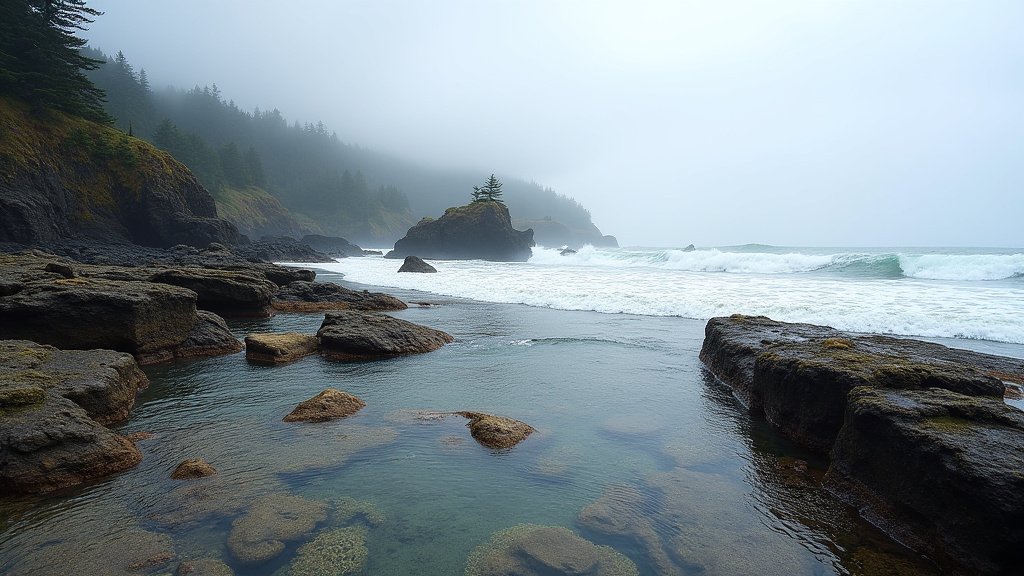
The 6.82-acre parcel is located near Yachats, a region known for its rugged basalt coastline and dramatic tide pools. Beyond its beauty, the site holds specific ecological and cultural value. For the Siletz people, the coast was a source of sustenance—fishing, clamming, and gathering—that formed the backbone of their economy and way of life. The return of this land provides a space for the Tribe to once again engage in these practices, ensuring that future generations can learn the traditional methods of resource management.
Furthermore, the restoration of tribal oversight brings a new level of environmental protection. Indigenous stewardship is increasingly recognized by climatologists and biologists as highly effective in promoting biodiversity. By applying traditional ecological knowledge (TEK) to the site, the Tribe can address local environmental challenges—such as coastal erosion and the protection of native marine and terrestrial species—in a way that aligns with the ecosystem’s natural rhythms rather than fighting against them.
Implications for the Future
While 6.82 acres may seem small in the context of the vast expanse of the United States, its symbolic weight is immense. This event sets a legal and social precedent. It forces private landowners, government agencies, and conservation trusts to ask themselves: Who truly has the best claim to steward this land?
We are likely to see more of these collaborative models emerge in the Pacific Northwest and beyond. As more organizations acknowledge the necessity of Indigenous sovereignty, we can expect an increase in similar transfers. This is not just about the property; it is about the legitimacy of tribal governments. When an organization like the McKenzie River Trust recognizes the Confederated Tribes of Siletz Indians as the rightful stewards, it validates their sovereignty, their history, and their future.
This reclamation serves as a powerful reminder that history is not static. The decisions made in the 1850s were final for that era, but they are not final for ours. Through intentional action and collaborative partnerships, the wrongs of the past can be corrected, and the future can be shaped by the people who have been here since time immemorial.
FAQ: People Also Ask
What is the ‘Land Back’ movement?
The ‘Land Back’ movement is an Indigenous-led initiative focused on reclaiming sovereignty over ancestral lands. It aims to restore land, resources, and self-determination to Indigenous peoples through legal transfers, co-management agreements, and the dismantling of colonial structures that alienated these communities from their territories.
Why was this specific parcel chosen for return?
The Rocky Shores parcel near Yachats was identified due to its combination of high ecological value and significant cultural history. Its return facilitates tribal access to the coast, supporting the Siletz people’s ability to maintain cultural traditions while simultaneously allowing for the preservation of a sensitive coastal ecosystem.
How will this land be managed moving forward?
The Confederated Tribes of Siletz Indians will manage the land with a focus on sustainable stewardship. While specific management plans often incorporate traditional ecological knowledge (TEK) to enhance biodiversity, the Tribe will ensure the land remains protected from development, preserving its ecological health and cultural integrity for future generations.