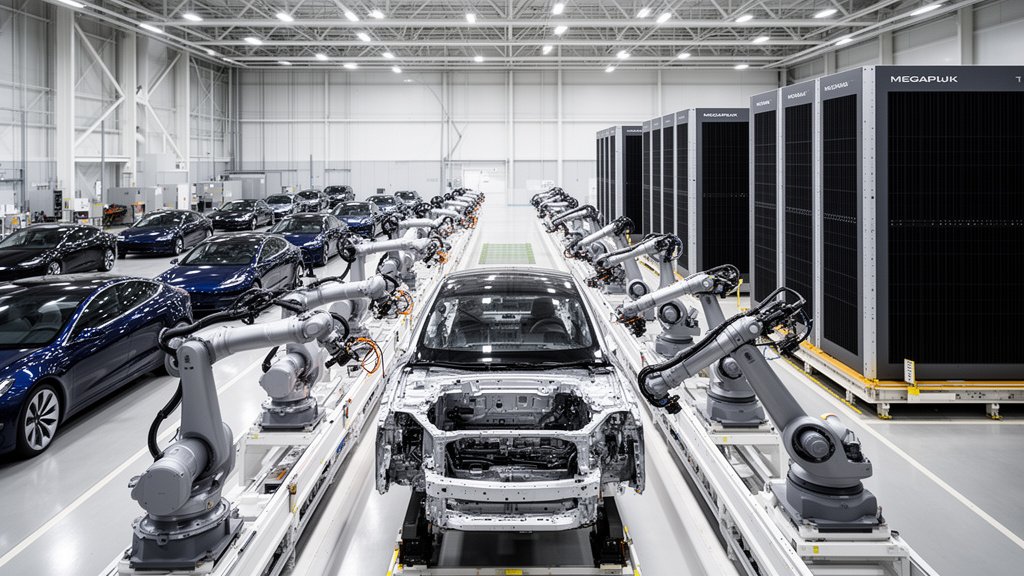
Tesla has officially released its third-quarter 2026 production and delivery figures, reporting a total of 464,391 vehicles produced and 486,532 vehicles delivered. The company also reached a milestone of 13.7 GWh in energy storage product deployments, signaling a shift in operational focus as the company leverages both its automotive and energy divisions to maintain growth in a competitive global market.
Key Highlights
- Vehicle Production: 464,391 units produced across the global Gigafactory network.
- Vehicle Deliveries: 486,532 units delivered, indicating strong consumer demand and effective inventory logistics.
- Energy Storage: 13.7 GWh of energy storage products deployed, representing a significant expansion in the company’s energy infrastructure business.
- Operational Strategy: The positive spread between deliveries and production signals a successful inventory optimization strategy.
Analyzing Tesla’s Q3 2026 Operational Momentum
The third quarter of 2026 has provided a vital look into the maturing state of Tesla’s manufacturing ecosystem. With 486,532 vehicles delivered compared to 464,391 produced, the company has effectively signaled a reduction in existing inventory levels, a move that often reflects healthier cash flow and a more disciplined supply chain management approach. In an industry currently navigating the complexities of global supply chain shifts and fluctuating demand, this gap of 22,141 units represents a pivotal alignment between the factory floor and the end customer.
Scaling Production and Manufacturing Efficiency
As Tesla continues to refine its manufacturing processes, the 2026 figures highlight the scale of the Gigafactory operations. Production efficiency remains a cornerstone of the company’s competitive advantage. By optimizing assembly lines and implementing further advancements in the ‘Unboxed Process’ (a hallmark of Tesla’s manufacturing evolution), the company has managed to maintain consistent output while preparing for future vehicle iterations. The ability to produce 464,391 vehicles in a single quarter underscores the immense scale that the company has achieved since its early years. This volume is not merely a number; it is a testament to the integration of automated robotics and AI-driven supply logistics that have become synonymous with the Tesla brand.
The Energy Storage Revolution
The most striking figure in the Q3 report may well be the 13.7 GWh of energy storage deployments. For years, observers treated Tesla’s energy business as an adjunct to its automotive core. In 2026, this narrative has shifted dramatically. The surge in storage capacity—ranging from the industrial-grade Megapack to the residential Powerwall—highlights the critical role of battery storage in the global transition to renewable energy. As grids worldwide face increased strain from weather variability and rising consumption, Tesla’s energy division has positioned itself as an essential provider of grid stability. The 13.7 GWh milestone is a clear indicator that the energy division is no longer just a secondary project; it is a high-growth pillar of the corporate strategy that commands significant capital and operational attention.
Market Implications and Future Outlook
What do these numbers mean for the remainder of the year? Firstly, the inventory drawdown suggests that Tesla is not struggling with oversupply, a common pitfall for legacy automakers. By moving 486,532 vehicles, the company has demonstrated that even in a cooling economic climate, the demand for its lineup remains resilient. Furthermore, the focus on energy storage provides a hedge against the cyclical nature of the automotive sector.
As we look toward Q4, the focus will likely shift to margin maintenance and the launch of any impending updates or refreshes. Investors and analysts alike are paying close attention to whether the 13.7 GWh energy run rate can be sustained or accelerated. If the company continues to mirror this performance, we are likely witnessing the transformation of Tesla from a car company into a dual-engine entity that produces both high-efficiency mobility and global grid infrastructure solutions. The synergy between these two sectors—leveraging the same battery chemistry and supply chain intelligence—is likely to create a moat that few, if any, competitors can easily bridge in the coming years.
FAQ: People Also Ask
Q: What is the significance of the 22,141 unit difference between Tesla’s production and deliveries?
A: The difference represents an inventory drawdown. When deliveries (486,532) exceed production (464,391), it means the company is selling vehicles that were previously in transit or held in inventory, which is generally viewed as a positive sign of healthy demand and efficient logistics management.
Q: How significant is the 13.7 GWh energy storage figure for Tesla?
A: 13.7 GWh is a substantial deployment milestone. It demonstrates the increasing maturity and scale of Tesla’s energy business (Megapack and Powerwall), showing that energy storage is becoming a major, independent revenue driver alongside the automotive segment.
Q: Are these numbers consistent with Tesla’s yearly production goals?
A: Yes, the figures are largely in line with analyst expectations for 2026. The ability to consistently deliver these volumes suggests that Tesla remains on track to meet its annual targets, maintaining its market position despite global economic headwinds.
Q: What entities are the primary drivers of Tesla’s 2026 performance?
A: The performance is driven by the global Gigafactory network (Tesla’s manufacturing hubs), the expansion of the Energy division, and the continuous integration of AI-driven manufacturing technologies that allow for high-volume production at competitive price points.