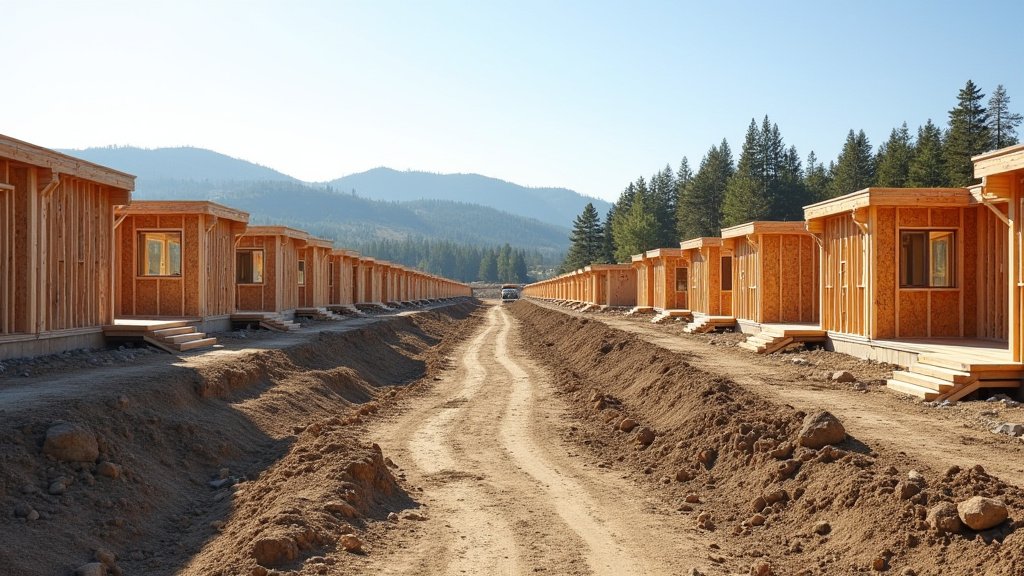
The housing landscape in Grants Pass is witnessing a transformative shift as the Gospel Rescue Mission officially launches “Mission View Village.” This $2.1 million initiative represents a strategic departure from traditional emergency sheltering, focusing instead on the long-term stability and dignity of seniors aged 55 and older who are currently experiencing homelessness. With funding secured and site work underway, the project marks a significant milestone in the region’s efforts to address the intersection of aging and housing insecurity.
Key Highlights
- Investment: A $2.1 million capital initiative dedicated to sustainable housing infrastructure.
- Target Demographic: Dedicated housing for vulnerable seniors aged 55 and older.
- Timeline: Site preparation is immediate, with the first phase of independent living units projected to open by next summer.
- Housing Philosophy: A “Housing First” approach designed to provide stable, permanent independent living rather than transitional emergency shelter.
Solving the Senior Housing Crisis in Grants Pass
The launch of Mission View Village is not merely a construction project; it is a direct response to a growing national crisis often referred to as the “Silver Tsunami” of homelessness. In Grants Pass, as in many mid-sized cities across the United States, fixed-income seniors are increasingly finding themselves priced out of a competitive rental market, leading to a rise in elder homelessness. The Gospel Rescue Mission, a long-standing cornerstone of the community, recognized that traditional congregate shelters—while necessary for emergencies—often fail to meet the specific health, mobility, and dignity needs of the aging population.
The Architecture of Dignity
Mission View Village is designed with a specific focus on the psychology of space. The tiny home model is not chosen merely for its efficiency, but for its ability to foster a sense of autonomy. By providing independent, self-contained units, the village allows seniors to manage their own living spaces, maintain a sense of ownership, and integrate into a supportive community environment. This architectural strategy reduces the institutional “feel” of emergency housing, promoting mental well-being and long-term residential stability.
Economic and Social Impact
The financial model behind the $2.1 million project reflects a broader trend toward data-driven social services. Critics of traditional shelter systems often point to the “revolving door” effect, where individuals cycle through emergency services without achieving permanent stability. By investing in permanent, independent housing, the Gospel Rescue Mission aims to reduce the long-term strain on public health resources, emergency rooms, and law enforcement interventions associated with street homelessness.
Furthermore, this initiative creates a secondary economic benefit for Grants Pass. By converting underutilized land into a functional, tax-neutral (or potentially tax-positive) housing development, the project aligns with modern urban planning principles that prioritize high-density, low-impact living solutions. This is not a sprawling development, but a compact, efficient use of space that maximizes the utility of every dollar raised.
The ‘Silver Tsunami’ and the Housing Gap
To understand the necessity of Mission View Village, one must look at the demographics of homelessness. Nationally, the average age of the homeless population has been creeping upward. This cohort often faces “compounding crises”: physical mobility issues, chronic health conditions that require refrigeration for medication, and social isolation.
Traditional shelters, characterized by large dormitory-style rooms and communal bathrooms, are often hostile environments for this demographic. They lack the quiet, privacy, and accessibility required for aging adults. The tiny home village model serves as a specialized intervention. By addressing these specific vulnerabilities, the project effectively closes a significant gap in the local safety net.
Future Predictions: Scaling the Model
As the first phase of Mission View Village approaches its summer opening, observers of the nonprofit housing sector will likely look to Grants Pass as a case study. If the project succeeds in maintaining high occupancy rates and positive health outcomes for its residents, it could provide a replicable blueprint for other regional organizations.
We anticipate that the success of this project could trigger a secondary wave of funding from state and federal sources. Government entities, currently grappling with the inefficiencies of temporary shelter programs, are increasingly receptive to “permanent supportive housing” (PSH) models. Mission View Village is perfectly positioned to serve as a high-visibility, evidence-based success story that could attract further public-private partnerships in the coming years.
FAQ: People Also Ask
Q: Who is eligible to live in Mission View Village?
A: The village is specifically designed for seniors aged 55 and older who are currently experiencing homelessness. The Gospel Rescue Mission will manage the intake and application process to ensure the facility meets the needs of this specific demographic.
Q: How is the $2.1 million project funded?
A: The funding is a combination of private donations, grants, and community contributions managed by the Gospel Rescue Mission. This initiative represents a substantial capital investment from the organization to secure long-term, sustainable housing.
Q: Why choose tiny homes for this project?
A: Tiny homes provide a balance between affordability, rapid construction, and the preservation of individual dignity. They offer private, independent living spaces that are easier to heat, cool, and maintain compared to traditional larger residential units or congregate settings.
Q: When will the first residents move in?
A: While site work is beginning immediately, the first phase of homes is anticipated to open to residents by next summer.