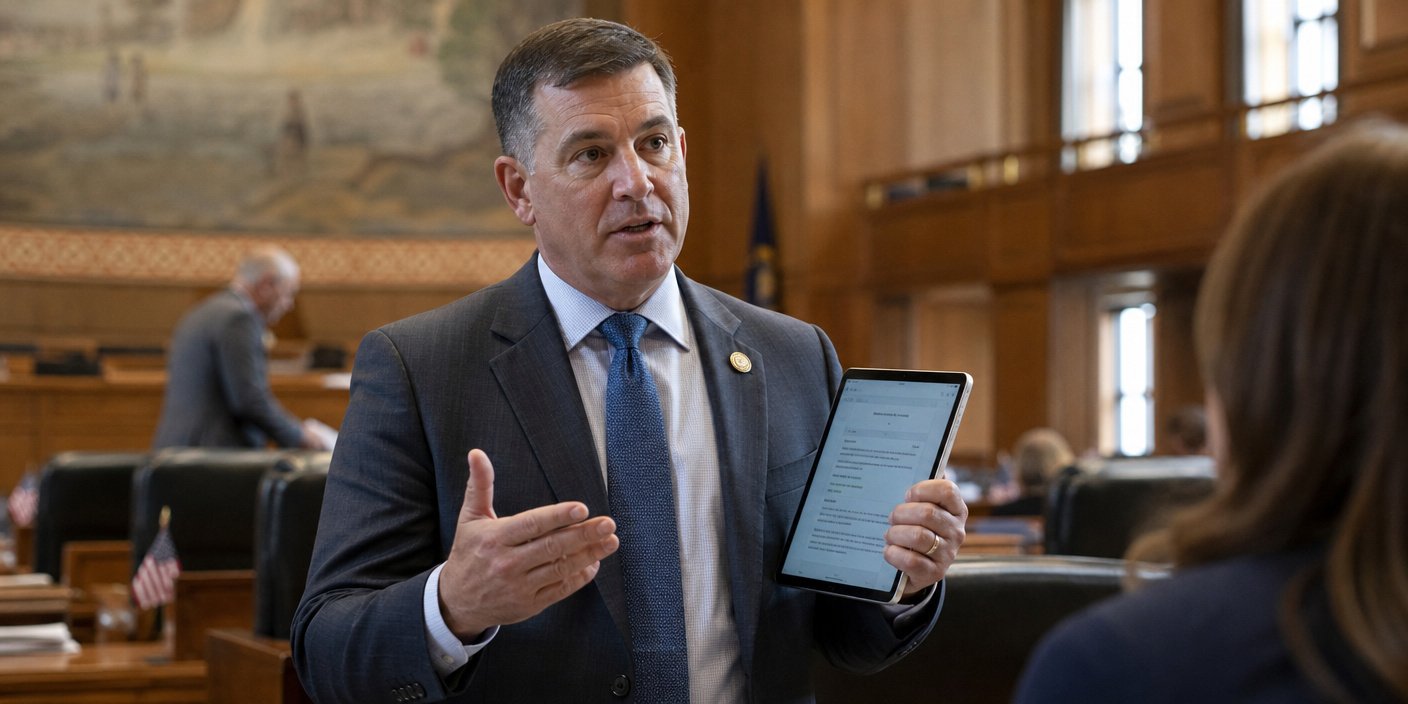
Representative Paul Evans (D-Monmouth) has signaled a critical shift in how the state addresses the deepening financial crisis facing rural municipalities. With small cities across Oregon struggling to maintain essential infrastructure, Evans is preparing to introduce landmark legislation during the 2027 session that would leverage the Oregon Lottery to establish a $1 million emergency fund specifically for cities with fewer than 20,000 residents. This proposal, aimed at providing a buffer against economic volatility, seeks to ensure that pillars of community life—such as libraries and parks—remain open and functional, even when municipal budgets are stretched to their breaking point.
The Anatomy of the ‘Financial Limbo’
For many of Oregon’s smaller communities, the term “financial limbo” is not a metaphor; it is a lived reality. These municipalities often lack the tax base of larger urban centers like Portland or Salem, leaving them disproportionately vulnerable to inflation, rising maintenance costs, and fluctuations in state revenue sharing. When budgets tighten, discretionary services like public parks and libraries—essential for civic health and social cohesion—are often the first casualties of austerity measures. Rep. Evans’ proposal targets this specific vulnerability, recognizing that while these cities are small, their importance to the fabric of Oregon is significant. The proposed legislation seeks to bridge the gap between essential services and the budgetary shortfalls that have left city councils grappling with impossible choices.
The Oregon Lottery as a Fiscal Lever
The choice to utilize the Oregon Lottery to fund this initiative is both strategic and historical. Since its inception, the Oregon Lottery has been a primary engine for state-funded economic development and education. By carving out $1 million for this emergency fund, Evans is framing municipal stability as a form of long-term economic development. The lottery mechanism provides a dedicated revenue stream that, while variable, is often more insulated from the direct legislative budgeting battles that characterize the General Fund. This approach suggests a recognition that the standard methods of state appropriation may not be agile enough to respond to the sudden, acute financial pressures faced by small town governments.
Protecting Community Anchors
The primary focus of the $1 million fund is the preservation of community spaces. In many small Oregon towns, the public library is the only source of high-speed internet for residents, and public parks serve as the primary venues for community gatherings and youth activity. When these spaces are shuttered, the social infrastructure of the town begins to erode. Evans’ proposal aims to provide these cities with the resources to maintain these facilities without forcing residents to endure significant tax hikes or complete service shutdowns. By focusing specifically on cities with fewer than 20,000 residents, the legislation provides a targeted safety net for the populations most frequently overlooked in statewide policy discussions.
Navigating the 2027 Legislative Session
The introduction of this bill in the 2027 session places it in a competitive environment where the state legislature will have to balance myriad demands. Proponents of the bill will likely argue that the return on investment—measured in public health, social stability, and property values—far exceeds the $1 million initial outlay. The challenge, however, will be building a coalition of support that spans party lines. While the bill is currently focused on the mechanics of funding, its success will depend on how Rep. Evans articulates the broader need for a state-led safety net for local governance. If the measure passes, it could serve as a template for other states dealing with the erosion of small-town public services.
Economic Impact and Long-term Sustainability
The economic implications of this proposal extend beyond the immediate maintenance of parks and libraries. Small cities are often the economic hubs for the surrounding rural counties. When these cities fail to provide basic infrastructure, their ability to attract new residents, retain small businesses, and host regional events diminishes. This fund, therefore, acts as a form of preventative economic medicine. By preventing the decline of these municipal assets, the state is effectively protecting the tax base that sustains these towns in the long term. Analysts will be watching closely to see how the criteria for distributing these funds are structured, as the fairness and accessibility of the grant process will be critical to the program’s ultimate success.
Future Implications for Municipal Finance
Looking toward the future, the 2027 legislation could fundamentally change the relationship between state government and small municipalities in Oregon. If successful, this could be the start of a more permanent, revolving fund mechanism, rather than a one-time emergency allocation. The move signals a potential pivot in Oregon politics toward a more decentralized model of support, where the state acts not just as a legislator but as a guarantor of last resort for the operational integrity of its smallest civic entities. As Oregon moves through the next few years, the debate surrounding this bill will likely center on the tension between fiscal conservatism and the necessity of state intervention in local government crises.