NVIDIA and MediaTek have announced a major expansion of their collaboration to build next-generation AI computing platforms. The deal includes MediaTek’s adoption of the NVIDIA NVLink Fusion platform for custom XPU development and a significant $3.5 billion investment from NVIDIA into MediaTek via convertible bonds, marking a pivotal moment in the semiconductor industry’s approach to edge-to-cloud computing.
Key Highlights
- Massive Financial Commitment: A $3.5 billion investment from NVIDIA into MediaTek via convertible bonds underscores the deepening trust and long-term strategic alignment between the two semiconductor titans.
- NVLink Fusion Integration: MediaTek will adopt NVIDIA’s proprietary NVLink Fusion platform, a critical advancement for enabling high-speed, coherent memory access between processors.
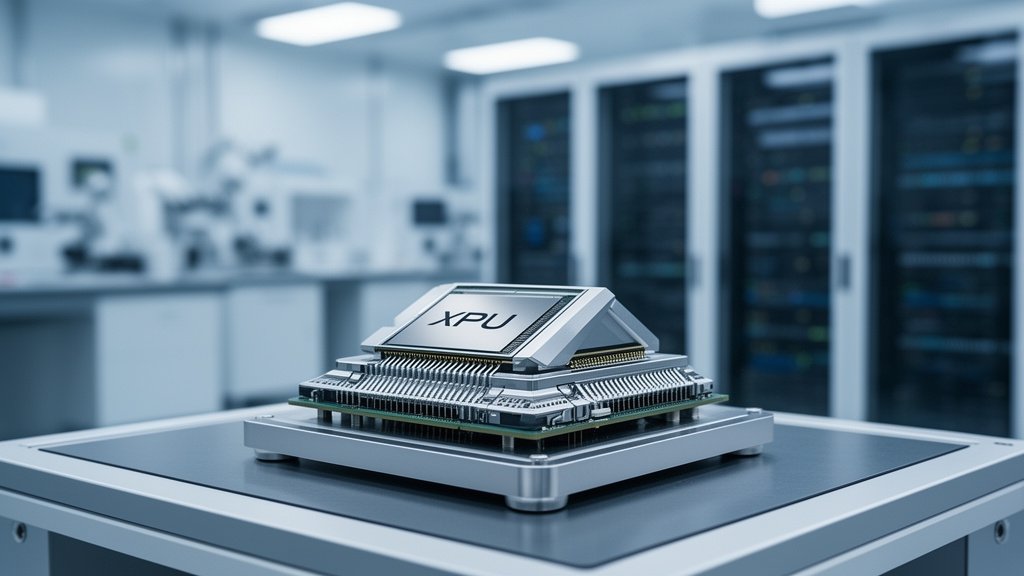
- Custom XPU Development: The collaboration focuses on engineering high-performance XPUs (Accelerated Processing Units) designed to handle the complex, data-heavy demands of AI inference and training at the edge.
- Bridging the Edge-to-Cloud Gap: The partnership aims to unify AI capabilities from localized edge devices—such as mobile handsets and automotive systems—directly to cloud-based data centers.
The Architecture of a New AI Era
The semiconductor landscape is undergoing a tectonic shift, driven by the insatiable demand for AI-capable hardware. Historically, the division between mobile “edge” computing and centralized cloud data centers was defined by clear boundaries in compute power and thermal constraints. MediaTek, long the leader in mobile SoCs (System-on-Chips) and automotive connectivity, and NVIDIA, the undisputed king of high-performance GPU and AI infrastructure, are now effectively erasing these lines.
The Role of NVLink Fusion
At the heart of this deal lies the adoption of NVIDIA’s NVLink Fusion technology. For the uninitiated, NVLink Fusion is the technological “glue” that allows for coherent memory access between the CPU and GPU. In traditional computing, moving data between a processor and a graphics unit incurs latency. NVLink Fusion drastically reduces this bottleneck by allowing the processor and the accelerator to view the same memory pool. By embedding this into MediaTek’s custom XPU designs, the resulting chips will be able to process generative AI models locally with speeds previously reserved for enterprise-grade server clusters. This integration allows MediaTek to offer a “server-class” experience on portable, battery-powered devices.
Financial Synergy: The $3.5 Billion Catalyst
NVIDIA’s $3.5 billion investment in convertible bonds is not merely a capital injection; it is a strategic lock-in. Convertible bonds provide NVIDIA with both a financial stake in MediaTek’s future valuation and a mechanism to ensure that the partnership remains technologically aligned. This investment signifies that NVIDIA is betting heavily on MediaTek’s ability to dominate the consumer and automotive markets, two sectors where NVIDIA’s previous attempts (such as the Tegra line in consumer devices) met with mixed success. By outsourcing the custom silicon development to MediaTek’s specialized teams while retaining the architectural heart (NVLink/GPU), NVIDIA effectively scales its reach into billions of potential devices.
The Shift to Custom XPUs
The term “XPU” or Accelerated Processing Unit is becoming the new standard for the next generation of semiconductors. Unlike a standard CPU, which handles general-purpose tasks, or a traditional GPU, which focuses on graphics and parallel compute, an XPU is a heterogeneous architecture designed specifically for the AI workload. The partnership will focus on tailoring these XPUs to the specific thermal envelopes required by modern smartphones, infotainment systems in autonomous vehicles, and smart industrial IoT devices. This transition to highly specialized hardware is necessary because generic silicon can no longer efficiently handle the computational load of Large Language Models (LLMs) and real-time vision processing required by modern consumer electronics.
Future Implications: The Intelligent Edge
Looking ahead, the convergence of MediaTek’s chip designs and NVIDIA’s software and interconnect stack suggests a future where “Edge AI” becomes significantly more powerful.
Mobile Revolution
The implications for the smartphone industry are profound. With these new XPU designs, mobile devices may soon handle localized inferencing for complex generative AI tasks—such as real-time video translation, high-fidelity neural image generation, or advanced voice assistants—without needing to rely on a constant, high-latency cloud connection. This shift preserves user privacy, reduces data costs, and improves responsiveness.
Automotive Autonomy
In the automotive sector, MediaTek’s Dimensity Auto platform will benefit from the integration of NVIDIA’s superior parallel processing capabilities. Vehicles powered by these next-generation XPUs will manage more sensors, perform more complex pathfinding algorithms, and offer more sophisticated driver assistance (ADAS) features while managing the power efficiency that is crucial for electric vehicle longevity.
Competitive Landscape
This partnership also sends a clear message to competitors like Qualcomm. While Qualcomm has historically dominated the premium mobile SoC space with its Snapdragon architecture, the MediaTek-NVIDIA combination provides a vertical integration that is difficult to challenge. By combining MediaTek’s efficient design-to-market speed with NVIDIA’s software ecosystem (CUDA), the alliance creates a “full-stack” solution that could eventually challenge incumbent architectures in both the high-end mobile market and the data-center-integrated-edge market.
FAQ: People Also Ask
Q: What is the primary benefit of the NVIDIA-MediaTek partnership?
A: The core benefit is the creation of a seamless “Edge-to-Cloud” ecosystem. By integrating NVIDIA’s NVLink Fusion into MediaTek’s custom XPU chips, hardware can handle complex AI workloads locally at the edge, reducing latency and reliance on cloud servers for every computation.
Q: How does the $3.5 billion investment impact the partnership?
A: The investment, structured as convertible bonds, provides MediaTek with the capital required for the intense R&D needed for advanced AI chip development, while also deepening NVIDIA’s strategic commitment and control over the technological roadmap of the chips being produced.
Q: What is a custom XPU?
A: An XPU (Accelerated Processing Unit) is a specialized chip architecture designed specifically to handle heterogeneous workloads—a combination of CPU, GPU, and AI acceleration. Unlike general-purpose chips, they are optimized for the mathematical patterns required by generative AI.
Q: Will this affect smartphone battery life?
A: Yes, in a positive way. By offloading specialized AI tasks to dedicated, high-efficiency hardware (the XPU) rather than relying on a general-purpose processor, the device can complete AI-intensive tasks faster and with less energy consumption, theoretically extending the battery life for common AI-assisted tasks.
Q: Why is “coherence” important in this deal?
A: In computing, memory coherence ensures that when a processor and an accelerator (like a GPU) access data, they see the same information in real-time. This eliminates “copying” data back and forth between memory pools, which is the single biggest bottleneck in high-performance AI processing.