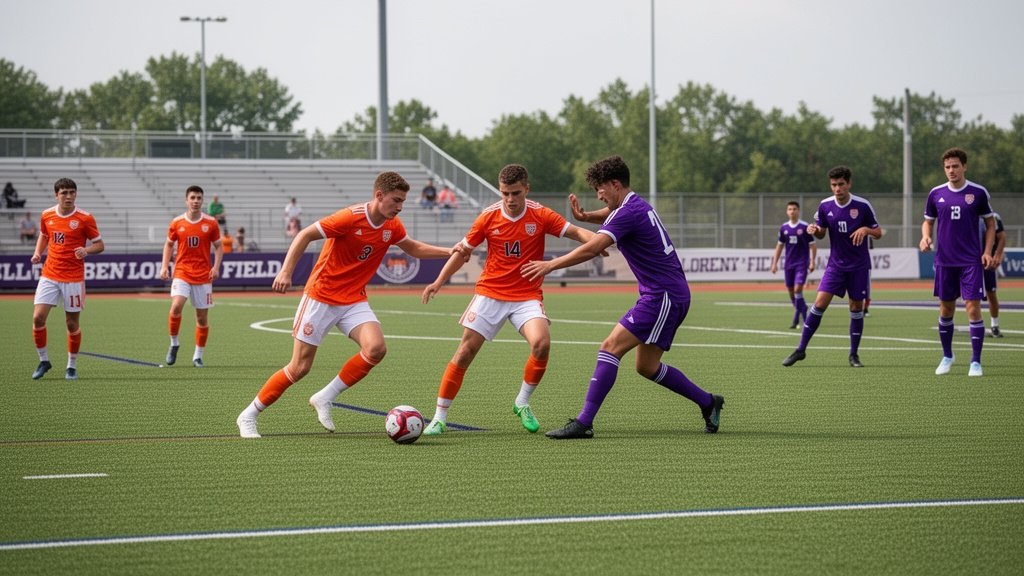
On August 30, 2026, the Oregon State Beavers and the Washington Huskies renewed one of the Pacific Northwest’s most storied college soccer rivalries. At Paul Lorenz Field, the atmosphere was electric, marking a pivotal moment in the early 2026 season where both programs sought to establish dominance and secure crucial RPI points before conference play intensified. The match was defined by tactical discipline, high-speed transitions, and the persistent pressure both teams exerted on their respective defensive lines.
Key Highlights:
- Rivalry Intensity: A high-tempo match reflecting the deep-rooted athletic competition between Oregon State and the University of Washington.
- Tactical Adjustments: Coaches from both sides utilized the match as a benchmark for roster depth and early-season chemistry.
- RPI Significance: With NCAA Tournament implications, every possession and potential set-piece opportunity was contested with postseason-level aggression.
- Defensive Grit: The match showcased organized defensive structures designed to neutralize quick counter-attacks from opposing wingers.
Tactical Turf War: Analyzing the 2026 Beavers-Huskies Clash
The Strategic Landscape of PNW Soccer
The match between Oregon State and Washington is more than just a scheduled fixture; it is a barometer for the health of soccer in the Pacific Northwest. In the 2026 landscape, with shifting conference alignments and the evolving nature of NCAA Division I soccer, these regional contests serve as the bedrock of team culture. For the Beavers, the objective at Paul Lorenz Field was clear: dictate the tempo through organized midfield possession. Washington, conversely, looked to exploit the wide channels, forcing Oregon State’s backline into high-pressure situations that tested the communication of the center-backs.
Breaking Down the 2026 Tactical Framework
Throughout the 90 minutes, spectators witnessed a clash of philosophies. Oregon State’s coaching staff emphasized a structured buildup, utilizing short, lateral passes to draw the Washington defense out of their defensive shape. This “patient-build” strategy is a staple of modern collegiate soccer, designed to isolate opposition defenders in one-on-one situations.
However, Washington’s defensive block proved resilient. The Huskies maintained a compact mid-block, limiting the space between the midfield and the defensive line. By closing off the central channels, they forced the Beavers to attack via the flanks, which resulted in a high volume of crosses. These service attempts were met with disciplined aerial defending by the Washington keepers and central defenders, who prioritized clearance volume over aesthetic possession. The tactical stalemate for much of the first half demonstrated the parity between the two programs.
Roster Depth and the Substitution Factor
One of the most critical aspects of this 2026 encounter was the utilization of bench depth. With the August heat often playing a factor in late-summer fixtures, the ability to rotate players without losing tactical coherence became the deciding factor in the final 20 minutes. Oregon State’s ability to bring on fresh legs in the midfield allowed them to sustain their high-pressing system, whereas Washington relied on experienced veteran leadership to manage the game’s tempo and absorb pressure during the latter stages of the second half.
The integration of new recruits into the starting lineups was particularly noteworthy. Both teams have placed a premium on recruiting dynamic playmakers who can transition quickly from defense to attack. In this match, we saw flashes of individual brilliance that hinted at the high ceilings of both squads as they head into the heart of their respective schedules. The transition play in the 65th minute, which saw a rapid sequence of vertical passes, showcased the level of athleticism that has become the hallmark of this regional rivalry.
Evaluating the Path to the NCAA Tournament
While early-season results are often treated with caution, the match on August 30 holds significant weight for the RPI (Ratings Percentage Index) calculations that the NCAA Selection Committee utilizes in November. A win or a hard-fought draw against a high-caliber opponent like Washington or Oregon State significantly bolsters a team’s resume.
Looking ahead, the takeaway from this match for both programs is the need for increased clinical efficiency in the final third. Both teams generated multiple high-quality scoring opportunities, but the conversion rates remained a point of focus. Improving the ability to finish under pressure will likely be the primary drill objective for both coaching staffs in the coming weeks. If these teams hope to make a deep run into the tournament, the lessons learned at Paul Lorenz Field regarding composure in front of the net will be invaluable.
FAQ: People Also Ask
1. Why is the Oregon State vs. Washington rivalry significant in 2026?
This rivalry is significant due to the regional pride and the high caliber of play consistently produced by both programs. As Pacific Northwest staples, these teams often compete for the same recruiting pools and regional dominance, making every meeting a critical test of their respective systems.
2. How do early-season games affect the NCAA Tournament outlook?
Early-season matches against reputable opponents provide critical strength-of-schedule points. In the NCAA tournament selection process, the RPI relies heavily on the strength of your opponents. Playing competitive games in late August is a strategic move to ensure teams are battle-tested and well-regarded by the committee.
3. What tactical change was most noticeable during this match?
Both teams showed a high degree of defensive organization. The tactical focus shifted from pure possession to a “transition-heavy” game, where both sides looked to capitalize on turnovers in the midfield rather than slow, methodical buildups.
4. What are the key attributes of the 2026 Oregon State soccer team?
In 2026, the Beavers focused on a disciplined, high-press system that relies on midfield mobility and lateral passing to stretch the field, combined with an emphasis on defensive compactness to prevent opponent counter-attacks.