The Decision That Reshaped the Oregon State Offense
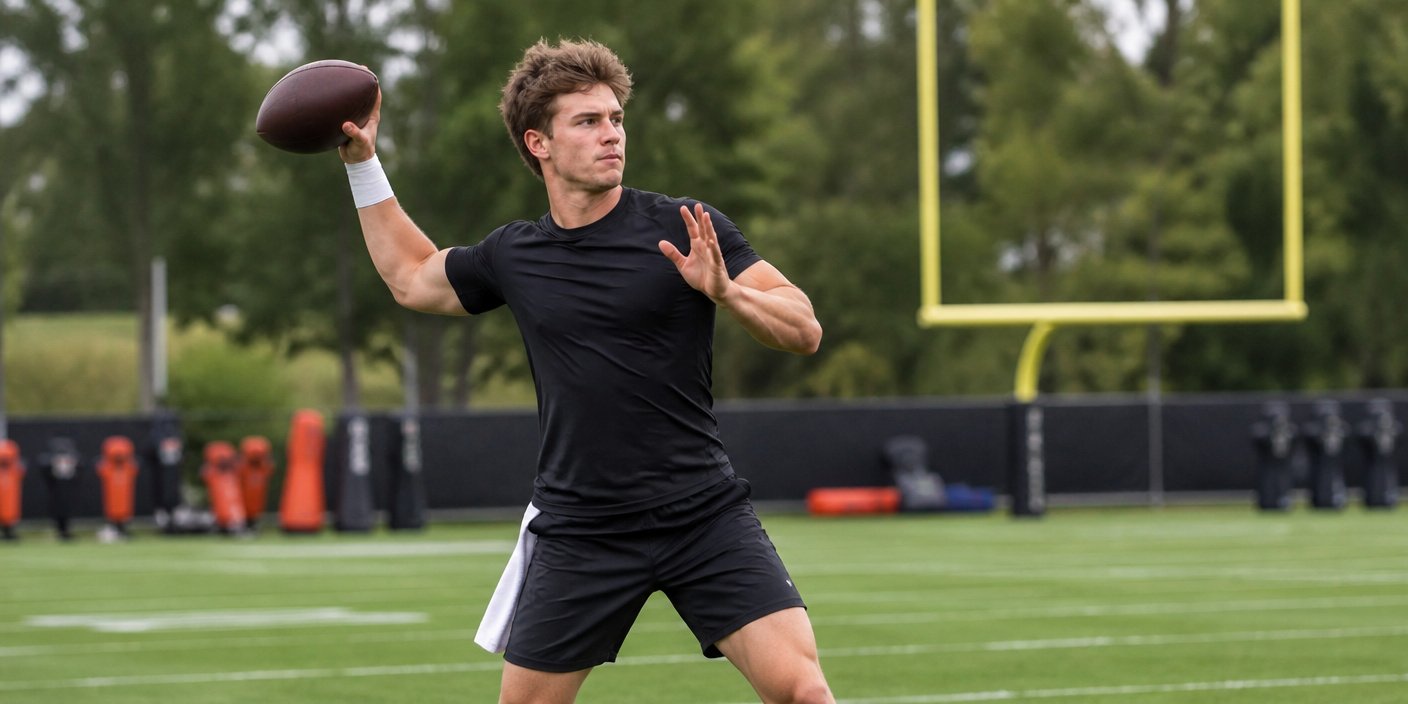
After weeks of intense speculation and a high-stakes spring camp that saw three distinct contenders vying for the starting position, Oregon State head coach and offensive staff have officially named Braden Atkinson the team’s starting quarterback. The decision marks the conclusion of a rigorous competition that pitted the former Mercer standout against veteran Maalik Murphy and sophomore Brady Jones, establishing a new trajectory for the Beavers’ offensive identity heading into the upcoming season.
Atkinson’s ascension to the top of the depth chart is a testament to both his adaptability and his pedigree. Having arrived in Corvallis via the transfer portal after a record-breaking career at Mercer, Atkinson brought with him the Jerry Rice Award—the honor bestowed upon the most outstanding freshman in the Football Championship Subdivision (FCS). Despite the significant jump in defensive complexity and raw physical speed inherent in the Power 4 landscape, Atkinson’s performance during the team’s scrimmage sessions proved decisive.
The Anatomy of the QB Competition
The quarterback battle at Oregon State was characterized by its length and its parity. From the opening days of spring practice, the coaching staff maintained an open-door policy, allowing Atkinson, Murphy, and Jones equal repetitions with the first-team offense. This transparency was intended to foster a culture of competition, but it also placed immense pressure on the signal-callers to perform with limited windows of opportunity.
Maalik Murphy, who entered the program with significant experience, brought a polished, traditional passing style that initially saw him leading the pack. Brady Jones, meanwhile, provided the local knowledge and consistency that long-term program development craves. However, as the final weeks of training camp progressed, it was Atkinson’s unique ability to extend plays—a hallmark of his playstyle at Mercer—that eventually separated him from the field.
According to insider reports from camp, Atkinson’s command of the situational offense, particularly on third-down conversions, became his calling card. His decision-making under the simulated pressure of the blitz, combined with an ability to read defensive coverage post-snap, allowed him to maintain a higher completion percentage in high-leverage practice periods than his counterparts.
Transitioning from FCS to the Power 4: The Atkinson Factor
The transition from FCS football to a major collegiate conference is historically fraught with challenges. The speed of the game accelerates, the defensive schemes become significantly more disguised, and the mental load required of a starting quarterback increases exponentially. Atkinson’s success in securing the starting role is a powerful indicator that his success at Mercer was not merely a product of the competition level, but a reflection of his inherent talent and preparation.
Atkinson has spent the offseason working specifically on his deep-ball accuracy and his comfort within a pro-style pocket environment. While his mobility made him a threat at Mercer, the coaching staff has emphasized the necessity of operating from the pocket to protect the team’s offensive rhythm. His ability to blend his natural athleticism with a newfound discipline in the pocket was the deciding factor that ultimately tipped the scales in his favor.
Strategic Implications for the Beavers
The appointment of Atkinson signals a potential shift in the Beavers’ offensive philosophy. With a quarterback capable of keeping a play alive when the original design breaks down, the coaching staff may feel more comfortable opening up the playbook to include more RPO (Run-Pass Option) elements and designed quarterback runs. This adds a crucial extra dimension to the offense, forcing opposing defensive coordinators to account for an additional runner in the box.
Furthermore, Atkinson’s history with the Jerry Rice Award suggests a baseline level of poise that is rare in a first-year Power 4 starter. He is accustomed to the spotlight of being a primary playmaker, and his experience carrying an FCS offense provides a foundation of confidence that the coaching staff believes will translate well when the stadium lights turn on.
Future Outlook and Expectations
As the team shifts its focus toward the season opener, the narrative will inevitably turn to how quickly Atkinson can gel with his new receiving corps. The rapport with his primary wideouts—a group looking to fill the void left by departures—will be the defining factor of the early season. For Oregon State, having a solidified leader at the most important position on the field is a massive milestone. The competition is over, but the real work begins now as Atkinson prepares to lead the Beavers onto the field as QB1.
FAQ: People Also Ask
1. What made Braden Atkinson win the competition over Maalik Murphy?
Atkinson won the job due to his superior performance in third-down situations and his ability to extend plays under pressure, which the coaching staff prioritized during the final weeks of camp. His unique blend of mobility and decision-making separated him from the more traditional styles of Murphy and Jones.
2. Will Maalik Murphy remain with the Oregon State program?
While the program has not released an official statement regarding potential transfers, Murphy and Jones are expected to remain in the quarterback room to provide critical depth and competition, which is vital for the team’s overall success throughout the long season.
3. Does Atkinson’s experience at Mercer prepare him for this level?
Yes. While the jump to a major conference is difficult, Atkinson’s tenure at Mercer, which included winning the prestigious Jerry Rice Award, demonstrates a track record of high-level performance and leadership that provided him with a strong foundation to compete immediately in the Power 4 environment.
4. How does Atkinson’s playstyle change the Beavers’ offense?
Atkinson’s mobility introduces the threat of RPO (Run-Pass Option) and potential designed runs, forcing defenses to play more conservatively. This differs from a static pocket-passing style and adds a layer of complexity for opposing defensive coordinators.