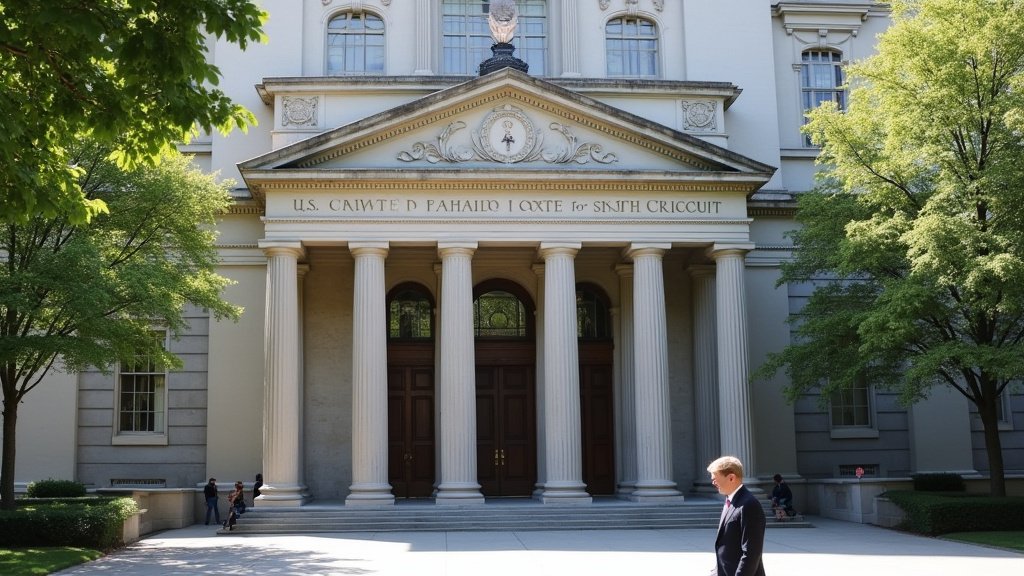
The landscape of collegiate athletics has been thrown into a state of sudden, high-stakes uncertainty. A federal appeals court has issued a temporary stay on a lower court’s order that would have granted thousands of college athletes an extra year of eligibility, effectively halting a massive shift in roster management and athletic policy. This development places the long-contested battle over COVID-19 era eligibility extensions on hold, leaving thousands of student-athletes, coaching staffs, and athletic directors waiting for final word on their immediate futures.
Key Highlights
- The Legal Stay: The U.S. Court of Appeals for the Sixth Circuit granted the NCAA’s request for a stay, halting an injunction that had initially required the association to grant an extra year of eligibility to winter sport athletes who competed during the 2020-21 season.
Impacted Populations: The lawsuit, centered on the case Ray v. NCAA*, involves athletes who were denied the extra year of eligibility that was afforded to athletes in other sports, creating a divide that plaintiffs argued was inequitable.
- High-Profile Involvement: The legal action directly affects numerous athletes across the country, including individuals like former Oregon State running back Anthony Hankerson, whose eligibility status remains tied to the outcome of these proceedings.
- Administrative Uncertainty: Universities are now facing significant roster management challenges as they navigate upcoming seasons without knowing which athletes will be legally eligible to return to the field.
The Legal Standoff: Ray v. NCAA and the Fight for Fairness
The current legal bottleneck stems from Ray v. NCAA, a pivotal lawsuit that challenged the NCAA’s historical policy regarding COVID-19 relief. During the 2020-21 academic year, the NCAA granted an extra year of eligibility to athletes in fall and spring sports, citing the unprecedented disruptions caused by the global pandemic. However, a specific segment of winter sport athletes—including those in basketball, swimming, and indoor track—did not receive the same across-the-board extension under the initial guidelines.
Plaintiffs in the case argued that this discrepancy was a violation of fairness and provided an unfair competitive disadvantage to winter sport athletes. In an earlier ruling, a lower court judge sided with these athletes, issuing an injunction that would have mandated the NCAA to grant the additional year of eligibility immediately. The NCAA, however, moved swiftly to appeal this decision, arguing that the injunction undermined its authority to govern its own rules and manage competitive balance across various athletic programs. The Sixth Circuit’s decision to stay the injunction is a tactical victory for the NCAA, as it prevents the ruling from taking effect while the appeals process unfolds.
The Human Impact: Athletes in Limbo
For student-athletes like Anthony Hankerson and thousands of others, the court’s decision is more than just a legal technicality; it is a direct disruption to their career timelines. Many athletes had been banking on this extra year to pursue graduate degrees, improve their professional draft stock, or simply gain more playing time to develop their skills. By halting the ruling, the court has effectively pressed ‘pause’ on these career trajectories.
Athletic programs are similarly caught in the crossfire. Coaches rely on roster planning months, sometimes years, in advance. When the eligibility status of key players is subject to the whims of federal litigation, it becomes nearly impossible to recruit effectively, manage scholarship caps, or even plan basic practice rotations. The financial implications for these programs are also significant, as the potential return of veteran players necessitates budget adjustments for scholarships and team travel.
The Institutional Defense: Why the NCAA Fought Back
The NCAA’s legal strategy has consistently emphasized the need for institutional control and the preservation of competitive fairness. From the governing body’s perspective, granting an extra year of eligibility to a broad, loosely defined group of athletes creates a ‘slippery slope’ that could destabilize other eligibility rules. They argue that if courts begin mandating eligibility exceptions, the foundational regulations of college sports—which are designed to keep the playing field level—will lose their authority.
Furthermore, the NCAA maintains that the specific COVID-19 concessions made in 2020 were ’emergency measures’ tailored to unique circumstances at that specific point in time. They argue that extending these measures years later ignores the intended scope of the original policy. While the plaintiffs characterize this as an equity issue, the NCAA maintains that it is a matter of administrative integrity. For the collegiate system to function, they argue, the power to define eligibility must remain with the association and its member institutions, rather than being dictated by judicial injunctions.
Future Implications and Economic Ripples
The outcome of this appeal will likely set a massive precedent for how federal courts interact with collegiate athletic governing bodies in the future. We are witnessing a slow erosion of the NCAA’s traditional ‘autonomy’ defense. As the legal landscape shifts, universities are being forced to adapt to a new reality where litigation is a standard part of athletic department operations.
Economically, the stakes are immense. Scholarship funding is a finite resource. If the court eventually rules in favor of the athletes, universities will need to find a way to fund hundreds of additional scholarships across the nation. This could lead to a ‘trickle-down’ effect where smaller programs, which already operate on razor-thin margins, might be forced to cut other sports to comply with potential new eligibility mandates. Conversely, if the stay is upheld and the appeal is won by the NCAA, many athletes will see their collegiate careers end prematurely, a reality that is likely to trigger further grievances and potentially new lawsuits focused on ‘damages’ or ‘lost opportunities.’
As the industry watches the Sixth Circuit, one thing remains clear: the days of the NCAA operating as an unchecked authority in the realm of eligibility are rapidly fading. The legal battle in Ray v. NCAA is merely one chapter in a much larger, ongoing saga concerning the rights of athletes, the power of collegiate governing bodies, and the future definition of what it means to be a ‘student-athlete’ in an era of professionalized college sports.