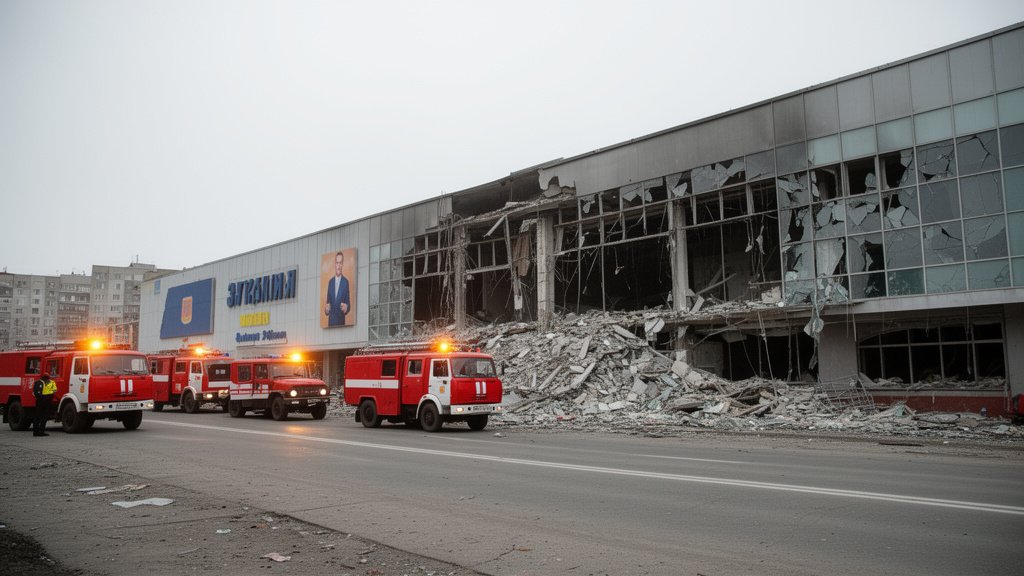
The devastating double-tap drone strike on a civilian shopping center in Kryvyi Rih, the birthplace of President Volodymyr Zelensky, has claimed 16 lives and left more than 130 individuals injured, marking a grim escalation in the ongoing conflict. The attack, which targeted non-combatant infrastructure during peak hours, has triggered widespread international condemnation and immediate threats of intensified sanctions from the European Union, as global leaders grapple with the tactical implications of such deliberate civilian targeting.
Key Highlights
- Mass Casualty Event: The strike resulted in 16 confirmed fatalities and over 130 documented injuries, overwhelming local medical infrastructure.
- Tactical Escalation: The use of a “double-tap” method—where a secondary strike targets first responders and bystanders gathered after an initial blast—has been condemned as a violation of international humanitarian norms.
- Geopolitical Fallout: The European Union has signaled that this specific incident is a catalyst for a new, accelerated round of economic and diplomatic sanctions against those responsible for the authorization of the strike.
- Symbolic Target: Kryvyi Rih’s status as the hometown of President Zelensky has led many analysts to view the strike as a calculated attempt to exert psychological pressure on Ukrainian leadership.
The Anatomy of a Calculated Strike on Civilian Infrastructure
The tactical decision to execute a “double-tap” strike on a civilian shopping center represents a significant and disturbing evolution in military engagement. By definition, a double-tap strike involves an initial attack followed by a second, precision-guided hit after a deliberate delay, intended to maximize casualties among the first responders, medics, and civilians who rush to the scene of the initial explosion.
The Mechanics of the Double-Tap Strategy
Military analysts have long warned that the utilization of double-tap strikes against civilian-dense areas suggests a high degree of intent to cause terror. In the case of the Kryvyi Rih mall, the primary strike served to create a chaotic emergency environment, drawing local fire departments, ambulance services, and concerned citizens into the “kill zone.” The secondary strike, occurring minutes later, turned a localized tragedy into a mass-casualty event. This method is not merely an accident of war; it is a force-multiplier for terror, designed to degrade public morale and force emergency services to operate under impossible risk conditions.
Humanitarian Crisis in Kryvyi Rih
Beyond the raw statistics of 16 dead and 130 injured, the humanitarian toll is immense. The shopping center, a central hub for commerce and community life, has been reduced to rubble. Local hospitals in Kryvyi Rih have reported severe strain, with surgeons and emergency staff working in shifts to manage the influx of trauma patients. The psychological impact on the city—already a frequent target due to its strategic industrial importance and status as the hometown of President Volodymyr Zelensky—is profound. Residents are now forced to navigate daily life with the knowledge that even non-military public spaces are potential targets for high-precision weaponry.
Global Outcry and the EU Sanction Response
In the immediate wake of the attack, the international community has responded with rare unified condemnation. The European Union (EU) has been the most vocal, with officials signaling that the deliberate nature of this strike against a civilian shopping center violates fundamental principles of the Geneva Conventions.
EU representatives have initiated discussions for an intensified “sanctions package” specifically targeting the supply chains providing the drone components and dual-use technology utilized in such attacks. The aim is to cripple the logistics behind these specific munitions. Diplomatic pressure is also mounting on neutral nations that may be acting as transit points for this technology. While sanctions have historically taken months to affect the battlefield, the EU is moving to implement these measures with unprecedented speed, aiming to signal that targeting civilians will result in immediate economic isolation.
Strategic Geography: Why Kryvyi Rih?
Kryvyi Rih remains a pivotal city in the ongoing conflict. As the largest city in central Ukraine and a critical node in the nation’s steel production, it is both an industrial powerhouse and a symbolic target. By attacking a civilian mall in the President’s hometown, the perpetrators are engaging in a form of psychological warfare. The goal is to project a message of vulnerability: that no city, regardless of its distance from the frontline or its strategic value, is beyond the reach of the current campaign. This strategy, however, has historically backfired, often serving to galvanize local resistance and increase international support for the targeted nation.
FAQ: People Also Ask
Q: What is a double-tap drone strike?
A: A double-tap strike is a tactical maneuver involving two successive attacks on the same location. The first strike causes damage, and the second strike occurs shortly after, targeting the first responders and civilians who arrive to assist victims.
Q: Why was the Kryvyi Rih shopping center targeted?
A: While the official military objectives are rarely disclosed by the perpetrators, analysts suggest the location was chosen for its symbolic value, as it is the hometown of President Volodymyr Zelensky, and its density, which ensures high civilian casualties.
Q: What sanctions are the EU threatening?
A: The European Union is focusing on a new package of sanctions aimed at restricting the flow of dual-use technologies, electronic components, and drone parts that are critical for the production and guidance systems of the weapons used in these strikes.
Q: What is the current status of the emergency response?
A: Rescue operations are ongoing, though hampered by the destruction of the site. Local authorities are coordinating with regional emergency services to treat the 130+ injured and manage the aftermath of the 16 fatalities.