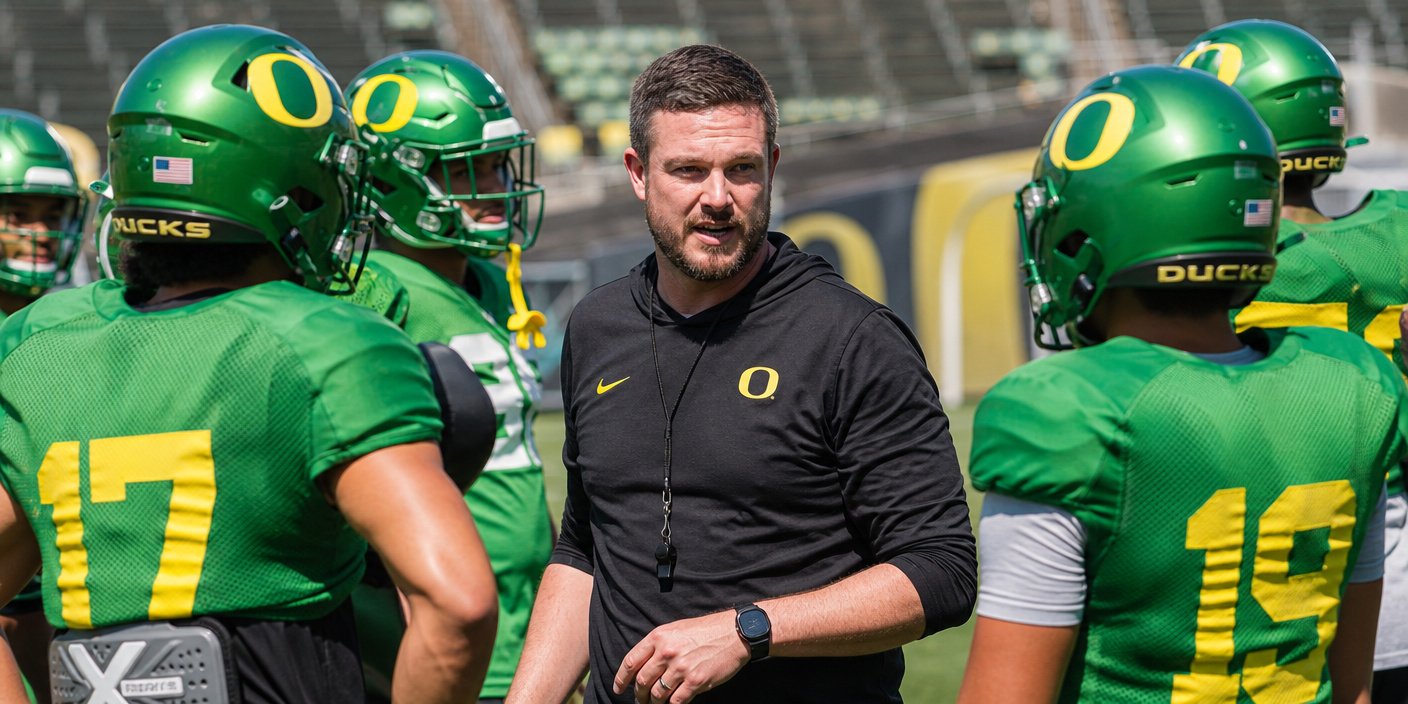
The release of preseason All-American lists is a time-honored tradition in college football, serving as both a celebration of individual excellence and, inevitably, a catalyst for debate. This year, the focus has turned to Eugene, where several Oregon Ducks players appear to have been omitted from major media outlets’ preseason honors. Despite the program’s solidified status as a national powerhouse and its recent transition into the Big Ten Conference, the exclusion of key Oregon personnel has raised eyebrows among analysts and fans alike, creating a narrative of “disrespect” that head coach Dan Lanning may well leverage as the 2026 season approaches.
Key Highlights
- High-Profile Omissions: Multiple Oregon Ducks starters, who statistically outperform many players selected for preseason honors, were left off major All-American lists.
- The Big Ten Transition: Analysts suggest the shift from the Pac-12 to the Big Ten may have caused a temporary “blind spot” for national selection committees still adjusting to the new geography of elite talent.
- The Motivation Factor: Historically, Oregon players have used perceived slights as fuel; industry experts suggest this could be a “chip on the shoulder” year for the roster.
- Statistical Discrepancy: The omissions appear to conflict with advanced analytics, which highlight several Ducks as top-tier performers at their respective positions.
The Anatomy of an All-American Snub
Preseason All-American lists are inherently subjective, blending statistical projections, previous season performance, and the “brand” recognition of the university. For Oregon, a program that has successfully rebranded itself as a national championship contender, the omission of its key players is less about individual talent and more about the mechanics of preseason polling. When journalists and scouts curate these lists, they often default to players from established traditional powers or conferences with longer-standing reputations in the preseason spotlight. For the Ducks, moving into the Big Ten has meant entering a new ecosystem where their individual stars are being compared against established titans from Ohio State, Michigan, and Penn State.
The Impact of Conference Realignment on Recognition
One of the secondary angles currently being discussed is the “geographical lag” in national media recognition. For years, the Pac-12 was often criticized for not receiving the same national spotlight as the SEC or the Big Ten. Now that Oregon is firmly entrenched in the Big Ten, one might assume the recognition would follow. However, the preseason selection process often lags behind reality. Voters are creatures of habit. The omission of Oregon players suggests that while the team’s logo has changed conferences, the perception of its individual players has yet to fully catch up in the minds of national media members who vote on these accolades. This is a critical disconnect, as these lists often serve as a preliminary “watch list” for end-of-season awards like the Heisman Trophy or the Maxwell Award.
Utilizing Disrespect as a Coaching Tool
Under the leadership of Dan Lanning, the Oregon Ducks have cultivated a culture that thrives on adversity and, specifically, the perception of being the underdog. Lanning has consistently utilized the “us against the world” mentality to maintain focus in the locker room. If there is one thing this coaching staff does exceptionally well, it is identifying external narratives and internalizing them. The media’s failure to recognize these players as preseason All-Americans provides Lanning with an easy, tangible narrative to feed his team: the idea that they are being overlooked despite their undeniable production. This serves as a psychological anchor for the 2026 season, potentially fostering a heightened level of intensity during fall camp and the early non-conference schedule.
A Statistical Look at the Omissions
When diving into the data, the omissions become even more puzzling. If we analyze advanced metrics—such as yards per route run for receivers, pressure rate for defensive linemen, or coverage grade for the secondary—several Oregon players consistently rank in the top five nationally at their positions. Yet, the consensus lists prioritize name recognition and “blue-chip” recruiting pedigree over current statistical impact. This divergence highlights a systemic issue in how preseason honors are awarded: they are often “career achievement” awards rather than accurate projections of the upcoming season’s performance. For Oregon, this creates a situation where their players must “prove it” on the field in September and October to force their way into the conversation, rather than being handed the benefit of the doubt in August.
Future Implications for the Ducks
As the 2026 season approaches, the focus must shift from the lists to the field. If Oregon’s players continue to play at an elite level, these omissions will serve as little more than a trivia footnote. However, if the trend continues throughout the season, it could impact how the team is viewed by the College Football Playoff committee. While preseason lists do not directly influence playoff rankings, they do influence the “narrative” that broadcasters and analysts push throughout the season. By failing to crown these players as “All-Americans” before a single snap is played, the media sets the stage for a narrative that the team is not as dominant as its win-loss record might suggest. This is a crucial distinction that the Oregon program will have to navigate as it seeks to validate its standing in the new Big Ten hierarchy.
FAQ: People Also Ask
Q: How are Preseason All-American teams selected?
A: They are typically selected by national media outlets, conference beat writers, and scouting consultants based on previous year statistics, returning production, and NFL draft potential. It is inherently subjective and often favors players from schools with the highest national media exposure.
Q: Does being left off a preseason list hurt a player’s chances for end-of-season awards?
A: It can. While it doesn’t preclude a player from winning, it can impact early-season media attention, which helps “build the case” for awards like the Heisman or the Outland Trophy. Early recognition often creates a momentum that is hard to stop.
Q: Is there bias against the Big Ten in preseason rankings?
A: Historically, no, but as the conference expands to include former Pac-12 teams like Oregon, there is a “transition period” where voters are recalibrating their perception of the talent in the region. The omission of Ducks players is widely interpreted by analysts as a failure to adjust to Oregon’s current dominance.
Q: How does this affect recruiting?
A: While it may seem minor, individual honors are part of the “brand” that schools sell to high school recruits. Seeing current stars omitted can occasionally be a negative talking point for opposing recruiters, though the coaching staff will likely counter this by highlighting the team’s success and development track record.