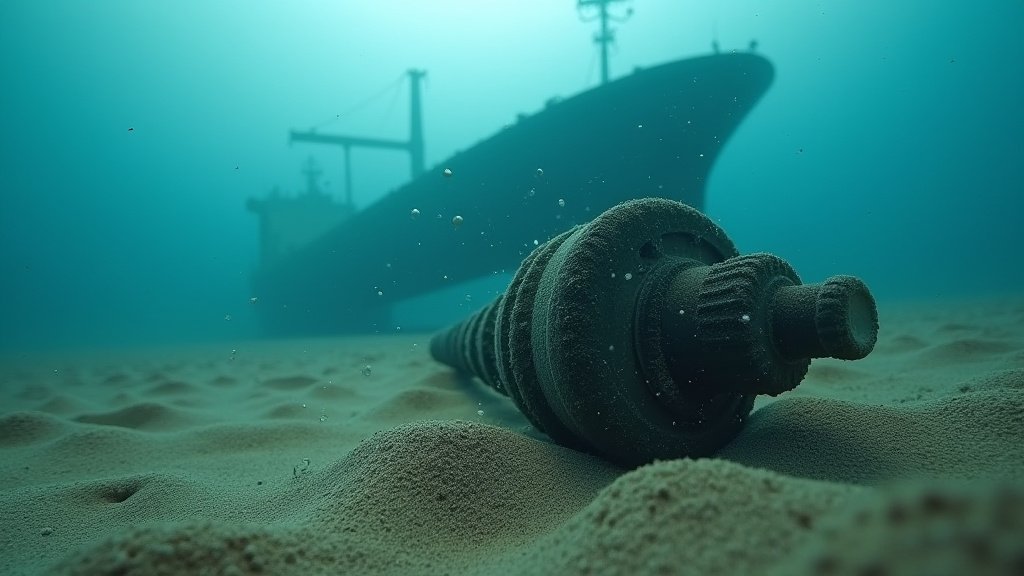
The United States military has escalated its efforts to secure the Strait of Hormuz, launching an expanded, aggressive mine-clearing operation as the global energy market faces its most precarious position in decades. President Donald Trump, acting on recommendations from military leadership, has ordered the Navy to “triple up” on its efforts to neutralize underwater explosive devices that the Islamic Revolutionary Guard Corps (IRGC) has allegedly deployed to choke off one of the world’s most critical maritime chokepoints. This operation comes at a pivotal moment, with a fragile, weekslong ceasefire between the U.S.-led coalition and Iran hanging in the balance, and the international community bracing for potential fallout from a prolonged blockage of Persian Gulf energy exports.
Key Highlights
- Aggressive Clearance Push: The U.S. Navy is deploying a combination of guided-missile destroyers, specialized explosive ordnance disposal teams, and advanced underwater drone technology to clear mines.
- Economic Stakes: The Strait of Hormuz typically facilitates the passage of approximately 20% of the world’s oil and a significant portion of its liquefied natural gas (LNG), making its reopening vital for global stability.
- Tactical Asymmetry: U.S. forces are countering Iran’s “mosquito fleet” tactics, where low-signature dhows and small vessels have been accused of covertly laying mines to evade detection.
- Risky Navigation: Despite U.S. efforts to signal the route is becoming safer, insurers and commercial shipping companies remain hesitant to resume full-scale traffic, fearing the threat of undetected mines remains high.
The Strategic Battle for the Strait
For months, the Strait of Hormuz has served as the frontline of an asymmetric naval war. While the U.S. military maintains a clear technological and conventional superiority, the Iranian strategy has focused on creating a denial-of-service environment. By utilizing relatively inexpensive sea mines—many of which can be triggered by acoustic signatures or water pressure changes—Tehran has successfully induced a climate of fear that has effectively halted standard commercial shipping patterns.
The Role of Asymmetric Warfare
The IRGC’s approach represents a textbook application of asymmetric warfare. By mining the narrowest sections of the Strait, Iran has forced the U.S. Navy to divert resources from power projection to mine counter-measures (MCM). This shift in focus is precisely what Tehran intended. Traditional naval destroyers, such as the USS Frank E. Peterson and USS Michael Murphy, are multi-mission platforms designed for air defense and anti-surface warfare, not for the delicate, high-risk work of mine-hunting. Consequently, their presence in the strait—while providing critical cover—has been a stopgap measure until more specialized assets, including unmanned surface and underwater vessels (USVs and UUVs), could be fully integrated into the theater.
Technological Countermeasures: From Drones to Divers
The Pentagon is banking on a technological pivot to break the deadlock. The current operational tempo utilizes the MK-18 Mod 2 Kingfish and the Barracuda mine neutralization vehicle to scan the seabed with high-resolution sonar. These systems are designed to operate in shallow, contested waters where human divers might be exposed to too much risk. However, military analysts warn that technology is not a silver bullet. The challenge in the Strait of Hormuz is the sheer volume of debris, the complexity of the underwater topography, and the deceptive nature of the mines themselves, which may be tethered or seabed-sitting, waiting for a specific target profile.
The Global Economic Ripple Effect
Beyond the military implications, the closure of the Strait of Hormuz represents an acute global energy crisis. With the blockade preventing or severely limiting the passage of tankers, international oil prices have remained volatile, fluctuating on every headline regarding ceasefire talks or military escalation.
Supply Chain Vulnerability
The global economy relies on the “just-in-time” delivery of energy resources. When a bottleneck of this magnitude occurs, the ripple effects are not limited to the Middle East. Refineries in Asia and Europe, which depend on steady inflows of Gulf crude, have had to scramble for alternative, far more expensive supply routes. The “dual blockade”—a term coined to describe the combination of Iran’s mine-laying activities and the U.S. interdiction of Iranian ports—has created a paradox where the global market is starved of energy while tankers sit anchored in the Gulf, unable to move safely.
The Confidence Crisis
Perhaps the most difficult element for the U.S. military to solve is not technical, but psychological. Even if the Navy certifies a shipping lane as “clear,” the insurance industry—the gatekeepers of commercial shipping—may not be satisfied. Insurance premiums for transiting the Strait have skyrocketed, and many shippers are unwilling to risk their multi-billion dollar vessels based on assurances that may prove false if a single mine is missed. The U.S. administration recognizes this; hence, the pressure to demonstrate total control. Yet, as experts note, it only takes one missed mine to shatter the confidence required to normalize traffic.
Future Outlook: The Long Game
As the ceasefire negotiations continue in Pakistan, the reality on the water remains grim. Defense officials have privately briefed lawmakers that a comprehensive clearing operation could take upwards of six months. This timeline is incompatible with the immediate demands of the global energy market. The U.S. strategy, therefore, is to create a secure corridor rather than a total clearance, attempting to carve out a “safe passage” that can handle essential traffic while the wider, more complex mining issues are addressed in the long term. This strategy of “managed risk” is the current operating reality in one of the world’s most dangerous waterways.
FAQ: People Also Ask
Q: How do sea mines in the Strait of Hormuz affect oil prices?
A: The Strait of Hormuz is a crucial chokepoint through which approximately 20% of the world’s daily oil production passes. When shipping companies perceive the strait as unsafe due to mining threats, they suspend or delay transits, causing supply chain disruptions that drive up energy costs globally.
Q: What is the ‘mosquito fleet’ strategy?
A: It is a naval tactic employed by the IRGC, using small, fast, highly maneuverable boats to overwhelm or harass larger, more conventional naval vessels. In the current context, these small boats are also used for covertly laying mines to disrupt traffic without directly engaging in a fleet-to-fleet battle.
Q: Why are US destroyers not ideal for mine clearance?
A: Guided-missile destroyers like the Arleigh Burke-class are built for high-end surface combat, air defense, and land-attack missions. They lack the specialized sonar suites, shock-hardened hulls, and specific mine-hunting tools found on dedicated minesweepers, though they provide necessary protection for the specialized drones and smaller clearance craft that are actually doing the hunting.