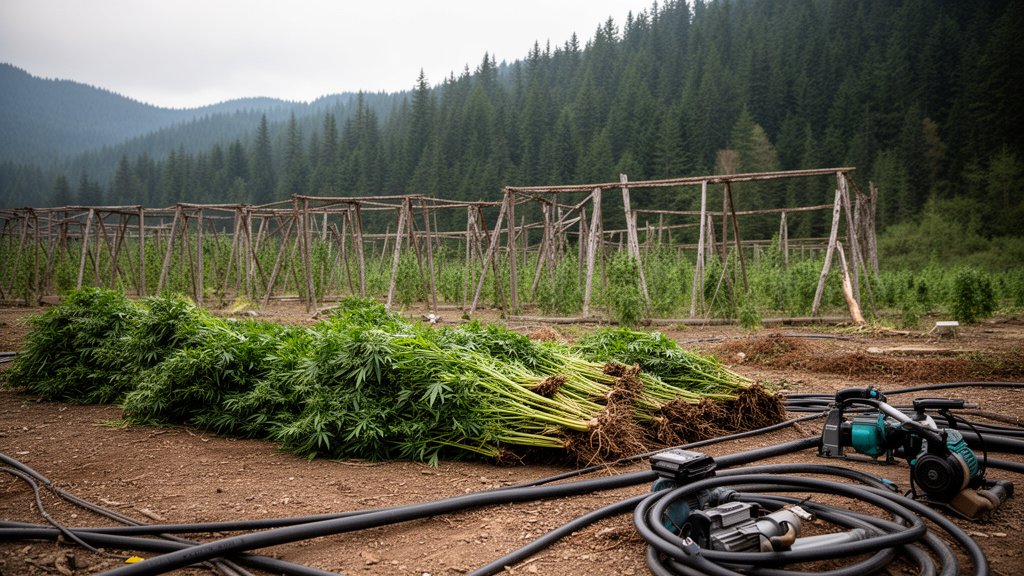
Authorities have successfully executed a sweeping, multi-agency operation to dismantle a sophisticated, illicit marijuana network spanning Clackamas and Marion counties in Oregon. The operation resulted in the seizure of 110,000 marijuana plants, an operation with an estimated street value of approximately $20 million. This tactical strike, driven by months of gathering intelligence and responding to community-led complaints, marks a significant escalation in the state’s ongoing battle to regulate its cannabis market and address the environmental and criminal fallout associated with unregulated grows.
Key Highlights
- Massive Seizure: Law enforcement confiscated 110,000 illegal marijuana plants, one of the largest single-event seizures in the region’s recent history.
- Multi-Agency Coordination: The operation involved a coalition of state and local law enforcement, highlighting a unified front against illicit agricultural activities.
- Community Catalyst: The investigations were significantly bolstered by active community reporting, underscoring the role of local residents in identifying suspicious activity.
- Economic Scale: The street value of the destroyed crops is estimated at roughly $20 million, representing a substantial loss for organized criminal networks operating in the black market.
The Anatomy of a Large-Scale Illicit Enforcement Action
The raids targeted several high-output growing sites that had been operating under the radar, often camouflaged as legitimate agricultural endeavors. According to statements from the participating agencies, the primary objective was to disrupt the flow of unlicensed product into both the local black market and interstate trafficking networks. The complexity of these raids required specialized training, as modern illegal grow sites often employ high-level surveillance, fortified fencing, and complex irrigation systems designed to evade standard oversight.
The Operational Strategy
Law enforcement utilized aerial surveillance and ground-level intelligence to map the extent of the grow sites before executing the raids. In Clackamas and Marion counties, the operational challenge was immense due to the remote, rugged terrain often favored by these operations. The coordination between the Oregon State Police, county sheriff’s offices, and state-level regulatory bodies allowed for a simultaneous strike, preventing operators from relocating assets or product before authorities could secure the sites.
Why These Counties Were Targeted
Clackamas and Marion counties have become hotspots for these illicit operations due to their distinct geographic advantages: access to abundant water rights, fertile soil, and a mix of rural, private land that is difficult for regulatory agencies to monitor. The sheer volume of 110,000 plants indicates that these were not small, localized grow operations but rather industrial-scale facilities likely linked to larger, organized criminal syndicates. By operating outside the legal framework of Oregon’s licensed cannabis industry, these growers bypass costly state regulations, taxes, and environmental safety protocols, allowing them to undercut legal businesses and flood the market with unvetted, potentially contaminated products.
Environmental and Community Consequences
Beyond the criminal element, these illicit operations impose a severe toll on the local environment and public health. The scale of this $20 million seizure highlights the severity of the infrastructure required to sustain such large grows.
Water Theft and Environmental Degradation
One of the most pressing concerns for local officials is the unauthorized diversion of water. Large-scale illegal grows require millions of gallons of water, often siphoned from local streams, wells, and irrigation canals. This depletion negatively impacts local agriculture, disrupts wildlife habitats, and exacerbates drought conditions in vulnerable areas. During these raids, investigators often find evidence of massive, illegal water pumping systems that operate without regard for water rights or the long-term sustainability of the regional aquifer.
The Health Risk of Black Market Products
Products originating from these seized sites often circumvent the rigorous testing mandated for legal Oregon cannabis. This includes testing for heavy metals, pesticides, and microbial contaminants. When these products reach consumers, there is no guarantee of safety. The eradication of 110,000 plants prevents a significant volume of potentially hazardous, untested material from entering the supply chain. Authorities have repeatedly warned the public that purchasing cannabis from unlicensed sources not only supports criminal enterprises but also exposes the user to unknown health risks.
The Persistent Challenge of Illicit Grows in a Legal State
Since the implementation of Measure 91, which legalized recreational marijuana in Oregon, the state has struggled to balance a thriving legal market with the persistence of a robust, black market infrastructure.
Historical Context: The Regulatory Gap
Initially, the goal of legalization was to bring the industry into the light. However, the high cost of compliance and taxation for licensed growers has inadvertently provided an incentive for a parallel, illegal market to thrive. These operators exploit the legal state’s infrastructure while ignoring its costs, effectively becoming a parasite on the legitimate industry. The formation of the Marijuana and Hemp Enforcement Division (MHED) was a direct response to this ongoing issue, aiming to provide a specialized, statewide focus on enforcement that local sheriff’s offices often lack the resources to handle alone.
Future Predictions: What’s Next?
As authorities continue to ramp up enforcement, the strategy is shifting from reactive responses to proactive, intelligence-led disruption. The recent seizure in Clackamas and Marion counties sends a clear message to criminal organizations: the state is increasing its operational capacity to monitor, detect, and dismantle these sites. Future efforts are likely to focus on the “supply chain” of these operations—targeting the financiers, the distributors, and the organizers behind the scenes, rather than just the growers in the field. Additionally, legislative efforts may soon focus on tightening land-use regulations to make it harder for illegal operations to establish themselves on agricultural property in the first place.
FAQ: People Also Ask
1. What happens to the marijuana plants after they are seized?
After being documented as evidence for potential criminal prosecution, the plants are typically destroyed. Because the material is illicit and untested, it cannot be processed or integrated into the legal market. Agencies ensure the destruction process is secure to prevent the product from being redirected to the streets.
2. Is this raid linked to organized crime syndicates?
Yes, operations of this scale—involving 110,000 plants—are rarely the work of independent individuals. They typically require significant capital, logistics, and labor, suggesting the involvement of organized crime syndicates that may also be linked to other illegal activities, including labor trafficking and environmental crimes.
3. How can residents report suspicious grow sites?
Authorities encourage residents to report suspicious activity to their local sheriff’s department or the Oregon State Police. Clues include heavy traffic in remote areas, abnormal electrical or water usage, the presence of makeshift structures, and the persistent smell of cannabis in rural, non-commercial zones.
4. Does this impact the price of legal marijuana in Oregon?
In the short term, such a massive removal of product from the market might tighten supply, but the primary goal of these operations is public safety and regulatory compliance, not market manipulation. Long-term, reducing the supply of cheap, black-market product helps level the playing field for licensed businesses that follow state regulations.