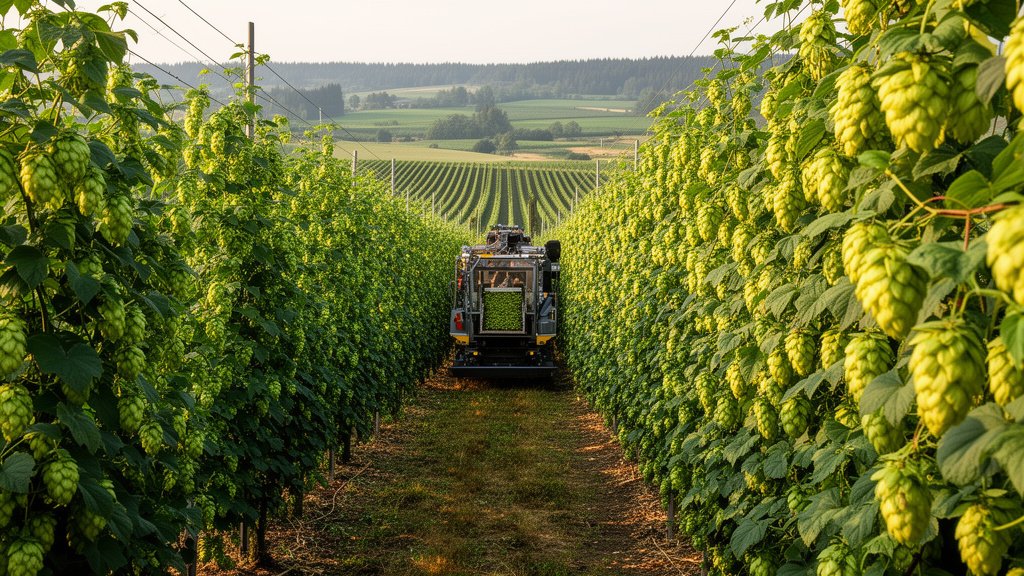
Oregon’s agricultural landscape is celebrating a significant milestone this season, as the 2026 Oregon hop harvest signals a robust recovery and growth trajectory for the state’s storied brewing industry. With 5,443 acres dedicated to hop production—a notable 1.6% increase from the previous year—growers are reporting exceptional quality, characterized by heightened aroma and flavor profiles that are expected to set a new standard for the coming year’s craft beer releases. This development is not merely an isolated agricultural event but a critical indicator of regional market health, positioning Oregon as a dominant force in the U.S. hop supply chain.
Key Highlights:
- Acreage Expansion: Oregon successfully cultivated 5,443 acres of hops in 2026, marking a 1.6% year-over-year increase.
- Quality Surge: Favorable meteorological conditions throughout the growing season have resulted in superior lupulin density, enhancing the aromatic intensity of major varieties.
- Market Significance: The growth reinforces Oregon’s position as a critical partner to the U.S. craft beer industry, providing consistent, high-grade supplies.
- Economic Impact: The steady expansion reflects increased demand from regional brewers and stable supply chain contracts.
Brewing Success: A Deep Dive into the 2026 Oregon Hop Season
The 2026 hop harvest represents a convergence of favorable environmental conditions and strategic agricultural planning. For Oregon’s farmers, this season has been defined by resilience and optimization. Unlike years plagued by erratic temperature spikes or unseasonal drought, the 2026 cycle benefited from a temperate spring and a controlled summer, allowing the hop bines to reach peak maturation without the stress that often degrades volatile oil content. This is a critical factor for brewers who rely on specific chemical profiles—specifically alpha acids and essential oils like myrcene, humulene, and caryophyllene—to define their flagship IPAs and seasonal offerings.
Climate Drivers and Terroir
The unique terroir of Oregon’s hop-growing regions, particularly in the Willamette Valley, has played a pivotal role in this year’s harvest success. Agricultural analysts note that the mild 2026 weather pattern allowed for optimal photosynthesis during the vegetative stages, which directly correlates to the final harvest’s high resin quality. For brewers, this means the ‘freshness’ perceived in this year’s crop will be significantly higher than in previous seasons. Research from entities like Oregon State University—which often collaborates with the Hop Growers of America to study plant resilience—suggests that the stability of this season has allowed for a more uniform harvest across the 5,443 total acres, reducing the logistical friction typically associated with staggered harvest windows.
The Economic Impact of a 1.6% Acreage Growth
While a 1.6% increase may appear modest in isolation, industry experts view this growth as a sign of calculated confidence. The expansion to 5,443 acres signifies that farmers are responding to specific contract demands rather than speculative planting. This measured approach prevents the market oversaturation that has hampered other agricultural commodities. For the craft brewing industry, which continues to demand high-aroma, flavor-forward varieties like Citra, Mosaic, and locally developed cultivars, this supply increase provides a buffer against price volatility. It allows breweries to secure supply chains with greater confidence, ensuring that the ‘Oregon-grown’ label remains a premium hallmark for quality in the competitive beer market.
Future-Proofing: Innovation in Oregon Hop Fields
Looking beyond the 2026 numbers, the industry is heavily investing in sustainable viticulture and disease-resistant hop breeding programs. The 2026 harvest serves as a testing ground for newer, more drought-resistant varieties that can withstand the increasingly unpredictable Pacific Northwest climate. By integrating precision irrigation data and advanced trellis management, Oregon farmers are not only producing a high yield this year but are laying the groundwork for future scalability. This proactive posture is vital, as the global demand for American hops remains high, and Oregon is positioning itself to be the sustainable, high-quality solution for both domestic and international markets.
FAQ: People Also Ask
Q: Why is a 1.6% increase in acreage considered significant?
A: In the hop industry, expansion is expensive and requires long-term commitment due to the perennial nature of hop bines. A 1.6% growth indicates that farmers are confident in long-term demand and have the financial stability to invest in expanding their productive footprint.
Q: What impact does this harvest have on the price of craft beer?
A: While hop prices are only one component of beer production, a high-quality, abundant harvest generally stabilizes the cost of goods for breweries. This can help prevent price hikes for consumers, as brewers can source consistent, high-quality ingredients without paying premiums for supply shortages.
Q: How does Oregon’s hop production compare to other regions like Washington?
A: Washington remains the largest hop-producing state in the U.S., but Oregon occupies a critical niche. Oregon is often recognized for its high-value, aromatic specialty hops and organic production, making it an essential partner for craft breweries that prioritize specific flavor profiles over pure alpha-acid volume.
Q: What defines the ‘aroma profile’ of this year’s harvest?
A: The 2026 crop is noted for its high lupulin content, which is the yellow, sticky resin in the hop cone where the essential oils reside. Because the weather conditions were optimal, these oils were well-preserved during the harvest, leading to more vibrant, punchy aromatics in the finished beer.