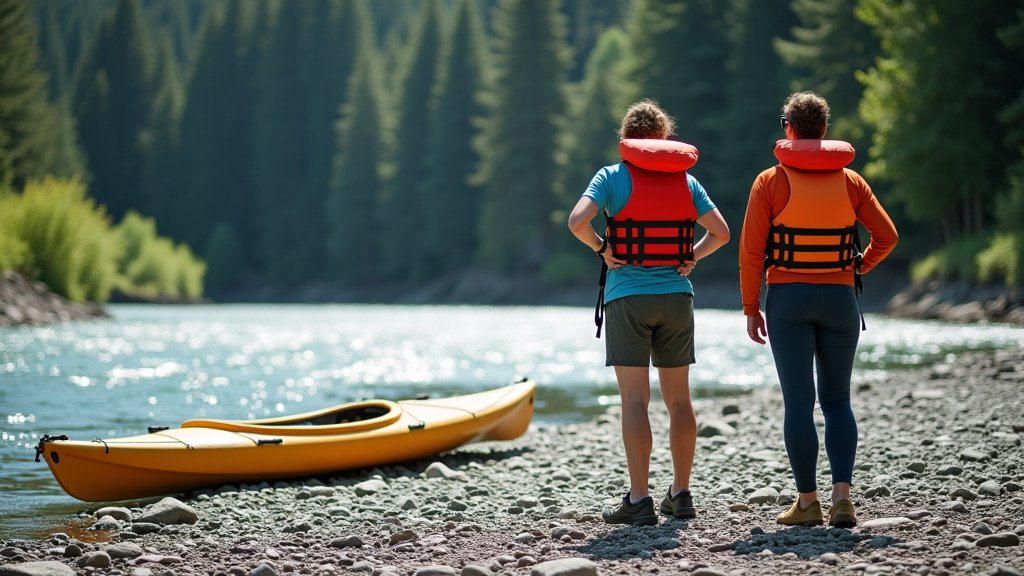
As the summer season reaches its peak in Oregon, local safety organizations in Eugene and Springfield, including the Lane County Sheriff’s Office and the Oregon State Marine Board, are issuing a critical call to action for all river-goers. With the Willamette and McKenzie rivers seeing a surge in recreational traffic, authorities are emphasizing that the beauty of these waterways masks a complex set of hazards—including fluctuating currents, cold water shock, and submerged woody debris—that demand immediate and consistent safety precautions. The primary directive is simple but life-saving: prioritize safety by wearing United States Coast Guard (USCG) approved life jackets and meticulously planning float routes before entering the water.
Key Highlights
- Mandatory Safety Gear: Experts emphasize that wearing a properly fitted USCG-approved life jacket is the single most effective way to prevent drowning, regardless of swimming ability.
- Navigational Hazards: Recent water surveys indicate significant amounts of submerged woody debris and “strainers” in both the Willamette and McKenzie, which can pin swimmers and vessels underwater.
- Cold Water Risks: Despite warm air temperatures, the McKenzie and Willamette rivers remain glacially fed, leading to cold water shock which can incapacitate even strong swimmers within minutes.
- Preparation is Critical: Floating enthusiasts are urged to file a “float plan” with friends or family, detailing their intended route and expected time of return to ensure rapid response in the event of an emergency.
Navigating the Currents: A Comprehensive Guide to River Safety
For residents and visitors of Eugene and Springfield, the Willamette and McKenzie rivers serve as the lifeblood of outdoor recreation. However, these rivers are dynamic ecosystems that change daily. Authorities are warning that the recent influx of recreational tubers, kayakers, and paddleboarders has correlated with an uptick in Search and Rescue (SAR) deployments, prompting a renewed focus on public education.
The Anatomy of River Hazards: Understanding Strainers and Siphons
One of the most dangerous, yet often overlooked, elements of Oregon river navigation is the presence of “strainers”—fallen trees, logjams, or thick brush that allow water to pass through but act as a filter that catches people and equipment. When a boater or swimmer is caught in a strainer, the force of the current against their body can make it nearly impossible to escape without assistance.
Furthermore, hidden debris creates siphons and hydraulic jumps that can trap individuals beneath the surface. “The river is not a stagnant pool; it is a moving machine,” notes a spokesperson for regional water safety units. “It changes with the flow rate, and a route that was safe two weeks ago might be blocked by a newly fallen cedar tree or a shift in the riverbed’s gravel bars today.” Visitors are encouraged to scout ahead and, if visibility of the river path is obscured, to portage (carry their vessel) around the obstruction rather than attempting to navigate through it.
The Silent Killer: Cold Water Shock
Even on days when the ambient air temperature exceeds 90 degrees Fahrenheit, the water in the McKenzie River, fed by snowmelt from the High Cascades, remains dangerously cold. Entering this water rapidly can trigger the mammalian dive reflex and involuntary gasping, leading to cold water shock.
This condition is a leading cause of drowning, as the gasp reflex can cause an individual to inhale water before they can regain control of their breathing. Experts emphasize that the physical exhaustion that follows cold water shock occurs much faster than in warmer environments, significantly reducing the window of time for self-rescue. Wearing a life jacket ensures that even if the swimmer becomes incapacitated by the cold, their head remains above the water, providing a crucial buffer for rescue teams to locate them.
The Economic and Operational Burden on Search and Rescue
Beyond the personal tragedy of a water accident, there is an immense burden placed on the regional emergency response infrastructure. The Lane County Sheriff’s Office Search and Rescue operations are resource-intensive, often requiring specialized training, watercraft, and personnel to be diverted from other duties.
“Every rescue is a potential tragedy, and every preventable incident impacts our local resources,” officials state. The call for safety is as much an economic necessity as it is a health directive. By utilizing proper Personal Flotation Devices (PFDs) and adhering to official safety guidelines, the public directly reduces the strain on these vital emergency services. Local municipalities are also reminding visitors that operating any vessel, including non-motorized ones, while under the influence of alcohol or controlled substances is illegal and significantly exacerbates the risk of accidents.
Future Predictions and River Management
Looking ahead, climate patterns in the Pacific Northwest are expected to continue shifting, leading to more erratic water levels and increased storm debris. Organizations like the Willamette Riverkeepers are working alongside local government to implement better signage at access points. However, the ultimate responsibility rests with the individual. Future initiatives may include stricter enforcement of life jacket regulations and potential mandatory safety courses for those utilizing rental equipment, marking a shift toward a more regulated recreational environment to protect the public.
FAQ: People Also Ask
Q: What type of life jacket is required by law in Oregon for river use?
A: Oregon law requires that there must be a USCG-approved, wearable personal flotation device (PFD) for every person on board a vessel. While not all adults are required by law to wear them at all times, authorities strongly recommend that everyone, including strong swimmers, wear them while on the river, especially given the rapid currents in the Willamette and McKenzie.
Q: What is a ‘float plan’ and why do I need one?
A: A float plan is simply sharing your itinerary—where you are putting in, where you plan to take out, and when you expect to arrive—with someone not on the trip. If you do not return by the agreed time, that person can alert authorities with specific information about where to begin a search, drastically increasing the chances of survival.
Q: Are the Willamette and McKenzie rivers safe for swimming?
A: While popular, these are not swimming pools. They are dynamic, naturally flowing rivers. Swimming in them carries inherent risks, including cold temperatures, sharp drop-offs, and unexpected currents. Swimming near active boating channels or near bridge pilings is particularly discouraged due to hydraulic hazards.
Q: How do I identify a ‘strainer’ while on the river?
A: A strainer looks like a mass of branches, trees, or debris where water is flowing through the gaps. If you see water “piling up” against an obstruction or hear a rushing sound that is not a standard rapid, stay clear. If you cannot see a clear, open channel through the feature, pull your vessel to the shore and walk around it.