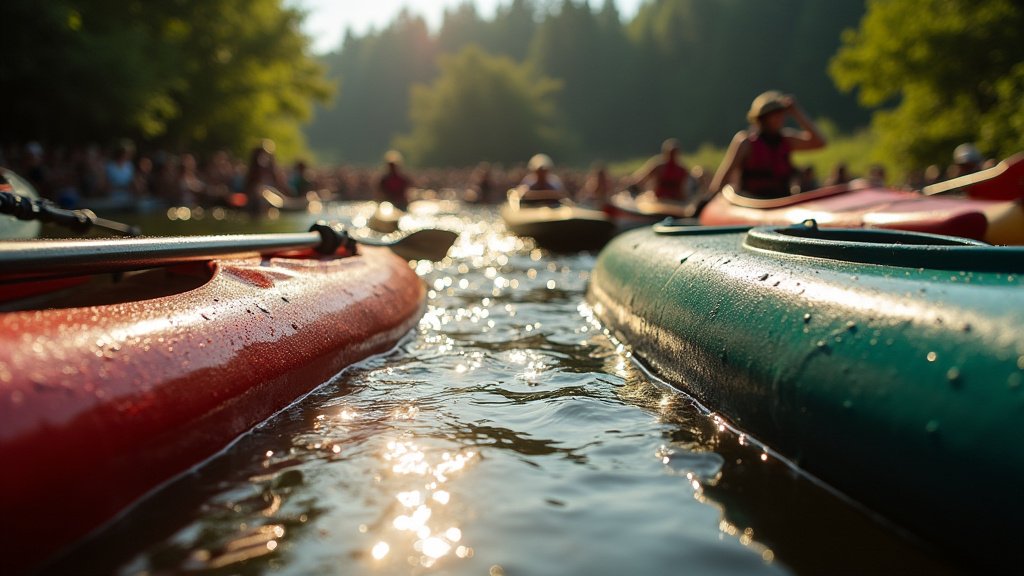
Hundreds of recreational users have taken to the Clackamas River to voice their strong opposition to a new paddle permit system recently signed into law by Governor Tina Kotek. The permit, championed by the Oregon State Marine Board, requires individuals using non-motorized watercraft like kayaks and paddleboards to obtain and display a permit, a move critics argue is an unnecessary fee and a barrier to accessing public waterways.
Key Highlights:
- A new paddle permit system for non-motorized watercraft on Oregon’s Clackamas River has drawn significant public outcry.
- Protesters argue the permit is an additional fee and an infringement on public access rights.
- The Oregon State Marine Board maintains the permit is necessary for funding and managing river resources.
- Governor Tina Kotek’s administration has defended the permit as a measure for conservation and safety.
Paddle Permit Sparks River Rebellion on Clackamas
The Clackamas River, a popular recreational artery in Oregon, has become the focal point of a burgeoning protest against a newly enacted paddle permit. The Oregon State Marine Board, with the backing of Governor Tina Kotek, has implemented a requirement for users of non-motorized watercraft to purchase and display a permit. This regulation, intended by proponents to generate revenue for river management, conservation efforts, and potentially improve safety, has been met with fierce resistance from a broad coalition of paddlers, outdoor enthusiasts, and advocacy groups. They contend that the permit represents an unjust financial burden and an unnecessary obstacle to enjoying natural public resources, sparking widespread dissent that culminated in a large-scale demonstration on the river itself.
The Rationale Behind the Permit
According to the Oregon State Marine Board, the revenue generated from paddle permit sales is earmarked for crucial initiatives. These include maintaining and improving river access points, supporting conservation efforts to protect aquatic ecosystems, and potentially funding educational programs related to safe boating practices. Officials have also pointed to an increase in river usage as a justification for the need for enhanced management and funding. The board argues that this system aligns with practices in other states and is a sustainable model for ensuring the long-term health and accessibility of popular waterways like the Clackamas.
Voices of Dissent: “A Tax on Recreation”
Opponents of the paddle permit have been vocal in their criticism. Many view the permit as a thinly veiled tax on recreational activities, disproportionately affecting low-income individuals and families who may find the additional cost prohibitive. Online forums and social media have buzzed with activity, with users sharing their frustration and organizing counter-actions. The sentiment among many protesters is that existing regulations and general user fees should be sufficient for river management, and that introducing a specific permit for paddlecraft is an overreach by state authorities. Concerns have also been raised about the enforcement of the permit, questioning how effectively and fairly it will be implemented.
Political Fallout and Public Response
Governor Tina Kotek’s office has publicly defended the paddle permit, stating that it is a necessary step to ensure the responsible use and preservation of Oregon’s natural resources. The administration emphasizes that the funds will be reinvested directly into the waterways that are increasingly relied upon for recreation. However, the public outcry has put political pressure on the governor and the Marine Board to reconsider or at least modify the permit’s implementation. Local elected officials have also begun to weigh in, with some expressing solidarity with the protesters and calling for greater transparency and public consultation in the decision-making process.
Secondary Angles to Consider
Economic Impact on Local Businesses: The imposition of a new permit fee could potentially deter some visitors from frequenting the Clackamas River area, impacting local businesses such as kayak rental shops, outfitters, and riverside eateries that rely on recreational tourism. A decrease in visitor numbers, even a small one, could have a noticeable effect on these small businesses.
Historical Context of Public Access: The protest taps into a broader, long-standing debate about public access to natural resources. Historically, many waterways in Oregon have been freely accessible, and the introduction of new permit requirements can be viewed as a shift away from this tradition, raising questions about the evolving relationship between public land/water use and government regulation.
Future of Recreational Permits in Oregon: This event could set a precedent for how Oregon manages its other popular recreational waterways. If the paddle permit system proves effective in generating revenue and managing usage, it might be considered for other rivers and lakes across the state. Conversely, a strong public backlash could lead to a rejection of similar proposals in the future, influencing policy decisions statewide.
FAQ: People Also Ask
What is the new paddle permit for the Clackamas River?
The new paddle permit is a requirement implemented by the Oregon State Marine Board for individuals using non-motorized watercraft, such as kayaks, canoes, and paddleboards, on the Clackamas River. It mandates that users purchase and display a permit.
Why was the paddle permit introduced?
The Oregon State Marine Board states the permit is intended to generate revenue for the management, maintenance, and conservation of the Clackamas River and its access points, as well as to fund educational programs and potentially improve safety measures.
Who is protesting the paddle permit?
The protest involves a broad range of recreational users, including kayakers, paddleboarders, and other non-motorized watercraft enthusiasts, as well as advocacy groups concerned about public access to natural resources.
What are the main arguments against the permit?
Critics argue that the permit is an unnecessary financial burden, an infringement on public access rights, and that existing regulations should suffice for river management. They also express concerns about the fairness and effectiveness of enforcement.
Has Governor Tina Kotek commented on the protest?
Governor Kotek’s administration has defended the paddle permit as a necessary measure for preserving natural resources and ensuring responsible use, stating that the generated funds will be reinvested into the waterways. She has not indicated a willingness to revoke the permit at this time.