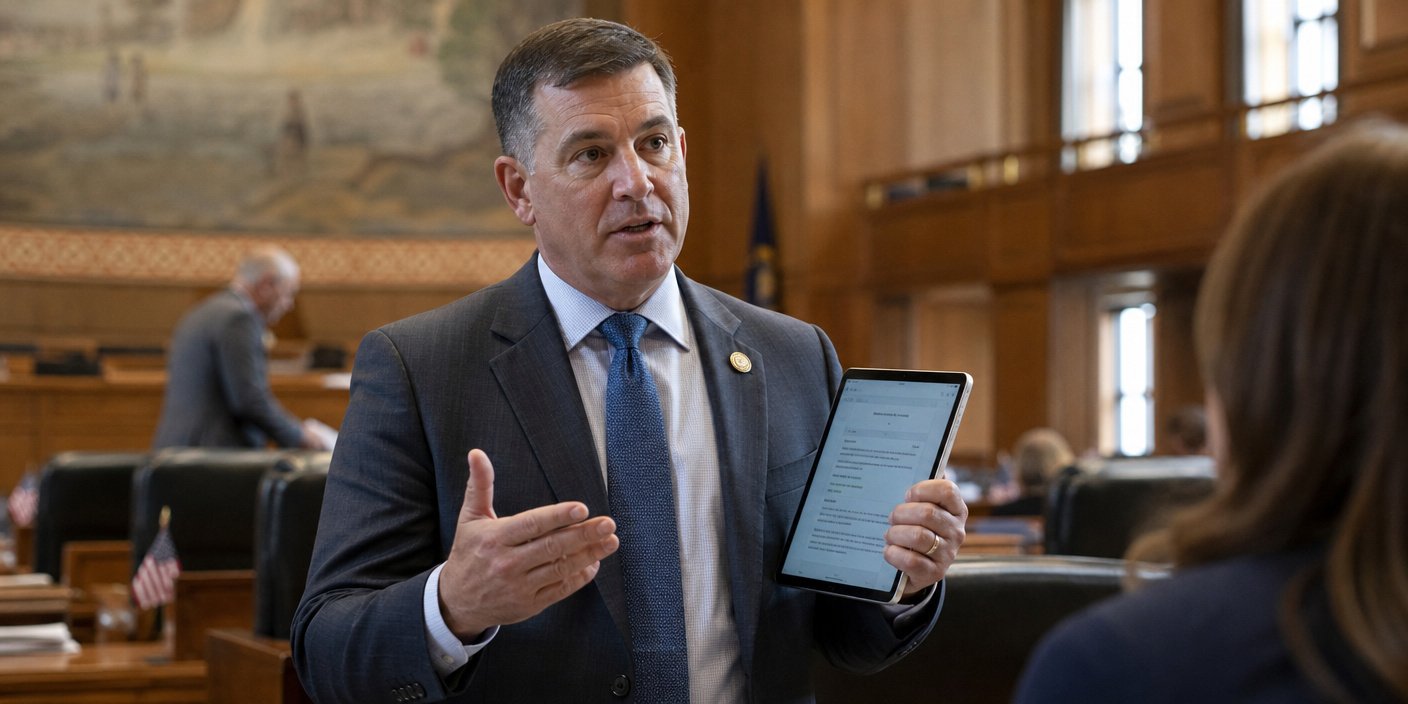
Oregon has taken a decisive step toward reshaping its financial landscape, enacting legislation designed to end a nearly two-decade-long drought in the formation of new, locally chartered financial institutions. With the signing of House Bill 4052, the state is aggressively incentivizing the creation of ‘de novo’ banks—newly chartered institutions that start from the ground up rather than through mergers or acquisitions. This legislative move signals a clear intent to revitalize the community banking sector, providing a robust tax incentive package to overcome the high barriers to entry that have largely prevented new banks from launching in the Pacific Northwest since 2007.
Key Highlights
- Legislative Incentive: HB 4052 provides a corporate excise tax credit of up to $1 million per year for three consecutive years to qualifying newly chartered banks.
- Addressing the Gap: Oregon has not seen a new de novo bank charter since 2007, and the number of locally headquartered banks has dwindled from over 50 to roughly 12 in the last two decades.
- Community & Rural Focus: Proponents argue that the tax credit will help offset the massive regulatory and capital costs of launching a bank, encouraging new entrants to serve underserved rural areas and specialized market niches.
- Eligibility Requirements: The credit applies only to banks that obtain a charter from the Department of Consumer and Business Services and commence operations between January 1, 2027, and January 1, 2033.
- Market Competition: The initiative aims to restore a level of localized competition and credit availability that has historically been eroded by the national consolidation of the banking industry.
The Resurgence of the De Novo Model in Oregon
For nearly twenty years, the landscape of Oregon’s banking sector has been defined by a trend of consolidation rather than creation. As larger national institutions swallowed local competitors and regulatory hurdles post-2008 heightened the financial barrier to entry, the concept of a ‘de novo’ bank—a bank starting with a clean slate—became a rarity. House Bill 4052 represents a pivot in this trajectory, acknowledging that a healthy, resilient economy requires a vibrant ecosystem of locally headquartered institutions that understand the specific needs of their immediate geographic and industry environments.
The Mechanics of the HB 4052 Tax Credit
At the core of this legislative change is a pragmatic understanding of the economic reality of banking. Launching a new bank is an capital-intensive endeavor, requiring significant upfront investment in technology, physical infrastructure, and, most importantly, regulatory compliance systems. By providing a corporate excise tax credit of up to $1 million annually for the first three years of operation, the state is effectively lowering the cost of entry for potential organizers.
This credit is specifically targeted to prevent the misuse of public funds for consolidation purposes. The legislation explicitly disqualifies any institution formed by the merger or conversion of an existing bank. The goal is the creation of new entities, ensuring that the incentive serves as a genuine catalyst for market growth rather than a subsidy for corporate restructuring. By allowing unused credits to be carried forward for up to three years, the state provides a buffer for new banks that may take time to achieve profitability, creating a more sustainable runway for these startups.
The Community Banking Imperative
Why does the formation of new banks matter? In an era where digital banking and fintech giants dominate headlines, the role of the traditional community bank remains uniquely essential. These institutions serve as the bedrock of local economic development. They are more likely to approve loans for small businesses, local farms, and regional enterprises that might otherwise be overlooked by large, algorithm-driven national banks.
Scott Bruun, president and CEO of the Oregon Bankers Association, has been a vocal supporter of this measure, emphasizing that the lack of new bank formation is not just a statistical curiosity—it is a tangible detriment to economic development, particularly in rural parts of the state. As local banks have consolidated, the personal relationship between the banker and the local business owner—a hallmark of community banking—has weakened. The legislation aims to restore this dynamic, ensuring that capital remains accessible to the small-scale borrowers who drive the Oregon economy.
The Path Forward: Challenges and Opportunities
While the tax incentive is a powerful tool, it does not remove the fundamental challenges associated with de novo banking. A new bank must still navigate the rigorous approval process overseen by the Oregon Department of Consumer and Business Services and federal regulators. They must prove that they possess the management expertise, capital strength, and cybersecurity infrastructure required to compete in a sophisticated digital market.
However, the opportunity is significant. As regional economic hubs, such as Central Oregon, continue to grow, the demand for banking services tailored to specific local needs is increasing. Furthermore, the banking industry is currently undergoing a transformation where specialized commercial banking niches are becoming more valuable. New entrants that can leverage advanced digital platforms to deliver a community-focused experience may find a unique competitive advantage over legacy institutions that are burdened by older systems and broader, less-focused organizational goals.
FAQ: People Also Ask
1. What is a ‘de novo’ bank?
A ‘de novo’ bank is a newly established depository institution that is issued a fresh charter to conduct banking business. It is distinct from banks created through the merger or acquisition of existing institutions.
2. Why has Oregon gone 18 years without a new bank charter?
Following the 2008 financial crisis, the regulatory requirements for starting a new bank became extremely stringent and costly. Combined with a national trend toward banking consolidation, this made it financially prohibitive for most groups to organize and launch new, state-chartered banks.
3. How does HB 4052 help new banks?
The bill provides a state tax credit of up to $1 million per year for the first three years of operation for qualifying new banks. This helps offset the high startup costs associated with regulatory compliance and capital requirements.
4. Will this law affect national banks operating in Oregon?
No. The tax credit is strictly for new Oregon-chartered banks. It does not provide benefits to national banks, nor does it change the operational regulations for existing national institutions.
5. When do these new banks have to start operations to qualify?
To be eligible for the tax credits outlined in HB 4052, a bank must obtain its charter and commence business in Oregon between January 1, 2027, and January 1, 2033.