Prime Minister Benjamin Netanyahu has ordered the security establishment to prepare for a total lockdown of the occupied West Bank and the complete closure of the city of Hebron. This escalation comes as a direct response to a surge in violence, specifically the recent fatal shooting of two Israeli soldiers. The decision, aimed at curbing further militant activities, places the region in a state of high alert, with the Israel Defense Forces (IDF) intensifying monitoring operations throughout the territory. These measures underscore the fragile security situation that frequently intersects with the political climate in Israel.
Key Highlights
- Total Lockdown Mandate: The Prime Minister’s Office has authorized the IDF to implement a full closure of the West Bank, effectively restricting movement to mitigate further security threats.
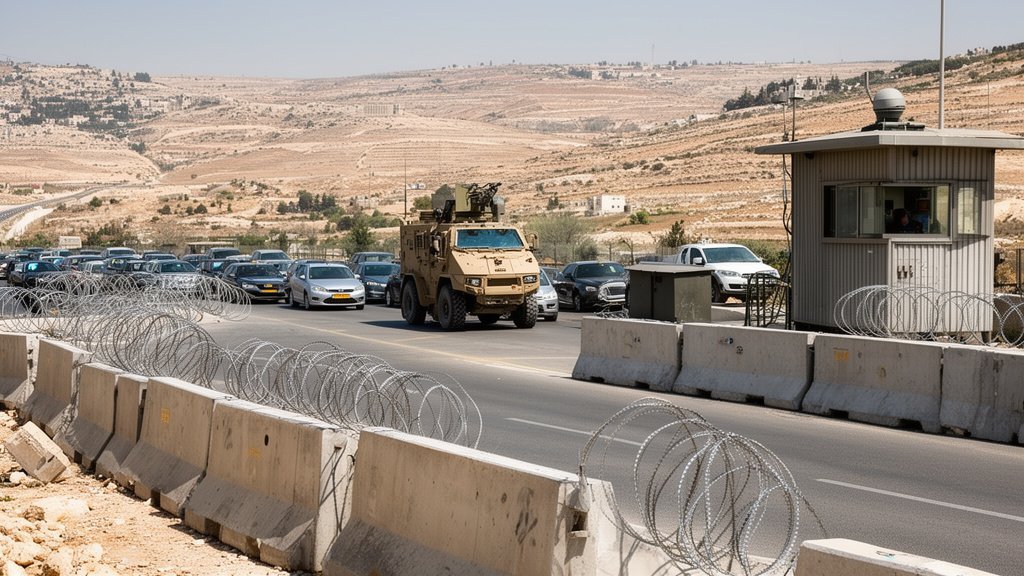
- Hebron Under Closure: As a focal point of recent instability, the city of Hebron is subject to a complete closure, with increased military presence at checkpoints and internal transit points.
- Catalyst for Action: The order follows the specific, fatal killing of two Israeli soldiers, a development that triggered immediate and heavy-handed security protocols.
- Political Timing: The mobilization coincides with the lead-up to Israeli elections, placing the ‘Security First’ doctrine at the center of the national conversation.
Strategic Security Measures and Political Volatility
The decision to lock down the West Bank is a classic, albeit controversial, maneuver in the Israeli security playbook. By restricting movement, the Israeli government and the IDF aim to compartmentalize violence, prevent the escape of suspects, and disrupt potential logistical chains used by militant groups. However, such large-scale operations are rarely purely tactical; they carry significant political weight, especially when they occur during an election cycle.
The ‘Security First’ Doctrine
The electoral landscape in Israel is famously sensitive to security lapses. For Prime Minister Benjamin Netanyahu, who has long campaigned on a platform of uncompromising security, the death of Israeli soldiers necessitates a robust, visible response. This lockdown serves as a demonstration of state power and control. By acting swiftly to seal off Hebron—a city known for its complex demographics and frequent friction points—the government signals to its base that it remains in control of the security apparatus. This approach is designed to neutralize domestic criticism regarding military preparedness and deter further attacks by making movement within the West Bank costly and difficult for residents.
Tactical Execution: The Role of the IDF
The operational burden of these orders falls squarely on the Israel Defense Forces. Closing the West Bank is a massive logistical undertaking. It requires the deployment of additional battalions, the tightening of permanent checkpoints, and the creation of temporary ‘flying’ checkpoints on arterial roads. In Hebron, the situation is even more complex. Given the city’s urban density and the proximity of Israeli settlements to Palestinian neighborhoods, a ‘complete closure’ means a significant disruption to daily life. Goods, medical supplies, and civilian movement are all impacted, creating a bottleneck that the IDF must manage while simultaneously conducting searches for those responsible for the soldiers’ deaths.
Economic and Social Consequences
While the security rationale is prioritized by the Prime Minister’s Office, the economic impact on the West Bank is immediate and severe. Palestinian businesses in Hebron rely on the flow of goods and people. A total lockdown acts as a de facto economic sanction, paralyzing local markets and causing significant financial strain. Beyond the immediate economic toll, such measures often deepen social resentment, which security analysts argue can paradoxically create a more fertile environment for radicalization in the long term. Balancing the immediate need for security with the long-term goal of preventing further instability remains the central, unsolved challenge of these lockdown policies.
FAQ: People Also Ask
Q: What is the primary reason for the lockdown?
A: The lockdown was ordered primarily as a security response to the killing of two Israeli soldiers, intended to facilitate IDF operations to locate the perpetrators and prevent further attacks.
Q: Why is Hebron specifically singled out for a complete closure?
A: Hebron is a frequent site of friction between Israeli security forces, settlers, and Palestinians. Its dense urban environment often makes it a strategic focal point for security operations and the pursuit of militants.
Q: How does this impact the upcoming Israeli elections?
A: Security is a pillar of Israeli electoral politics. A decisive response by the Prime Minister reinforces the ‘Security First’ brand, aiming to project strength and competence to the electorate during a critical campaign period.
Q: What are the risks of such extensive lockdowns?
A: Critics and international observers often point to the potential for the collective punishment of the civilian population, the degradation of the local economy, and the risk that increased friction points may inadvertently spark further, larger-scale unrest.