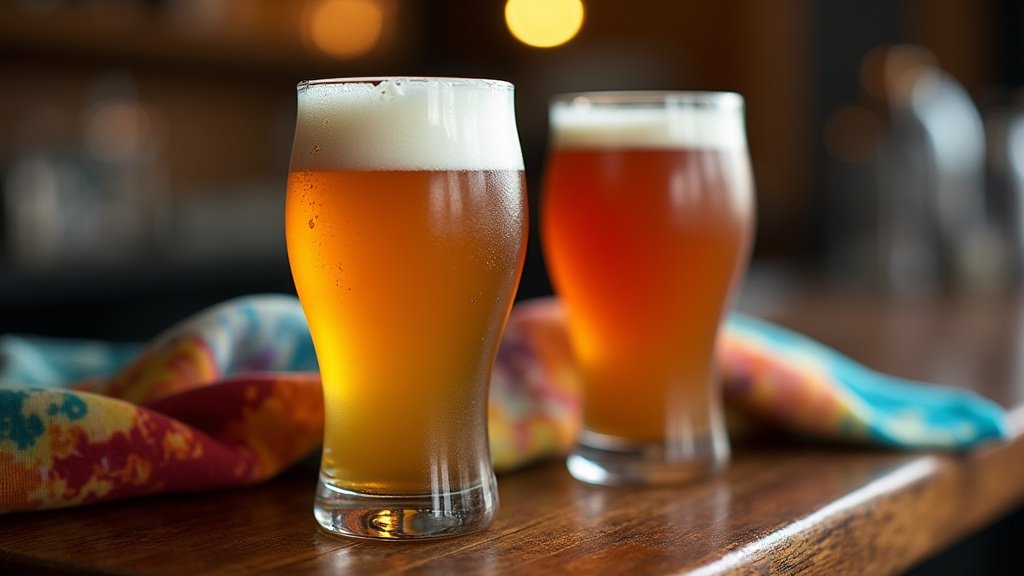
Portland’s craft beer scene is no stranger to specialized event programming, but Living Häus Beer Company has carved out a distinct niche by eschewing the typical, highly commercialized approach to the unofficial cannabis-adjacent holiday of 4/20. Instead of leaning into stereotypical ‘stoner’ motifs, the brewery has curated a weekend-long experience that pairs high-level brewing expertise with tangible, tactile community participation. By focusing on two massive collaboration releases—one with Von Ebert Brewing and another with Ghost Town Brewing—alongside a participatory tie-dye workshop, Living Häus is setting a new standard for how taprooms can function as interactive social hubs rather than mere retail spaces.
The Shift Toward Participatory Taproom Culture
The modern brewery experience has been rapidly evolving. Where the mid-2010s were defined by the ‘destination brewery’—large, factory-like spaces optimized for maximum throughput—the current era is trending toward the ‘community micro-hub.’ This is a space where the barrier between producer and consumer is broken down through shared activities. The 4/20 event at Living Häus is a prime example of this trend. By offering a ‘Tie-Dye & Collab’ session, the brewery is acknowledging that today’s craft beer drinker is looking for an experience, not just a pint.
This shift is largely driven by a demand for authenticity. In a crowded marketplace where there are thousands of IPAs, breweries have to offer a reason for a customer to choose their taproom over the local bottle shop. Activities like guided tie-dye sessions, while seemingly distinct from brewing, create a collaborative, unpretentious environment that mirrors the ethos of the craft beer community itself: it’s messy, creative, and centered on shared effort.
Analyzing the Collaboration: The Science of the Hop Bill
At the heart of the event are two distinct, hop-forward IPAs, each showcasing the collaborative efforts of regional brewing powerhouses. The technical execution here is worth a deep dive for any beer enthusiast.
‘Otto,’ the West Coast IPA collaboration with Von Ebert Brewing, is a lesson in modern hop utilization. By balancing classic bittering agents with high-tech cryo-products, the brewers are chasing a specific profile that prioritizes aromatics over simple bitterness. The inclusion of Krush, Columbus Cryo, and Chinook alongside Mosaic creates a backbone of dank, resinous pine, overlaid with the modern ‘fruit-punch’ characteristics provided by the Krush and Mosaic hops. This is not a palate-wrecker; it is a meticulously designed West Coast IPA intended to highlight clarity and hop expression.
Conversely, ‘Crux the Cat,’ the American IPA collaboration with Ghost Town Brewing, takes a different path. By utilizing a heavy concentration of Mosaic Cryo, Nelson, Enigma, and Columbus Cryo, the brewery is leaning into the ‘Southern Hemisphere/American’ fusion profile that is currently dominating consumer preferences. Nelson Sauvin and Enigma hops provide the signature white-grape and berry characteristics that have defined the ‘modern IPA’ movement, offering a stark contrast to the pine-heavy traditionalism found in ‘Otto.’
The decision to release these back-to-back showcases the Living Häus philosophy: they are not just brewing for volume; they are brewing for contrast. By allowing patrons to compare these two profiles side-by-side during the event, the brewery is acting as an educator, subtly teaching their customers how to perceive differences in terroir and hop application.
The Role of ‘Craft Beer Scribe’ and Community Curation
The second major pillar of the weekend is the 4/20 Häus Bottle Share, hosted by local beer personality @craftbeerscribe. Bottle shares have historically been an underground, enthusiast-only affair, often perceived as exclusive or intimidating to the casual drinker. By bringing this event into the taproom environment and hosting it with a known community figure, Living Häus is democratizing the concept of the ‘bottle share.’
This is a critical move for the sustainability of the local craft beer economy. When a brewery facilitates these gatherings, they are essentially saying, ‘We trust our community to curate the experience.’ It creates a feedback loop: customers bring in unique, rare, or sentimental bottles to share, the brewery provides a welcoming and safe environment, and the result is a heightened level of engagement that fosters long-term customer loyalty. It’s a move that transcends the transactional nature of selling a drink and enters the territory of ‘social infrastructure.’
Why Collaborations are the New Currency of Craft Beer
It is impossible to discuss the success of Living Häus without discussing the economics of brewery collaboration. In the hyper-competitive Pacific Northwest market, collaboration is no longer just a fun marketing tactic; it is a strategic business necessity. When Living Häus partners with Von Ebert or Ghost Town, they are not just sharing a recipe; they are sharing audiences.
Cross-pollination is the name of the game. A fan of Von Ebert’s specific brewing style who might not have frequented the Living Häus taproom on Belmont Street now has a tangible, product-driven reason to visit. These collaborations mitigate risk for the individual brewery, allow for experimental recipe development without tying up capital in potentially unpopular styles, and—most importantly—build a stronger, more resilient network of local businesses.
Furthermore, the collaborative process forces brewers to work outside their comfort zones. When two different brewing teams collide, they are forced to negotiate water profiles, yeast strains, and hop sourcing. This friction is where innovation happens. It keeps the industry from stagnating and prevents the ‘same-old, same-old’ fatigue that can plague regional taprooms.
The Cultural Context of 4/20 in the Taproom
Historically, the brewing industry has had a complicated relationship with cannabis-themed events. For years, the two industries operated in parallel but rarely intersected in a formalized way, largely due to regulatory hurdles and the desire to maintain a ‘family-friendly’ or ‘craft-focused’ image. However, as the legal landscape has shifted and the cultural stigma has faded, breweries have begun to embrace the intersection of these two cultures with more confidence.
Living Häus’s approach—which is admittedly and hilariously self-aware, evidenced by their comment about not playing Grateful Dead music—is a breath of fresh air. By pivoting toward the creative (tie-dye) and the analytical (bottle sharing) rather than just the ‘munchies’ or ‘stony’ tropes, they are respecting their consumer’s intelligence. They recognize that their core demographic values craft, sustainability, and creative expression. The event isn’t about getting high; it’s about getting together, sharing a beer, and doing something creative with your hands.
This approach aligns with the larger ‘Maker Movement’ that has taken hold in Portland. From ceramics to textile arts, the city prizes people who make things with their own hands. By hosting a tie-dye station, Living Häus is aligning their brand with the values of their city. It’s a smart marketing pivot that positions the brand not as a consumption-heavy entity, but as a local institution that values the same principles of craft and labor that go into their brewing process.
Looking Ahead: The Future of the Taproom Experience
As we look forward to the remainder of 2026, the Living Häus ‘4/20 Tie-Dye & Collab’ serves as a blueprint for what a successful taproom operation looks like. It is high-touch, high-concept, and deeply local.
We anticipate that more breweries will adopt this ‘event-first’ model. The days of simply opening the doors and letting the beer do all the heavy lifting are waning. Success in the current climate requires a synthesis of product quality and social utility. By providing a forum for artistic expression (tie-dye) and community curation (bottle share), Living Häus has created an event that provides value to the consumer long after the beer is finished. It is this value-add that will differentiate the thriving breweries of the future from those that struggle to maintain relevance in an increasingly fragmented market.
In conclusion, the 4/20 weekend at Living Häus is more than just a marketing stunt. It is a calculated and successful effort to deepen community bonds, showcase technical brewing prowess, and create a welcoming space that reflects the multifaceted interests of the modern beer consumer. It proves that the most effective way to celebrate a cultural moment isn’t by leaning into the clichés, but by elevating the collective experience of the people in the room.