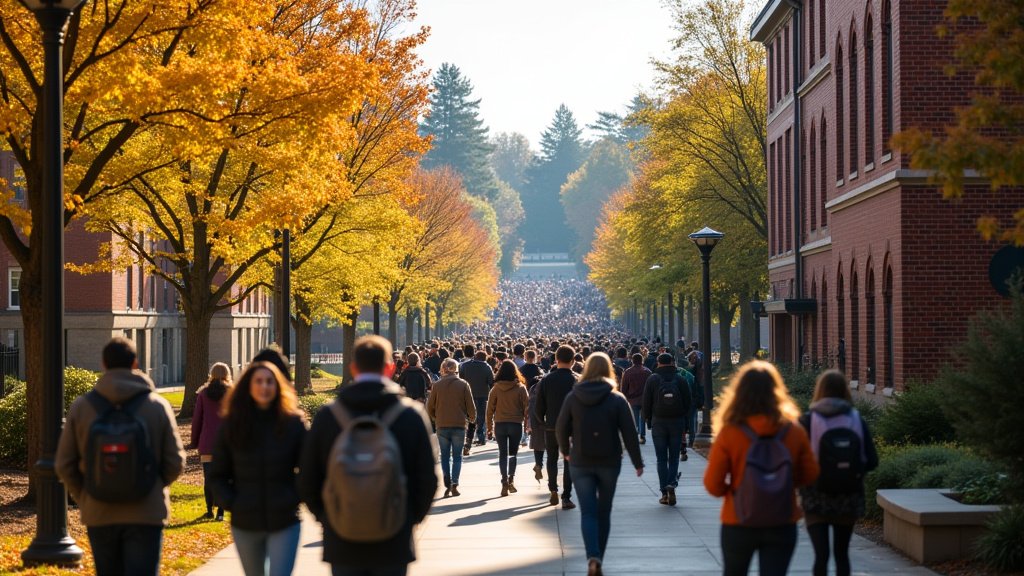
As the autumn semester gains momentum, the UO campus area is cementing its status as a premier regional cultural powerhouse. The latest edition of “The 2026 Lookout List: Arts and Entertainment” has officially dropped, and for Friday, October 9, the agenda is packed with high-caliber programming that merges historical introspection with world-class artistic performance. Whether you are a student, a local resident, or a visitor, this weekend offers a rare opportunity to witness the intersection of academic rigor and creative expression.
Key Highlights
- America at 250 Exhibit: A flagship multi-media historical presentation analyzing the semi-quincentennial of the United States, offering deep-dive perspectives on the nation’s trajectory.
- Murdock International Piano Competition: The highly anticipated semifinals commence, showcasing elite virtuosos competing for a chance at the final honors.
- Community Convergence: These events serve as the focal point for regional cultural tourism, highlighting the UO campus area’s growing influence as an arts destination.
- Curated Experience: The “Lookout List” provides a structured approach to navigating these conflicting high-profile events, ensuring maximum engagement with both history and music.
The Nexus of History and Virtuosity: A Cultural Landmark
The University of Oregon campus has long been a hub for intellectual pursuit, but the cultural landscape for October 9, 2026, marks a distinct elevation in the quality and scope of public programming. The “Lookout List” highlights a day where local attendees must choose between engaging with the profound complexities of American history and the electrifying tension of high-stakes musical performance. This is not merely a list of events; it is a snapshot of a community that demands both intellectual stimulation and aesthetic excellence.
America at 250: Confronting the Timeline
At the center of the historical discourse is the “America at 250” exhibition. While exhibitions marking the nation’s 250th anniversary are appearing globally, the UO installation differentiates itself through its reliance on primary source archives and immersive technology. Unlike traditional museum exhibits that rely on static text, this installation uses architectural projection to visualize historical data, allowing attendees to walk through the demographic and political shifts that have defined the American experience.
Critics and curators alike have lauded this exhibit for its refusal to sanitize the narrative. By centering on the tension between civic ideals and historical reality, the “America at 250” exhibit transforms from a static display into a living, breathing commentary on the current state of national identity. For attendees on Friday, this is an essential stop that challenges the perception of history as a closed book.
The Murdock Semifinals: Anatomy of a Performance
Parallel to the historical reflection is the auditory intensity of the Murdock International Piano Competition semifinals. Now in its 15th iteration, the Murdock has become a definitive career milestone for young concert pianists. The semifinals represent the most grueling stage of the competition; the field is narrowed, the pressure is immense, and the repertoire is unrestricted, allowing competitors to showcase their unique artistic voices.
Audience members who secure a seat at the semifinals are not just hearing music; they are observing a high-stakes psychological and physical exercise. The technical requirements to advance are rigorous, often demanding the execution of some of the most difficult pieces in the piano canon—ranging from the complex structures of Rachmaninoff to the emotive demands of Liszt. The competition serves as a reminder that the UO campus area is a proving ground for the next generation of global talent.
Economic and Educational Ripple Effects
Beyond the intrinsic value of the arts, the “Lookout List” reveals a critical economic secondary angle. The influx of patrons for events like the Murdock competition creates a tangible surge in local economic activity. From coffee shops bordering the university to local transportation services, the “Arts Effect” on the UO campus economy is measurable. Local hospitality and service businesses have aligned their staffing and hours to accommodate the uptick in foot traffic, transforming the campus area into a temporary festival-like environment.
Furthermore, the academic alignment cannot be ignored. The “America at 250” exhibit, for instance, operates in symbiosis with the university’s history and political science departments. This creates a secondary educational ecosystem where students are not just passive observers but are actively involved in the facilitation and critical analysis of the event. This integration of the “real world” arts scene with university curriculum provides a blueprint for how modern campuses can remain relevant in an increasingly digital, decentralized culture.
The Future of Regional Arts Hubs
Looking ahead, the success and organization of the 2026 arts schedule suggest a shift in how regional hubs operate. By consolidating high-profile events into curated “Lookout Lists,” organizations can prevent audience fragmentation. It is a strategic move that acknowledges a simple truth: attendees have limited time and high expectations. By providing a clear, authoritative guide, the campus arts board ensures that every major event—whether historical or musical—receives the attendance density required for a successful, viral cultural moment. As we look toward the remainder of the year, this model of event curation will likely serve as a gold standard for other academic and municipal centers looking to revitalize their arts and entertainment sectors.
FAQ: People Also Ask
Q: Why are the “America at 250” exhibit and the Murdock competition scheduled on the same day?
A: The scheduling is deliberate. By concentrating high-caliber events on a single date, the UO campus area creates a “cultural destination day,” encouraging visitors to remain in the area for multiple events and generating a higher economic impact for local businesses.
Q: Can I attend both events on October 9?
A: While both events are located within the UO campus area, they are designed as immersive, long-form experiences. The “America at 250” exhibit is self-guided and open for extended hours, while the Murdock semifinals are ticketed performances with specific start times. We recommend checking the official UO Arts portal to cross-reference set times.
Q: What is the significance of the “2026 Lookout List”?
A: It is a curated, authoritative guide designed to help residents and visitors navigate the most significant arts and cultural programming, ensuring they don’t miss key events that define the region’s academic and artistic identity.